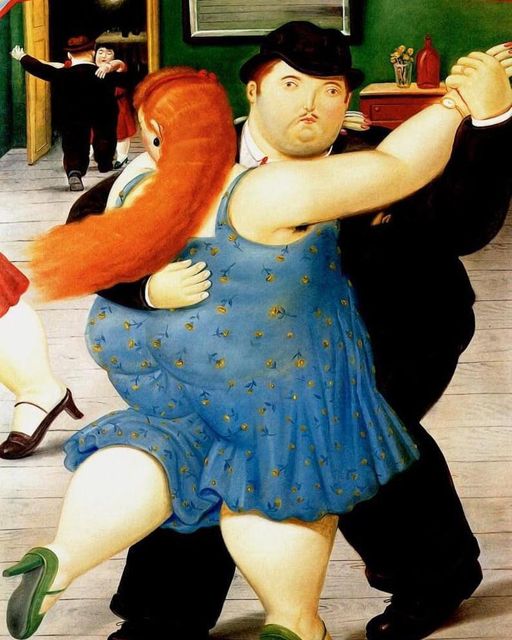
Sometimes woman and man can both lead. And then the life pulses back and forth in flesh and bones and soul!
It’s the birthday of the Irish revolutionary Maud Gonne, the lifelong muse of poet W.B. Yeats, born in Aldershot, England, in 1865. She and Yeats were the same age, born only a few months apart, and they first met when they were 25 years old. He was introduced to her by a friend, the Irish nationalist John O’Leary, and later referred to the day when he met her as “when the troubling of my life began.”
She was tall and exquisitely beautiful. In his Memoirs, Yeats wrote: “I had never thought to see in a living woman so great beauty. It belonged to famous pictures, to poetry, to some legendary past. A complexion like the blossom of apples, and yet face and body had the beauty of lineaments which Blake calls the highest beauty because it changes least from youth to age, and a stature so great that she seemed of a divine race.”
Yeats immediately fell in love with Maud Gonne, and he asked her to marry him in 1891, but she refused. It was the first of many proposals of marriage that he made and that she rejected. They remained close to each other throughout their lives, though, and agreed at one point that they had a “spiritual union” to each other.
In response to one of Yeats’ many marriage proposals, Maud Gonne told him: “You would not be happy with me. … You make beautiful poetry out of what you call your unhappiness and you are happy in that. Marriage would be such a dull affair. Poets should never marry.”
The Poetry Almanac Dec 20, 2022
“Writing is a performance, like singing an aria or dancing a jig” —Stephen Greenblatt
TUESDAY, DECEMBER 20, 2022
“Perhaps we lament over some dreams that have been shattered and we see that our best expectations often need to be put together with unexpected, disconcerting situations… We do not need to give in to negative feelings, like anger or isolation – this is the wrong way! Instead, we need to attentively welcome surprises, the surprises in life, even crises. When we find ourselves in crisis, we should not make decisions quickly or instinctively, but let them pass through the sieve… When someone experiences a crisis without giving in to isolation, anger, and fear, but keeps the door open for God, He can intervene. He is an expert in transforming crises into dreams – yes, God opens crises into new horizons we never would have imagined before, perhaps not as we would expect, but in the way He knows how. And these, brothers and sisters, are God’s horizons – surprising – but infinitely more grand and beautiful than ours! May the Virgin Mary help us live open to God’s surprises.”
Pope Francis


 The Vibrant Channeled Creator