Lay on the memories…

The Writer’s Almanac from Monday, May 26, 2014
“How to Regain Your Soul” by William Stafford from The Darkness Around Us is Deep. © Harper Perennial, 1994.
ORIGINAL TEXT AND AUDIO – 2014
Today is Memorial Day. The first official observance of what we now know as “Memorial Day” was held on May 30, 1868, by proclamation of John A. Logan, Commander in Chief of the Grand Army of the Republic and a Civil War veteran. The day was set aside to honor those who died “in defense of the country during the late rebellion.” Known as “Decoration Day,” the observance drew on a long Southern tradition of honoring the dead by decorating the gravesite with flowers. In late spring or early summer, extended families would gather in mountain cemeteries for “dinner on the ground,” spreading tablecloths on the grass and using their best plates for the potluck meal. They arranged colorful flowers on the graves, sang hymns, held service and baptisms, and prayed. This practice is still common in the South, from the Ozarks to North Carolina.
On this day in 1868, 5,000 people helped decorate the graves of more than 20,000 Union and Confederate soldiers buried at Arlington National Cemetery; memorial events were held in 183 cemeteries in 27 states.
It’s the birthday of jazz musician Miles Davis, born in Alton, Illinois (1926). His father was an oral surgeon, and he grew up in a nice home in East St. Louis. The family also owned a ranch in Arkansas. He was about seven or eight years old when he started listening to a radio show called Harlem Rhythms. It was a 15-minute show, and it came on at 8:45 in the morning. Davis started showing up late to school every day because he couldn’t bear to miss the music.
About that same time, he started paying attention to the music he heard in rural Arkansas. He said: “We’d be walking on these dark country roads at night and all of a sudden this music would seem to come out of nowhere, out of them spooky-looking trees that everybody said ghosts lived in. […] That kind of sound in music, that blues, church, back-road funk kind of thing, that southern, midwestern, rural sound and rhythm. I think it started getting into my blood on them spook-filled Arkansas back-roads after dark when the owls came out hooting.” A few years later, he started music lessons, playing the trumpet. And after that, he didn’t stop. He was playing professionally by the age of 15, and when he was 18, he struck out for New York to find his hero, Charlie Parker. Soon they were playing together, and Davis continued to play jam sessions with other musicians and experiment with new types of jazz. In 1959, he recorded Kind of Blue, one of the best-selling jazz records of all time.
It’s the birthday of astronaut Sally Ride, born in Los Angeles (1951). When she was young, her teachers used to wheel big black-and-white televisions into the classrooms so that students could watch the space launches, and Ride was fascinated by the space program. She was good at math and science, but she was also an athletic kid who loved to play football in the street with the neighborhood boys. Her parents worried that she would be injured, so signed her up for tennis lessons instead. She was such a good tennis player that Billie Jean King encouraged her to consider a professional career. Ride started college at Swarthmore in Pennsylvania, but she didn’t like it, and she was homesick. She dropped out and moved back to California to give her tennis career a try. She said, “Fortunately, I took a long, hard look at my forehand and realized that I was not going to make a fortune with that forehand.” So she went back to college, this time at Stanford, which had a better tennis team. She graduated with degrees in Physics and English — her specialty was Shakespeare. When an interviewer asked her whether Shakespearean drama helped her as an astronaut, she said, “I am certain that it did.”
She had almost completed her Ph.D. in Physics when she saw an ad in the Stanford student newspaper. It was from NASA, looking for applicants for the astronaut program. Traditionally, NASA had selected former Marines, pilots, and Air Force officers to serve as astronauts, but they were looking for a new pool of applicants. Ride said: “It’s something that was just deep inside me. There is really no other way to describe it. The moment I saw the opportunity, I knew that that is what I wanted to do.” She applied, and out of 8,000 applicants, she was chosen to be one of 35 new members of the astronaut corps. In that new group of astronauts, there were five other women besides Ride; but when they arrived at the Johnson Space Center, there were only four women out of the 4,000 scientists and engineers. At NASA, Ride worked as an engineer and helped develop a robotic arm for the space shuttle. She was chosen to join the crew of the 1983 Challenger mission, making her the first American woman in space. She was bombarded with questions about how she would handle life in space — reporters asked her everything from whether she would cry to whether it would affect her reproductive organs. Johnny Carson joked that the launch was postponed because Ride was looking for a purse to match her shoes. The week before the launch, she said: “I did not come to NASA to make history. It is important to me that people don’t think I was picked for the flight because I am a woman.”
The Challenger mission launched on June 18, 1983. Ride spent six days in space, helping to operate the robot arm. She was not only the first American woman in space, but also the youngest person, at the age of 32. When she landed, Ride announced: “The thing that I’ll remember most about the flight is that it was fun. In fact, I’m sure it was the most fun that I will ever have in my life.” She refused to accept a bouquet of flowers, since no one offered flowers to the five male astronauts. Ride went on a second Challenger mission in 1984. She was training for a third mission when the Challenger exploded in 1986. Ride served on the commission that investigated the disaster. She left NASA not long after to teach at the California Space Institute in San Diego. Ride and her partner, Tam O’Shaughnessy, founded a company called Sally Ride Science to make science approachable for kids, especially girls. Ride and O’Shaughnessy became tennis friends at age 12, met again as adults and bonded over a shared love of science, fell in love, and were together for 27 years — but they did not publicly acknowledge their relationship until Ride’s obituary. She died in 2012, at the age of 61.
She said: “The view of Earth is absolutely spectacular, and the feeling of looking back and seeing your planet as a planet is just an amazing feeling. It’s a totally different perspective, and it makes you appreciate, actually, how fragile our existence is. You can look at Earth’s horizon and see this really, really thin royal blue line right along the horizon, and at first you don’t really quite internalize what that is, and then you realize that it’s Earth’s atmosphere, and that that’s all there is of it, and it’s about as thick as the fuzz on a tennis ball, and it’s everything that separates us from the vacuum of space.”

Be well, do good work, and keep in touch

Garrison Keillor

Ludwig Wittgenstein was particularly interested in language …

A Saint Reaches Out On Easter: Pope Francis

8 AM – Serves his sheep

12 noon – Strokes

2 PM – Sits at the side right hand of Christ

Is AI to replace or guide humans?

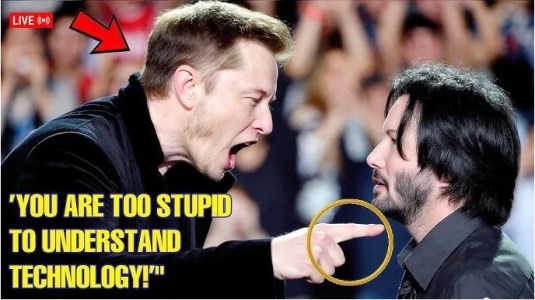
A Debate between Keanu Reeves and Elon Musk

Keanu Reeves is known for his wisdom, humility, and deep understanding of life beyond Hollywood. In this powerful debate, Keanu Reeves goes head-to-head with Elon Musk in a conversation that challenges the future of AI, creativity, and human connection. As the discussion unfolds, Keanu Reeves delivers a response so profound that it leaves the audience in absolute shock.

Keanu Reeves stepped onto the stage with his characteristic quiet confidence. Across from him sat Elon Musk, the tech billionaire famous for his audacious claims and unapologetic vision for the future. The auditorium buzzed with anticipation, knowing this would not be a typical interview, but rather a pivotal debate about artificial intelligence (AI), creativity, and the future of humanity.

“I’m a bit surprised you agreed to this, Keanu,” Musk began, his tone laced with condescension. “AI is the future. Hollywood is nostalgia.”

Without missing a beat, Keanu replied, “Nostalgia reminds us what it means to be human. Can AI do that?”

The audience murmured appreciatively. Musk, momentarily caught off guard, quickly recovered. “AI already creates scripts, actors, and music. Soon, studios won’t need people. Why watch a real actor who ages when you can have a flawless digital version?”

Unfazed, Keanu leaned forward slightly. “Elon, have you ever watched a sunset? You can replicate it perfectly digitally, but does that mean you’ve truly experienced it? Real presence is something AI can’t replicate. Art, stories, and humanity itself are irreplaceable.”

The audience erupted in applause, visibly resonating with Reeves’s sentiment. Musk, clearly irritated, retorted sharply, “AI isn’t just replicating experiences; it’s improving them. Future movies will be scientifically perfected, precisely predicting audience desires. Humans can’t compete.”

Calmly, Keanu posed a thoughtful counter-question: “Then why do people still attend live concerts or Broadway shows when AI could theoretically perfect these experiences? People crave genuine connections that technology simply can’t replicate.”

Musk shifted in his seat, visibly uncomfortable as Keanu addressed the audience directly. “If you believe human creativity—the raw, imperfect beauty of real art—will always matter, let us know right now.”

Immediately, the live stream exploded with support, revealing overwhelming agreement with Reeves’s stance. Musk, cornered but defiant, persisted, “You’re missing the big picture. AI is efficiency, progress, survival. Humans are slow, emotional, flawed. AI isn’t.”

With poised clarity, Keanu replied, “Do you think intelligence is about replacing humans or helping them? The real question isn’t whether AI can replace us, but whether we should let it.”

The crowd again burst into applause. Musk, for the first time, seemed at a loss. Keanu’s message was penetrating deeper than he anticipated, resonating profoundly with the audience.

Desperate to regain control, Musk challenged, “AI is cheaper, faster, doesn’t age or demand royalties. Studios care about profit, not unpredictability. What happens when AI-generated movies earn more than those with real actors?”

Reeves paused thoughtfully before responding, “If AI-generated actors are truly superior, why haven’t they already replaced us entirely? Why do studios still choose humans? Because perfection isn’t what makes us connect—flaws do. Genuine performances aren’t memorable for technical precision but for their authenticity.”

Keanu then asked Musk directly, “If AI is so superior, why do humans still surprise each other? Why do we fall in love, laugh unexpectedly, or cry at predictable movie endings? Because we are unpredictable, something no AI can truly understand.”

The audience, captivated, roared in approval. Musk, increasingly frustrated, activated a massive screen behind them displaying a flawless AI-generated short film featuring a digitally recreated Keanu Reeves.

“This,” Musk declared triumphantly, “was produced entirely by AI in under 24 hours. No actors, no costly sets, just pure technology. How can you compete with this?”

The audience held its breath, waiting for Reeves’s response. He smiled calmly, unfazed by the display. “Will anyone here remember this AI-generated scene tomorrow? It looks perfect, but it’s empty. The greatest films aren’t remembered because they’re flawless—they’re remembered because they resonate. AI can mimic appearances, but it can’t replicate the soul.”

The audience erupted once again, sensing the truth in his words. Musk, increasingly unsettled, questioned Keanu’s qualifications. “You’re an actor, not an engineer. What gives you the right to debate AI’s future?”

With composed authority, Keanu replied, “I don’t need to be an engineer to understand humanity. I just need to be human.”

The auditorium exploded into applause, definitively shifting in Keanu’s favor. Reeves then dropped a revelation that left Musk visibly stunned: “For the past five years, I’ve invested in AI—not to replace humans, but to empower them. While you create AI to replace people, I create AI to protect creativity.”

The crowd went wild, realizing Keanu wasn’t just defending creativity philosophically; he was actively shaping its future. Musk, realizing he’d lost control, attempted a final comeback, arguing that convenience and efficiency ultimately dictate human behavior.

Keanu shook his head gently, “Throughout history, people have thought books, theaters, and live performances would disappear. Yet they’re still here because humans inherently value meaning over mere convenience. Technology doesn’t erase meaning; it makes us fight harder for it.”

The crowd stood, roaring in agreement. Keanu turned to address them directly, “This debate isn’t about AI. It’s about deciding who controls our future—those who want to replace humanity or those who want to empower it.”

Reeves closed with a rallying cry, “If you believe in human creativity and the right to shape our future, join this fight. The future isn’t dictated by technology; it belongs to those who choose it.”

Elon Musk, visibly shaken, remained silent as Reeves left the stage to deafening applause. The debate had ended decisively, marking a significant moment in the conversation about AI and humanity. Keanu Reeves hadn’t just challenged a powerful tech titan; he had reminded the world of something critical—that the power to shape our future remains, and should always remain, human.

Here I will try to see what really happened here!

The contrast between Keanu Reeves and Elon Musk in this debate can be framed as the difference between humanistic wisdom and cold, utilitarian logic.

Keanu Reeves: The Guardian of Human Creativity

Reeves embodies a deeply human philosophy, emphasizing authenticity, imperfection, and emotional connection as the core of what makes art, creativity, and human life meaningful. His perspective resonates with a compassionate, soulful approach, rooted in a belief that technology should serve and elevate humanity, not replace it. He represents the philosopher-artist, a figure who values the spiritual and emotional depth of human experience over sheer efficiency or financial gain.

Elon Musk: The Pragmatic Technocrat

Musk, on the other hand, represents the machine-driven futurist, someone obsessed with optimization, control, and efficiency. His vision prioritizes technological progress over emotional depth, where human unpredictability is seen as an obstacle rather than an asset. His admiration for figures like Nietzsche or certain authoritarian thinkers suggests an Ubermensch mindset, where superiority is defined by power and intelligence rather than empathy and wisdom. His approach to AI, automation, and even business strategy reflects a mechanistic view of human society, where individuals are either useful components or obsolete relics.

Human Warmth vs. Cold Calculation

Reeves’ philosophy represents the warmth of human greatness, where true value is found in art, emotion, connection, and imperfection. Musk’s mindset, by contrast, embodies a dry, mechanical approach, where people are secondary to technological supremacy. This almost technocratic reductionism can be seen as eerily similar to past ideologies that devalued human individuality in favor of grand, impersonal visions of the future.

In essence, the contrast is between humanistic brilliance and a dystopian, efficiency-obsessed mentality—between someone who champions the soul of humanity and someone who sees humans as inefficiencies to be managed or even eliminated.

Here is the original link from Hot News Fandom:

UFC commentator Joe Rogan calls for major rule change after accusing fighter of ‘clearly cheating’ at UFC 314

the American Sentence

Nancy Culmone

The American Sentence

Seventeen syllables

comprise an American Sentence

like this!

The sentence looks into the mirror

and sees there

an awkward haiku.

We needn’t feel left out

that we’re not Japanese

since we have this form.

Old Japanese haiku masters

on their death beds

still count syllables.

It’s hard to count syllables

without letting your fingers dance

the count.

jch May 2024

Both Sides Now

Image

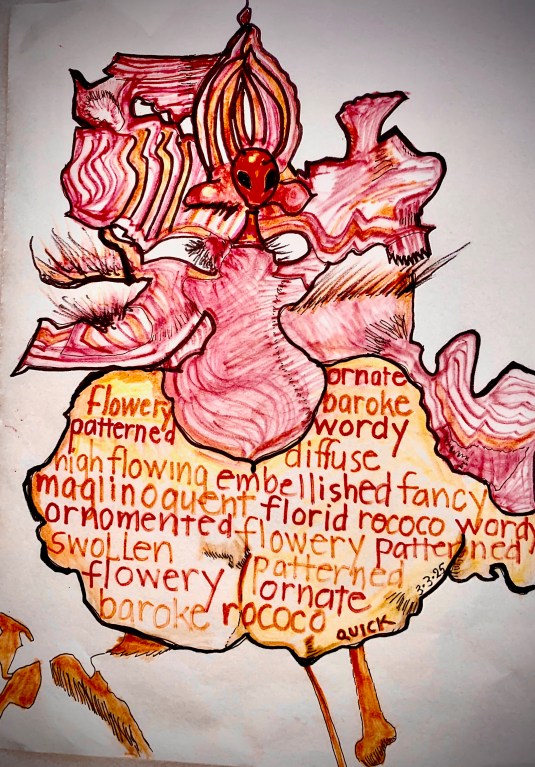
FLOWERY

The orchid is ready to lead.

Image

Bravo

BeauxArts       

Jeanne Poland

Calligrapher and poet.

Bravo


B oost

R ave

A ccolade

V ast

O vation

All Rights Jeanne Poland 2025

Sheep are like that…


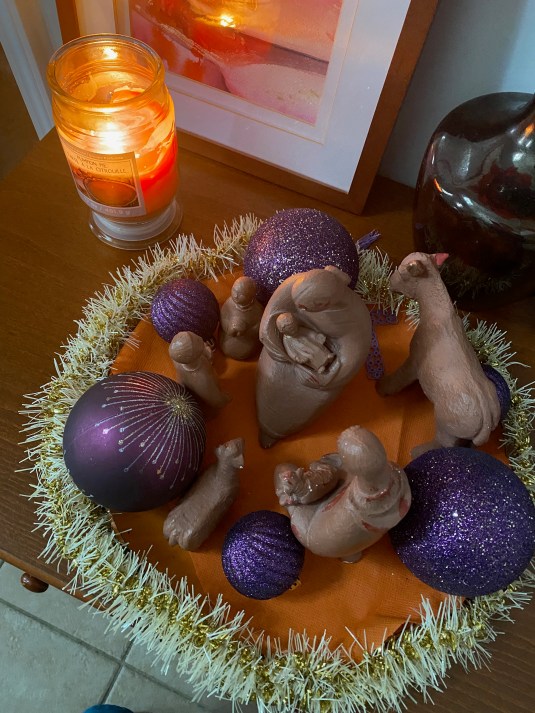
Advent…waiting…expectation:

Previous Older Entries