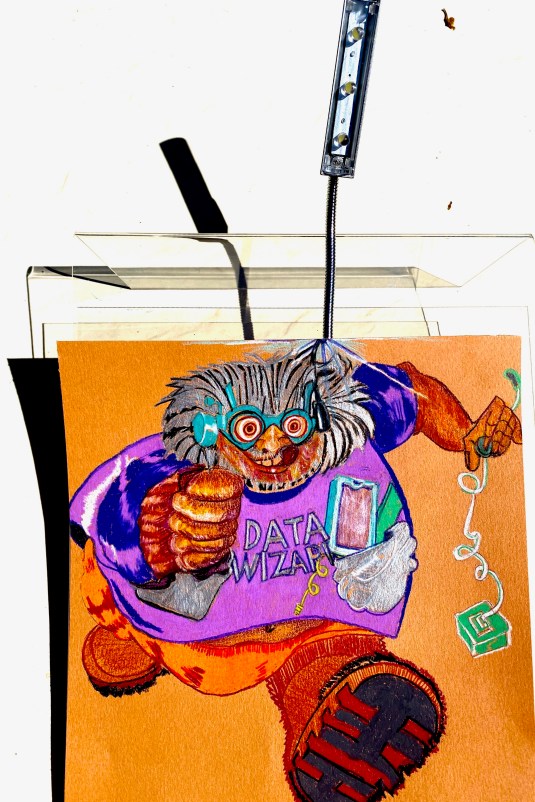
caricature of Don by Jeanne
8/7/2020
color pencil on pastel paper
former Caricatures:



5 views over 30 years
all are favorites!
Jeanne Poland's Poetry Blog
07 Aug 2020 Leave a comment
in data wizard, Poetry Tags: 5 views over 30 years, 8/7/2020, all are favorites, caricature, color pencil on charcoal paper, data wizard
caricature of Don by Jeanne
8/7/2020
color pencil on pastel paper
former Caricatures:
5 views over 30 years
all are favorites!
05 Aug 2020 Leave a comment
in do unto others, Poetry Tags: better than any argument, civilization, do unto others, downstream, on his farm, rise at dawn to pick dew wet red berries in a cup, the natural world, upstream, Wendell Berry, what passes for it

It’s the 86th birthday of environmental writer Wendell Berry,
born in Port Royal, Kentucky (1934).
Berry publishes poetry, essays, and novels, most of which reflect his concern for the natural world and the ways we interact with it.
Berry continues to live and work on his farm in his hometown.
Berry said, “Do unto those downstream as you would have those upstream do unto you.”
He said, “You can best serve civilization by being against what usually passes for it.”
And he said,
“Better than any argument is to rise at dawn and pick dew-wet red berries in a cup.”
04 Aug 2020 Leave a comment
in congruent, Poetry Tags: as naturally as breath, belief matches up with actions, believe what you say, body mind and soul come into alignment, Caroline Myss, consciousness, follow thru on guidance, honor spiritual truths, in a fog, judgement makes you a prisoner, matters of the spirit, never compromise the truth, realize the full potential of power, spiritual practice, stress comes from incongruence, The Fifth Mystical Law, your power is invisible

The Fifth Mystical Law
Caroline Myss
Maintaining Spiritual Congruence
Whether you strike out on the path of consciousness in order to heal yourself or to engage more profoundly in matters of the spirit, one way of describing your goal is to say that you want to become a congruent human being. Congruency can take many forms, but in essence you are congruent when your beliefs match up with your everyday actions and your spiritual practice.
Say what you believe and believe what you say;
act on your belief and follow through on guidance that comes from inner reflection.
In this way, body, mind, and soul finally come into an alignment that allows for the harmony of the graces to flow through you as naturally as your breath.
You maintain congruence by honoring the spiritual truths that you have consciously made a part of your interior life.
Truth is its own monitoring device;
that is, you can never lie to yourself about compromising a truth.
Your biology itself will show signs of the stress when you become incongruent with a truth. Part of us realizes that acknowledgment of a belief – whether private or public – stands as an official commitment to it, if only before our own conscience.
A consciousness left in a fog is incapable of creating any clear path in life, much less of healing anything. There is nothing easy about living a conscious life, but it’s even more treacherous to live an unconscious one.
Simply being as conscious as you can be at each moment is a full-time job, because becoming a conscious person is all about realizing the full potential of the power of choice.
Of all the choices that you can make, none is as empowering as the decision to live in a spiritually congruent way.
What you can do:
Practice spiritual congruence by living these truths:
* You should say only what you believe and believe what you say.
* Power originates behind your eyes, not in front of your eyes. Once power becomes visible, it evaporates. True power is invisible.
* Thought precedes the creation of matter. Therefore, your thoughts are instruments of creation as much as your words, deeds, and finances. Become conscious about the quality of your thoughts, because each one sets patterns of cause and effect into motion. Every thought is a tool. Every thought is a prayer.
* Judgement anchors you to the person or thing you judge, making you its servant. Judge others too harshly and you become their prisoner.
02 Aug 2020 Leave a comment
in Poetry, sparkle Tags: breaking up the darkle, cruel mulls, gentle, glow, grovels are as vocal crawls, home to winged gulls, natural, one boggled hussled roll, simple rebels, skykles, sparkle

sparkles
Sparkle
sparkle is as sparkle does
breaking up the darkle
sparkle is as skykles glow
home to winged gulls
carnal prompts are throttles:
couples gentle lulls.
grovels are as vocal crawls
gentle, cruel mulls.
natural, simple rebels are
one boggled, hussled roll.
30 Jul 2020 Leave a comment
in dilemma, Poetry Tags: and kills rank's glory, attention from brutes, Beetle Bailey, dilemma, dries the tongue to ash, Greg and Mort Walker, snake eyes, the general is looking

attention from brutes
dries the tongue to ash- snakes eyes
and kills rank’s glory!
29 Jul 2020 Leave a comment
in moon queen, Poetry Tags: 2020, moon queen, raise the tides tumult, selfie by Jeanne of jeanne Moon Queen July 29, smile at destiny, tilt the head to ponder quick
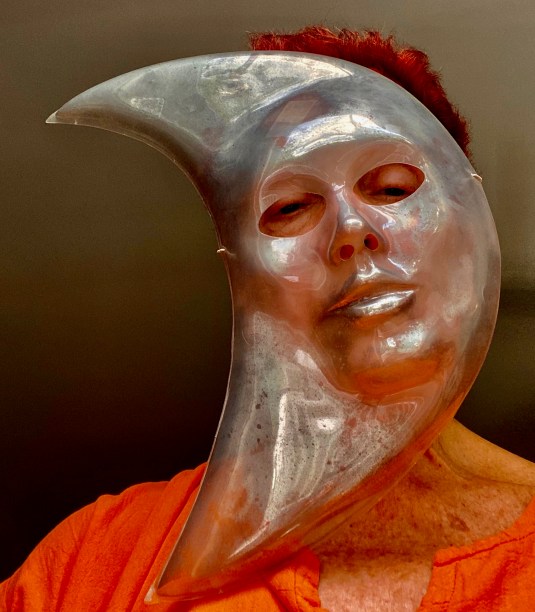
selfie by Jeanne of Jeanne “Moon Queen” July29,2020
smile at destiny
tilt the head to ponder quick
raise the tides tumult
28 Jul 2020 Leave a comment
in Poetry, who is Gerard Manley Hopkins? Tags: burned all his poetry, Charles Wright, Dylan Thomas, English poet, innovative, Jesuit Priest, let me have more pity on..., My own heart, mystic, oddness, Roman Catholicism, struggled with spiritual and artistic matters, the slums of Manchester, who is Gerard Manley Hopkins?

Today is the birthday of English poet and Jesuit priest Gerard Manley Hopkins (1844) (books by this author), born in Stratford, Essex. He won a poetry prize in grammar school and then received a grant to study at Balliol College, Oxford, where he studied Classics and continued to write poetry. His academic record was outstanding, earning him the approbation of one of his masters, who called him “the star of Balliol.”
While he was at Oxford, Hopkins (who had been raised in the Anglican Church) converted to Roman Catholicism. His experience was so profound that he decided to become a Jesuit priest in 1868, and he burned all his poetry, feeling it was not befitting his profession as a clergyman. He did continue to keep a journal, however, and in 1875, he returned to poetry. He was living in Wales, and found its landscape and its language inspirational. When five Franciscan nuns died in a shipwreck, he was moved to write a long poem, The Wreck of the Deutschland.
Once he was ordained in 1877, he worked as a parish priest in the slums of Manchester, Liverpool, and Glasgow. He lived in Dublin from 1884 until his death of typhoid fever in 1889. Overworked, exhausted, and unwell, he wasn’t happy there, and his poetry reflects his unhappiness. Called the “terrible sonnets,” they show the poet’s struggles with spiritual and artistic matters.
Most of his poetry wasn’t published in his lifetime, and it was so innovative that most people who did get to read it didn’t understand it. As he wrote in a letter to Burns, “No doubt, my poetry errs on the side of oddness …” But it influenced such 20th-century poets as W.H. Auden, Dylan Thomas, and Charles Wright.
My Own Heart
by Gerard Manley Hopkins
My own heart let me more have pity on; let
Me live to my sad self hereafter kind,
Charitable; not live this tormented mind
With this tormented mind tormenting yet.
I cast for comfort I can no more get
By groping round my comfortless, than blind
Eyes in their dark can day or thirst can find
Thirst’s all-in-all in all a world of wet.
Soul, self; come, poor Jackself, I do advise
You, jaded, let be; call off thoughts awhile
Elsewhere; leave comfort root-room; let joy size
At God knows when to God knows what; whose smile ‘s
not wrung, see you; unforeseen times rather — as skies
Between pie mountains — lights a lovely mile.
“My own heart let me have more have pity on; let…”
by Gerard Manley Hopkins.
Public domain.
27 Jul 2020 Leave a comment
in BALANCE, Poetry Tags: a gentle whisper become a roar, BALANCE, bursts of temper, create brilliant, destiny, find balance, healthy flow, lends a hand or remains uncompromising, let charismatic light explode, lifts people, lifts people up or burns with rage, lightening bursts of temper, look within, move to your true soul path, original ideas, positive release, shine like a flewless diamond, sun queen or ice queen, SunQueen or Ice Queen, the wind decides, thrives or dies

the wind decides who thrives or dies
who is the Sun Queen or the Ice Queen
who lends a hand or remains uncompromising
lifts people up or burns with rage
lightning bursts of temper
healthy flow allows positive release
find balance
your destiny
shine like a flawless diamond
create brilliant, original ideas,
look within
let your charismatic light explode
a gentle whisper become a roar
move to your true soul path
26 Jul 2020 Leave a comment
in Orwell or Huxley?, Poetry Tags: a captive culture, banning books, deprive us of information, fears, Neil Postman, no one to read books, Opposite and together is strength, Orwell or Huxley?, our desire will ruin us, so much that passivity and egoism result, trivial culture, truth concealed from us, truth drowned in irrelevance, What do you fear?, what we fear will ruin us

opposite and together is strength
Brave New World is often compared with George Orwell’s Nineteen Eighty-Four (1948),
since they each offer a view of a dystopian future.
Cultural critic Neil Postman spelled out the difference in his 1985 book Amusing Ourselves to Death:“What Orwell feared were those who would ban books.
What Huxley feared was that there would be no reason to ban a book, for there would be no one who wanted to read one.
Orwell feared those who would deprive us of information.
Huxley feared those who would give us so much that we would be reduced to passivity and egoism.
Orwell feared that the truth would be concealed from us.
Huxley feared the truth would be drowned in a sea of irrelevance.
Orwell feared we would become a captive culture.
Huxley feared we would become a trivial culture. …
In short, Orwell feared that what we fear will ruin us.
Huxley feared that our desire will ruin us.”
What do you fear?
25 Jul 2020 Leave a comment
in Are Aquarius and Scorpio compatible?, Are Scorpio and Aquarius compatible?, Poetry Tags: A seeks stimulation, A teanes S to calm down, affable, aggressive, Aquarius belongs to the world, Are Aquarius and Scorpio compatible?, different philosophies and needs, eccentric enigma, hidden meaning in things, idealistic, inner outward, inquisitive, intense energy, love match, Mars:revolutionary, masculine energy, Opinionated, probing, progressive, romantic, S looks for purpose, Saturn demands hard work and discipline;while Uranos makes Aquarius forward looking, social, spirited, stimulated by a crows, strong wills, the devotion of scorpio is a great support, very intimate
Compatibility


When Scorpio and Aquarius make a love match, it is a fusion of two very different life philosophies and many very different needs. There is much chance for friction here. Where Scorpio faces their inner emotional world directly and with an intense energy, thinking deeply about the more hidden undercurrents of life, Aquarius takes that same sort of energy and turns it outward.
With their unusual, idealistic and, above all else, very social outlook on life, Aquarius seems an odd choice for the more introverted Scorpio. Aquarius needs a crowd to feel stimulated, and they’re always looking around the room for the next interesting person to get to know. Scorpio, on the other hand, desires engaging, probing and very intimate time with their romantic mates.
This pair may seem to have very little in common, but they both have such strong wills that, when focused on their relationship, can get them what they need and want.Both Scorpio and Aquarius can be uncooperative and opinionated: They like things to go their way, no questions asked! For this love match, though, ‘their ways’ are very dissimilar.
Scorpio is inquisitive, digging deeply into the hidden meaning of things, always asking questions and wanting to know where things are going and why.
Aquarius is progressive and affable yet does not enjoy detail.
Scorpio may be enticed by their differences, as Aquarius shows them new, exterior worlds but may end up frustrated trying to get answers from this eccentric enigma.
Aquarius does not welcome possessiveness, either, preferring to belong to the world rather than one single person. But a stinging Scorpion can be fiercely possessive, and they require more attention than an Aquarian might be able to give. If Aquarius slows down and pays attention, they may find the devotion Scorpio provides to be a great support.
The Planets Mars and Pluto rule Scorpio, and the Planets Saturn and Uranus rule Aquarius.
Mars is a revolutionary, aggressive and spirited masculine energy, and Pluto enlightens these impulses and adds a rebirthing, cyclical quality.
Saturn is a cool, contained energy, and Uranus is about all things different and unusual.
Mars is emotional, reacting without thinking things through; such is the nature of Scorpio. Saturn demands of Aquarius much hard work and discipline, while
Uranus gives them that forward thinking mind.
A gentle Scorpio lover, careful not to tether an Aquarius in too tightly can teach their mate about a life based on emotional intuition, one that quiets the intellect sometimes in favor of physical sensation. Understanding
Aquarians can teach their serious Scorpio mates to calm down, to detach themselves from uncontrollable situations and to reevaluate their goals if they get off course.
Scorpio is a Water Sign,
and Aquarius is an Air Sign.
Air is about the intellect, so Aquarius tackles life as one chance to grow and explore after another, while Scorpio is more analytical.
Scorpio looks for purpose, and Aquarius seeks stimulation.
These love mates have trouble understanding one another’s origin of thought.
Confrontations arise as Scorpio’s possessiveness gets the better of them orA might be flippant,deny S emotional reassurance,unyielding,dogmatic and perservering,success is in their synergy,
if Aquarius seems too cool and flippant and denies Scorpio emotional reassurance.
Both need to learn that they view the world in different ways and they should celebrate and laugh at their differences.
Scorpio and Aquarius are both Fixed Signs. Both can be unyielding, dogmatic and persevering. If they have a plan, they’ll stick to it until their efforts are rewarded. Once they have made up their minds that they are good mates for one another, they will never be discouraged from maintaining the relationship.
But they may have such contradictory approaches to life that their relationship gets more difficult than it is pleasurable. If they believe in the value of the relationship, they will be able to overcome differences.
What’s the best thing about the Scorpio-Aquarius relationship? Their capacity for success in their synergy. Both Signs have very powerful personalities, so neither will openly dominate the other. Once they can appreciate their differences, come together and agree on their individual roles within the relationship, the results can be intensely gratifying.
SCORPIO AND AQUARIUS COMPATIBILITY
Scorpio and Aquarius Nature and Nuances:
The Scorpio Aquarius compatibility can be studied in various angles and aspects. The attraction towards these two signs is immense and can truly take them places with each other.
Let’s find out how likely it is for the two to end up together:
Scorpio and Aquarius Personality Traits:
Scorpions are known for their originality, strength and self-assurance.
They are extremely resourceful and know how to get the job done. They might not necessarily seek the limelight at all times, but whenever they find themselves in it, they know how to shine the brightest to grab the opportunity with both hands. They are secretive beings and find it difficult to trust most people so as to open up to them.
The cerebral Aquarius has the ability to change the world with its sharp intellect and its ability to look at things in a balanced and unbiased capacity.
They are progressive and rebellious personalities who thrive on independence. They can never be chained down to someone else’s demand. Their originality knows no bounds and their high imaginative power can be both, an undeniable strength or a glaring weakness, in their armour!
Scorpio and Aquarius Love Compatibility
The fact that both Aquarius and Scorpio are fixed signs helps the two hit it off with each other. The eternal mystery that surrounds an Aquarius enthralls the Scorpion. The latter loves a challenge and seeks complexity throughout his/her life. The Aquarian, with his/her convoluted personality, fits the box perfectly.
Because Aquarius is such an understanding and open-minded sign, it will accept the extreme views and opinions of a Scorpio with ease. This will help the Scorpion relax further and will harbour a sense of respect for the water-bearer.
Aquarius is drawn towards the strong personality of Scorpio. They will both relate to each other and usually connect on a level other couples rarely reach. Their mutual apprehension towards the society and its rules will make them develop closeness with each other.
Pros and Cons of Scorpio and Aquarius Compatibility:
Pros of the Scorpio Aquarius Relationship:
The immense physical attraction between the two signs will ensure that there is not a dull moment in the bedroom during the Scorpio Aquarius relationship. They tend to bring out the best in each other when it comes to sex and if the two manage to keep it flexible, their physical intimacy will be a gift to the relationship.
The intellectuality of both the signs will keep them engaged in each other. They are most likely to be outcasts and rebels, which will further help them connect on more levels and create a bond that is strong from the outset.
Cons of the Scorpio Aquarius Relationship:
The biggest problem in Scorpio man and Aquarius woman and vice-versa relationship is the emotional divergence in the two signs. Aquarius likes to keep its emotions in check, and it will be a long time before the water-bearer opens up completely to his/her partner.
Scorpio, who might find this exciting in the first phase of the relationship, will slowly start getting suspicious of the Aquarian’s refusal to express fully. The former might end up feeling a bunch of emotions that most likely will not be reciprocated by the Aquarius.
Since the Scorpion is possessive and protective, those ruled by Scorpio zodiac sign might try to control their partner to an extent. The water-bearer loves its independence though and cannot compromise it for anyone or anything in their lives.
Conclusion:
This is a match that needs to work on its communication if it wishes to go the distance. The Aquarian must open up slowly but surely and the Scorpion must give him/her the window to do it at a comfortable pace.
It is important for both individuals involved to build on the relationship with a dollop of patience, a spoonful of persistence, and a whole lot of understanding. They will readily bring a lot of variation to each other’s lives and if they handle their bond with care, the change will most definitely be along the positive lines.
Scorpio – Aquarius Compatibility Meter
20%
Communication
10%
Sex
15%
Compatibility


 The Vibrant Channeled Creator