
illustrator: Wendy Edelson
time to close your eyes
time to smell the leaves
always: time for cuddles!
Jeanne Poland's Poetry Blog
28 Sep 2019 Leave a comment
in Don and Jeanne, Poetry Tags: always: time for cuddles!, Don and Jeanne, illustrator: Wendy Edelson, time to close your eyes, time to smell the leaves
illustrator: Wendy Edelson
time to close your eyes
time to smell the leaves
always: time for cuddles!
27 Sep 2019 Leave a comment
in Poetry, rolled your buttocks over Tags: A Song for the Middle of the night, beat the yowling out of me, by James Wright, dragged a dead cat across the kitchen floor, Eustace CDeschamps, Happy is he who has no children for babies bring nothing but crying and stench, illustrator:J Byron Schachner, legs up la la legs down la la, powder your backside, rolled your buttocks over

illustrator:J Byron Schachner
A Song for the Middle of the Night
by James Wright
By way of explaining to my son the following curse by
Eustace Deschamps: “Happy is he who has no children;
for babies bring nothing but crying and stench. “
Now first of all he means the night
You beat the crib and cried
And brought me spinning out of bed
To powder your backside.
I rolled your buttocks over
And I could not complain:
Legs up, la la, legs down, la la,
Back to sleep again.
Now second of all he means the day
You dappled out of doors
And dragged a dead cat Billy-be-damned
Across the kitchen floors.
I rolled your buttocks over
And made you sing for pain:
Legs up, la la, legs down, la la,
Back to sleep again.
But third of all my father once
Laid me across his knee
And solved the trouble when he beat
The yowling out of me.
He rocked me on his shoulder
When razor straps were vain:
Legs up, la la, legs down, la la,
Back to sleep again.
So roll upon your belly, boy,
And bother being cursed.
You turn the household upside down,
But you are not the first.
Deschamps the poet blubbered too,
For all his fool disdain:
Legs up, la la, legs down, la la,
Back to sleep again.
“A Song for the Middle of the Night” by James Wright from Above the River: The Complete Poems © 1990 by Anne Wright. Published by Wesleyan University Press and reprinted with permission
24 Sep 2019 Leave a comment
in imaginations, Poetry Tags: brilliant, but not lived with, charming, first rate intelligence, Francis Scott Fitzgerald, imaginations, imaginations are fascinating, Jacqui Lawson card, retain functioning, two opposed ideas

Jacqui Lawson Card
https://www.jacquielawson.com/sendcard?cardid=3502234
Francis Scott Fitzgerald said:
“The test of a first-rate intelligence is the ability to hold two opposed ideas in the mind at the same time,
and still retain the ability to function.”
And his daughter, “Scottie” Fitzgerald, said about her parents,
“People who live entirely by the fertility of their imaginations are fascinating,
brilliant and often charming,
but they should be sat next to at dinner parties,
not lived with.”
23 Sep 2019 Leave a comment
in connect, Poetry Tags: 480 BCE, connect, Euripides, photo by Schultz, Reading the Leaves by Barbara Cooper, The Book of Kells, treated women as major characters

photo by Schultz
Reading the Leaves
by Barbara Crooker
The future will come, I tell myself,
and it won’t be pretty, with its aches
and sags, the body’s sure decline.
So I hold on to this radiant
morning, the sun as it turns the dial
of the lake up to “glitter,” polishes the grass
til it shines like a traffic light signaling go.
Blackbirds flash in and out of the oaks,
saw the air into ribbons that weave
with each gust of the wind. Even the tea
in my cup shines pure amber. And then,
there’s the miraculous mixture of digital data,
electrons and photons, that later this evening
will connect me to you.
“Reading the Leaves” by Barbara Crooker from The Book of Kells. Cascade Books, © 2019.
It’s the birthday of the tragic poet Euripides,
He was one of the first writers to treat women as major characters in his plays.
( in 480 B.C.E)
21 Sep 2019 Leave a comment
in Poetry, the bible tells me so, Tags: are in danger, are lonely, chanted, forget your blessings, harmonized, hymnal, need rest, need rules of conduct, need to know God's will for your life, oil our foreheads with balm, psalms, soothe the savage, the bible tells me so,, where to look in the bible when you..., worry

notice the psalms
most frequently cited!
chanted
harmonized
to soothe the savage
and oil our foreheads with balm:
the psalms!
try this for a listen;
20 Sep 2019 Leave a comment
in Poetry
swimming to save
 Hồ Bơi Miền Quê
I learned to swim in a cage like this too. I’m very thankful to the man who taught me to swim; later on I taught 1,000 children how to swim; I saved 13 people from drowning, diving to the ground – and fighting there vs. the panic of the victims…
it’s necessary that every human being learns to swim – I had wonderful decades in my life, swimming through rivers and lakes, in the ocean too…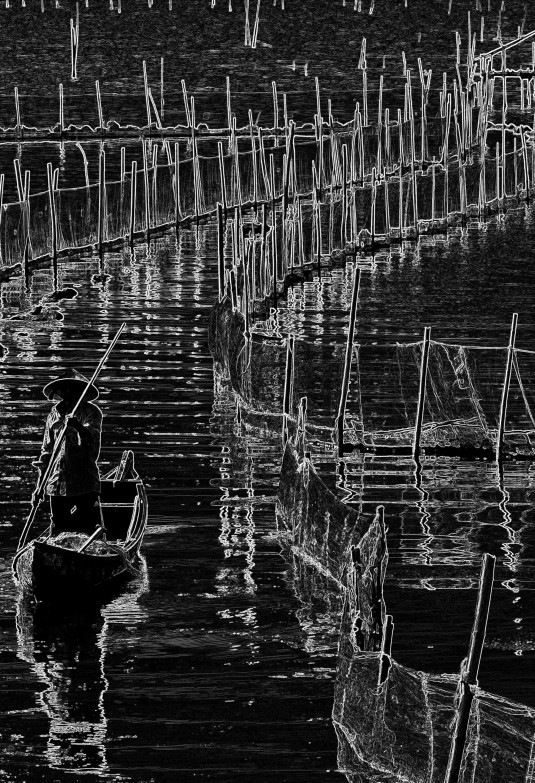 At Night in Vietnam
 The 3 photos are by Lan Nguyen Kim
19 Sep 2019 Leave a comment
in autumn in the grand tetons, Poetry Tags: a path of fire, autumn in the grand tetons, eye, inflames our nose, orange burns its trail, photo by Charles Schultz, soul
photo by Charles Schultz
orange burns its trail:
a path of fire
inflames our nose, eye…soul!
14 Sep 2019 Leave a comment
in Poetry, Religion...Science Tags: Ivan Pavlov, learned conditional reflexes, mundane to sacred, naturalist-physician, Religion...Science, scientists who are religious, study of Science, The Experimental Psychology and Psychopathology of Animals, theological seminary

from mundane to sacred
Today is the birthday of physiologist Ivan Pavlov, born in Ryazan, in central Russia (1849). His father was the village priest, and Pavlov was all set to follow in his footsteps — even enrolling in theological seminary — when he read Darwin’s work and became interested in the study of science. He left the seminary and began a course of study in physics, mathematics, and natural sciences at the University of St. Petersburg; later he received his medical degree at the Imperial Medical Academy. He left religion behind because he couldn’t reconcile his passion for scientific proof with a life of faith, and was surprised when he came across other scientists who were religious. One day, walking to his laboratory, he saw a medical student cross himself outside a church. “Think about it!” Pavlov told his colleagues. “A naturalist, a physician, but he prays like an old woman in an almshouse!”
In 1890, he was named head of the Physiology Department at the Institute for Experimental Medicine, and five years later he was named Chair of Physiology at the Imperial Medical Academy. It was during this time that he did his most groundbreaking work. In 1903, he published a paper called “The Experimental Psychology and Psychopathology of Animals.” In it, he explained his theory of conditional reflexes. Unlike innate reflexes, which are instinctual, conditional reflexes are learned. Pavlov came up with this theory in the course of studying the digestive systems of dogs. He noticed that the dogs would begin salivating when the lab assistant brought in their food; this was a natural reflex, and it didn’t surprise him. But then after a while, the dogs began drooling whenever the lab assistant entered the room, even if there was no food present. Pavlov speculated that the dogs’ behavior had changed because they had learned to associate the presence of the lab assistant with the presentation of food. He turned on a metronome at the same time that the dogs were fed. Eventually, the dogs would salivate whenever they heard the metronome — even without food — which meant that Pavlov had created a new, learned reflex in his subjects. He was even able to fine-tune the response so that it only happened when the metronome was set at a particular speed. He also learned that the reflex could be unlearned: if he used the metronome too many times without later providing food, the dogs stopped associating the sound with a meal, and they stopped salivating.
from the Poetry Almanac 9/14/19
13 Sep 2019 Leave a comment
in Poetry, the sacred flag Tags: 42'x30, a sacred object, Fort Mc Henry, Francis Scott key, largest flag in existence, Major Armistead, the sacred flag, The Star Spangled Banner

It was on this day in 1814 that Francis Scott Key was inspired to write the words to “The Star-Spangled Banner,
by witnessing the British attack on Fort McHenry in Baltimore Harbor…
…just after sunrise on September 14th, he saw the American flag still flying over the fort. In fact, Francis Scott Key might never have even seen the flag if the fort commander, Major Armistead, hadn’t insisted on flying one of the largest flags then in existence. The flag flying that day was 42 feet long and 30 feet high.
Francis Scott Key began writing a poem about the experience that very morning. It turned out that the battle at Baltimore was the turning point of the war. Before the war, the American flag had little sentimental significance for most Americans. It was used mainly as a way to designate military garrisons or forts. But after the publication of “The Star-Spangled Banner,” even non-military people began to treat the flag as a sacred object.


 The Vibrant Channeled Creator