free at last

69280870_10158751871184418_7353917414519603200_n


the Reverend Martin Luther King Jr.,

began what would become one of the greatest speeches in history with,

“I am happy to join with you today in what will go down in history as the greatest demonstration for freedom in the history of our nation.”

He ended with, “When we allow freedom to ring, when we let it ring from every village and every hamlet, from every state and every city, we will be able to speed up that day when all of God’s children, black men and white men, Jews and Gentiles, Protestants and Catholics, will be able to join hands and sing in the words of the old Negro spiritual: Free at last! Free at last! Thank God Almighty, we are free at last!”

Goethe wrote,

“A man can stand anything except a succession of ordinary days.”

And, “Divide and rule, a sound motto. Unite and lead, a better one.”

And,

“That is the true season of love, when we believe that we alone can love, that no one could ever have loved so before us,

and that no one will love in the same way after us.”

silk petals

JByronSchachnervelvet and silk

photo by J Byron Schachner


A World of Want
by Tina Schuman
You think your life will go on
like this forever—weekly trips
to the garbage bin, untangling
the green snake of hose between the ferns
and the delphiniums, the coral bells
leaning their long necks
against the back fence.
Today, as I watched the carousel
of cars turn one by one through
the intersection and onto the freeway
I tried to imagine each life.
Not so much where they were
going, but what they were made of:
wounds, illusions, desires, deceits…
Through all of this a preoccupation
with the next perceived need floats-up
like thought bubbles inside my head:
Coffee, Cheetos, sex, a new blouse, a larger house,
a desk fan, appreciation from that one specific person,
the phones chirp, the trip to France.
If I could quiet this conga-line of cravings
what lingering longings would I lament?
What radiant unattached insights
would I muster? Who would I be
without my constant yearnings?
It’s a world of want. You get the idea.
 
“A World of Want” by Tina Schuman from Praising the Paradox.

Amazon is my friend

I miss my friend, Katarina Babanovsky

jeannepoland's avatarThe Vibrant Channeled Creator

Amazing Amazon by Katerina Babanovsky Amazing Amazon by Katerina Babanovsky

Want to read my reviews of these treasured books I’ve purchased from Amazon?

http://www.amazon.com/gp/cdp/member-reviews/A32OU8CPECZA49

View original post

reflections

67960007_432191950716260_6737042737947738112_n

wild calm

Deadline


Before the deadline:
Pinch the possibilities!
Squeeze the seconds!
Fashion flickers!

After the deadline:

Exhale elan!

Fancy Freshness!

Somersault

Moments all.
None split asunder:
Undercurrents grow
To undercurrents.

A line is dead
But life-alive.
And here we are
Between.


By Jeanne Poland
11/10/11
All rights reserved.


Hermit Poet

arthurs-cave-miller-kendrick-architects_dezeen_sq-1704x1704

expanding cabin in Wales


It’s the birthday of humorist Will Cuppy (books by this author), born in Auburn, Indiana (1884). He spent seven years as a graduate student at the University of Chicago, before he finally dropped out and moved to New York City. He wrote advertising copy and tried to write a play, but it didn’t work out. He decided that the big city was too distracting for him, so he moved to Jones Beach Island, off the south shore of Long Island.

For eight years, he lived in a shack made of tarpaper, clapboard, and tin, which he called “Tottering-on-the-Brink.”

The only other people living on the island were members of the Coast Guard, who invited him to dinner, patched his roof, and rowed him to the mainland on the rare occasions when he had to go into the city. The Jones Beach State Park expanded and forced Cuppy out of his shack, so he moved back to Manhattan and published 

How to be a Hermit (1929), which was a best-seller — it went through six printings in four months. In it, he wrote:

“‘A hermit is simply a person to whom civilization has failed to adjust itself.”

Newfound fame and a life in Greenwich Village didn’t change Cuppy’s hermitic habits. He researched and wrote at night and slept during the day, he ordered food delivered to him, and he talked only occasionally to other people, mostly via letters. He was a prolific writer — he wrote essays for The New Yorker, and reviewed mysteries and crime fiction in his column “Mystery and Adventure” for the New York Herald Tribune — he read and reviewed more than 4,000 novels throughout his career. His essays were published in books like How to Tell Your Friends from the Apes (1931) and How to Attract the Wombat (1949).

As Cuppy got older, he became more and more isolated, and depressed. His health deteriorated, he felt like he was being replaced by younger journalists, and he became estranged from one of his oldest friends. In 1949, he received notice that he would be evicted from the apartment where he had lived ever since he left Jones Beach Island. He committed suicide before he could be evicted. The following year, his book The Decline and Fall of Practically Everybody (1950) was published posthumously, and it spent more than four months on the New York Times best-seller list.

Cuppy said: “Intelligence is the capacity to know what we are doing and instinct is just instinct. The results are about the same.”


how we look

IMG_3370


IMG_3372


IMG_3373.jpg


youth

middle age

golden years

Annie Proulx-I love you

65961917_2071988932924194_1095747084646088704_o

illustrator: J Byron Schachner


It’s the birthday of novelist and short-story writer Annie Proulx, born Edna Ann Proulx in Norwich, Connecticut (1935).

She said, “Spend some time living before you start writing.”
Proulx was in her 50s when she started writing fiction; her first book was a collection of short stories, Heart Songs (1988).

When her editor drew up the contract, he asked if he could put in a clause that she might someday write a novel. She said: “I just laughed madly, had not a clue about writing a novel, or even the faintest desire. I thought of myself as a short-story writer. Period, period, period.” Five years later, her second novel, The Shipping News (1993), won the Pulitzer Prize and the National Book Award.
Her books include Accordion Crimes (1996), Close Range: Wyoming Stories (1999), Bird Cloud: A Memoir (2011), and Barkskins (2016).
She said: “What I find to be very bad advice is the snappy little sentence,

‘Write what you know.’

It is the most tiresome and stupid advice that could possibly be given. If we write simply about what we know we never grow.”


When I read my Proulx books, my whole life slows down.

The depth of the writing and the feel of the images are soul touching.

Orator tames the savage beast

JByronSchachner copy

illustrator: J Byron Schachner


The Story
By Fred Chappell
Once upon a time the farmer’s wife
told it to her children while she scrubbed potatoes.
There were wise ravens in it, and a witch
who flew into such a rage she turned to brass.
The story wandered about the countryside until
adopted by the palace waiting maids
who endowed it with three magic golden rings
and a handsome prince named Felix.
Now it had both strength and style and visited
the household of the jolly merchant
where it was seated by the fire and given
a fat gray goose and a comic chambermaid.
One day alas the story got drunk and fell
in with a crowd of dissolute poets.
They drenched it with moonlight and fever and fed it
words from which it never quite recovered.
Then it was old and haggard and disreputable,
carousing late at night with defrocked scholars
and the swaggering sailors in Rattlebone Alley.
That’s where the novelists found it.
 
“The Story” by Fred Chappell from The Yellow Shoe Poets: Selected Poems 1964-1999. © Louisiana State University Press, 1999


It was on this day in 1940 that Winston Churchill delivered a speech to the House of Commons with the famous line: “Never in the field of human conflict was so much owed by so many to so few.” The Battle of Britain was raging, and he was referring to the small group of the Royal Air Force who had successfully held off the much larger Luftwaffe, the German air force.
Churchill wrote all of his own speeches, and he was a gifted orator, but people thought that his vocabulary and style of speaking were old-fashioned. But after the beginning of World War II, Churchill’s dramatic rhetoric fit the mood of the country.
His father, Lord Randolph Churchill, served in the Parliament and was a talented debater, famous for making spontaneous speeches. Winston, on the other hand, labored over every speech. He brainstormed, researched, planned out the speech in his head, then dictated it aloud to his secretary. From there, he revised it several times and typed it up in what he called “psalm form.” His speeches looked like blank verse poetry on the page, so that the rhythm and pauses were laid out just how he wanted them. Before Churchill delivered a speech, he would practice over and over, sometimes in the bathtub.

betwisk

NATALISTowl

Natalist Owl


moby-dick-word-posterABlankness FullofMeaning

A Blankness Full of Meaning (Moby Dick)


synonyms for “betwisk:

bent

curling

buckle

warp

distort

ringlet

wring

intertwine

twiddle

swivel

spin

spiral

corkscrew

contort


acting: what you do when someone else is ready

maxresdefault-1

Real joy is in constructing a sentence!


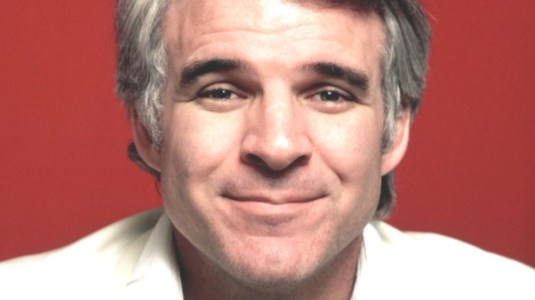
It’s the birthday of humorist Steve Martin,

born in Waco, Texas (1945).

He’s known as a comedian and actor,

but he has also written several plays and novels, including WASP (1995), Shopgirl (2000), and An Object of Beauty (2010).

He said: “The real joy is in constructing a sentence.

But I see myself as an actor first because writing is what you do when you are ready

and acting is what you do when someone else is ready.”

Previous Older Entries Next Newer Entries