Where do nuns come from?

pope-francis-meets-a-group-of-franciscan-nuns-during-his-weekly-in-picture-id956384244

Pope Francis with Franciscan nuns


Today is the birthday of St. Clare of Assisi, born 1194. As the eldest daughter of a wealthy family, she was expected by her parents to marry well, and they began trying to fix her up with eligible bachelors when she was only 12. She managed to convince them to wait until she was 18, but by that time she preferred to go and listen to the young and radical Francis of Assisi preaching the gospel. One Palm Sunday, she ran away in the middle of the night to give her vows to Francis. He cut her hair, dressed her in black, and brought her to a group of Benedictine nuns. Later, he moved her to the Church of San Damiano, where she embraced a life of extreme poverty, after the example set by Jesus. Claire’s sister Agnes eventually ran away to join her, and so did other women, and the order became known as the “Poor Ladies.” They spent their time in prayer and manual labor, and refused to own any property.
Throughout her tenure as abbess, Clare fought for the right to adopt her Rule of Life as the official governing policy of the Poor Ladies, rather than the Rule of St. Benedict, which was more lax. She was the first woman to write the rule for a religious order, and Pope Innocent IV finally granted her request just two days before she died at the age of 59. She was canonized two years after her death, and eventually the Poor Ladies became known as the Order of St. Clare, or the “Poor Clares.”

utilikilts

banner-34

https://www.utilikilts.com/

strut your macho loins

be cool

Discover the gold standard of luxury and function with the Survival Utilikilt! A favorite among the hiking crowd, the Survival has more storage space than a ’57 Buick.


Desk jockeys need not apply. The Workman’s is the ultimate utility kilt – our flagship model built for staying ventilated during those long, hot days on the worksite.

the-workman.jpg


In the shop, we call it “The Office Kilt”. The Mocker is our answer to ubiquitous (and, should we add: tight, uncomfortable, wimpy and tremendously lame) Dockers®.

the-spartan.jpg

self serving

LadyLibertyandJuly4th

Lady Liberty exists for all…or some?


It was on this day in 1863 that the New York City Draft Riots began, the bloodiest riot in American history. The rioters were working-class white men, mostly Irish-Americans. They were rioting against a new draft law put into place by President Lincoln, but they were angry about much more than that, and the draft law was just the final straw.

It was a terrible summer, hot and muggy, during the height of the Civil War. Rich New Yorkers were making money off the war, but poor people were even poorer than usual. There was huge inflation, and when people did manage to afford staple goods, they were often contaminated — sand mixed into sugar, or sawdust into coffee. Working-class immigrant New Yorkers had signed up in high numbers to serve in the Union Army, and many had died; those who did make it back alive were often wounded and could no longer provide for their families. Unemployment was high. Workers kept going on strike, but the strikes were broken. The sensational newspapers of the day published stories blaming all this misery on Lincoln, black people, and the recently issued Emancipation Proclamation. The newspapers warned working-class white people that black people would be moving up from the South in huge numbers and stealing their jobs. They published hateful pieces claiming that black men were breaking the strikes, and that they were staying home and seducing white women while white men fought.

Lincoln was desperate for more soldiers — men were dying at a faster rate than volunteers were enlisting. So he and Congress authorized the nation’s first draft law, and on Saturday, July 11th, the lottery began, with a blindfolded clerk pulling names out of a hat. Unfortunately there was a major exception to this fair process: for $300 you could buy your way out of the draft. It was a fee only the rich could afford — the average New York City worker earned 85 cents per day. On Saturday, a number of firemen from the Black Joke fire company were chosen in the lottery. The next day, the firemen sat around in a tavern talking angrily about the draft, and they decided to protest. On Monday morning, they showed up at the draft office with their fire truck full of rocks they had collected from construction sites. They threw the rocks through the office windows, burned the draft records, and attacked the officers who were administering it.

By the time they were finished, thousands had gathered around them. The original motives of the anti-draft protesters were quickly eclipsed by the angry mob. The mob fashioned makeshift weapons and went on a destructive rampage through the city. They pulled up railroad and streetcar tracks, knocked down telephone poles, cut telegraph lines, lit buildings on fire, and attacked people. They targeted Lincoln supporters, abolitionists, and policemen. They destroyed Protestant churches and charities, and they attacked the newspaper offices of The New York Times and The New York Tribune — the Times’ editor and owner Henry Raymond actually defended himself against the rioters with a Gatling gun. Most of all, the mob targeted African-Americans. They destroyed businesses and community spots that were owned by blacks or catered to them, and set fire to the Colored Orphan Asylum. The mob attacked countless black people, set their homes on fire, and brutally murdered at least 11 black men. The violence continued to escalate, and there were not enough federal troops in the city to do much about it, since they were all off fighting in Pennsylvania — the Battle of Gettysburg had ended just 10 days before the riots began. On Wednesday, July 15th, troops were hurried from Gettysburg to New York City to fight. By Friday, there were about 6,000 federal troops, and the riot finally died down. The official death toll was listed as 119, but was probably higher. Many African-Americans left New York City because of the riots, leading to a 20 percent decrease in the African-American population in New York City during the Civil War.

Imps

urchins, monsters, devils, sprites…

jeannepoland's avatarThe Vibrant Channeled Creator

imp imp

The rascal met the urchin
the devil and the sprite;

they frolicked in the forest
scampered, snapped to fright;

then terrorized the monkeys,
monsters, goblins, night!

thank you, Joy Acey for the prompt!

View original post

how we ended up together

IMG_2954

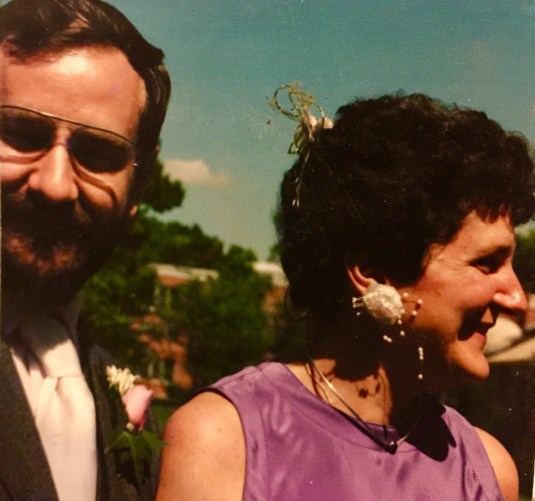
the summer of 1988: Jeanne and Don


How We Ended Up Together
by Joyce Sutphen
He was good in an emergency, calm
in the middle of a storm. Accidents
didn’t surprise him; he was always
ready for whatever came along. You
could count on him; you could make
a deal and he would keep it, even if you
couldn’t. His deals were impossible;
his deals were meant to make you fail,
and failing you found yourself in some
sort of emergency, someplace you didn’t
want to be, and he was good at getting
you back to the ground, back to your feet.
I chose him for what he could not give me,
and he chose me because I would not ask
until I was desperate and only he could help.
 
Joyce Sutphen, “How We Ended Up Together” from Naming the Stars. Copyright © 2004 by Joyce Sutphen

animals gathering

JRZNewProfile

illustrator: JRZ


The Owl and the Pussycat
by Edward Lear
I
The Owl and the Pussy-cat went to sea
   In a beautiful pea-green boat,
They took some honey, and plenty of money,
   Wrapped up in a five-pound note.
The Owl looked up to the stars above,
   And sang to a small guitar,
“O lovely Pussy! O Pussy, my love,
   What a beautiful Pussy you are,
      You are,
      You are!
What a beautiful Pussy you are!”
II
Pussy said to the Owl, “You elegant fowl!
   How charmingly sweet you sing!
O let us be married! too long we have tarried:
   But what shall we do for a ring?”
They sailed away, for a year and a day,
   To the land where the Bong-Tree grows
And there in a wood a Piggy-wig stood
   With a ring at the end of his nose,
      His nose,
      His nose,
With a ring at the end of his nose.
III
“Dear Pig, are you willing to sell for one shilling
   Your ring?” Said the Piggy, “I will.”
So they took it away, and were married next day
   By the Turkey who lives on the hill.
They dined on mince, and slices of quince,
   Which they ate with a runcible spoon;
And hand in hand, on the edge of the sand,
   They danced by the light of the moon,
      The moon,
      The moon,
They danced by the light of the moon.
 
“The Owl and the Pussycat” by Edward Lear. Public domain.

threads

byJByronSchachner

illustrator: J Byron Schachner


one claw

one peek

one frown

one tail

one twist of yarn

an’ stuffing    f  l   i    e     s      !

frog is back

JRZ4

JRZ #4 frog


colonial well dressed frog

enjoying pizza

up to his elbows in pizza

daintily sipping tea

at the tea party in Boston

when stumps held table-tops

and tops held pizza

to die for…

beside independence!

women who make distinctive moves

HudsonSeniorCenter

Hudson Senior Center


Elizabeth Kubler Ross

Many people in the medical profession disapproved of her work — they thought it was indecent — but most patients were eager to talk. She used these conversations to write On Death and Dying (1969), which became a huge best-seller. In it, she outlined the five stages of grief, specifically when someone is diagnosed with a terminal illness: denial, anger, bargaining, depression, and acceptance. Her work also paved the way for hospice care.


writingIsSwimmingUnderwaterHolding breath

“writing is as difficult as staying underwater and breathing while you write!”

It’s the birthday of writer Shirley Ann Grau, whose novels and short stories, set in the Deep South, explore the intricacies of race and gender. Grau was born in New Orleans (1929), spent her childhood in Montgomery and Selma, Alabama, and was educated at finishing schools. She says, “I was probably the only 17-year-old who knew precisely how to set a table if I happened to be giving a dinner for the pope.” The head of the English department at Tulane University turned down her request for a teaching position, telling her, “There will be no females in the English Department.” She married a philosophy teacher, began having children, and kept writing, making notes on scraps of paper and holding “noisy conversations” with her characters. Grau corrected the galleys for her first book, The Black Prince, in her pediatrician’s office, as her son was being treated for measles, spreading the papers on the long examination table.
Though considered one of the finest portrayers of relationships between blacks and whites in American literature, Grau says, “I’m interested in people, but not as representative of race. I see people first. I do stories first.” She was just 35 when she won the Pulitzer Prize for fiction in 1965 for The Keepers of the House, about a wealthy white man who marries his black housekeeper.

art challenger

the art challenger

runs against the wind

invents style every day

seeks challenge

conquers it!

flies her banner!

Previous Older Entries Next Newer Entries