Ants make great subjects for my first graphic novel

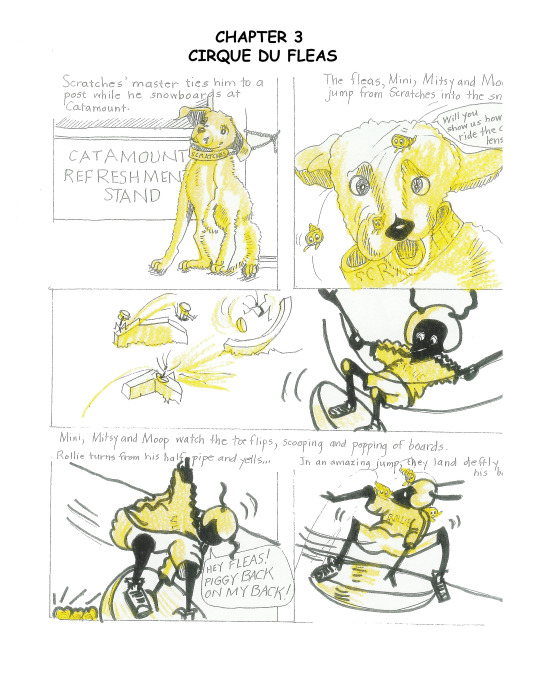
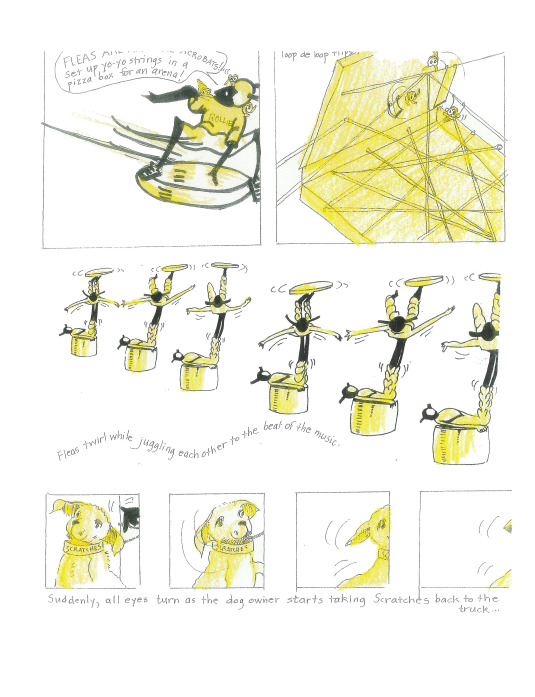

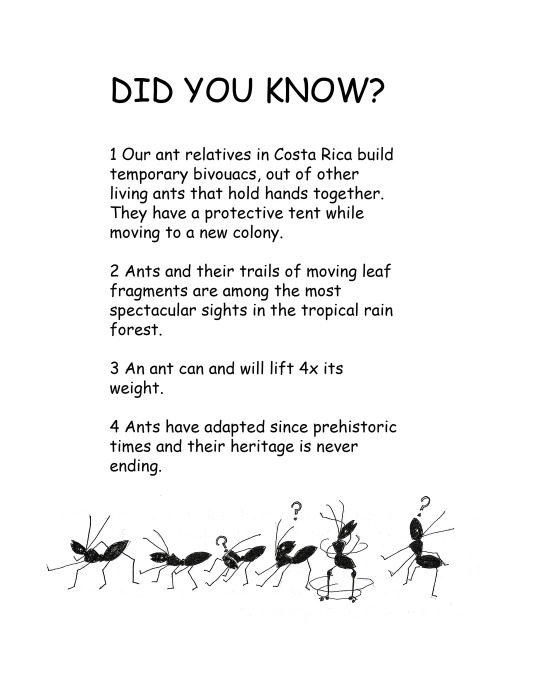
The four pages above are from Jeanne’s graphic novel: “The Roller Skating Ant”: Chapter 3.
I posted it to go with Catherine Johnson’s poem:
http://wp.me/sHil1-scritch
Jeanne Poland's Poetry Blog
11 Jun 2019 Leave a comment
in Poetry
Ants make great subjects for my first graphic novel
The four pages above are from Jeanne’s graphic novel: “The Roller Skating Ant”: Chapter 3.
I posted it to go with Catherine Johnson’s poem:
http://wp.me/sHil1-scritch
11 Jun 2019 Leave a comment
in Poetry Tags: Feelings, I trust you, speak to me
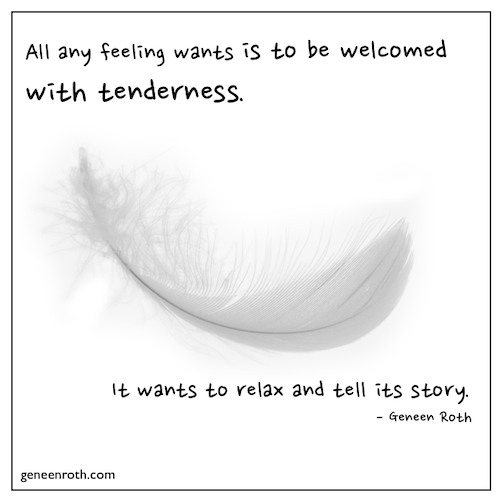
I trust you, feeling.
S P E A K to me.
09 Jun 2019 Leave a comment
in dime novels, Poetry Tags: 1860, AMBarnard, better paid than elaborate works, dime novels, Louisa May Alcott, Maleska, melodramatic pulp fiction, paperbacks, The Maniac Bride, Theodore Dreiser, Upton Sinclair

posted by Char Jones
It was on this day in 1860 that the first dime novel was published. It was called Malaeska, the Indian Wife of the White Hunter, by Ann S. Stephens, and it was the first of 321 novels published by Beadle & Adams in their series Beadle’s Dime Novels.
The early dime novels were wrapped in a salmon-colored cover, and they actually cost 10 cents. Before long, the phrase “dime novel” was used to mean any cheap, melodramatic pulp fiction, some of which actually cost 15 cents.
Many authors of dime novels wrote nothing else, but there were some established writers who tried their hands at writing pulp fiction.
Theodore Dreiser may have helped write the Diamond Dick dime novels. Louisa May Alcott published more than 30 dime novels under the pseudonym A.M. Barnard.
She wrote to her friend Alfred Whitman: “I intend to illuminate the Ledger with a blood and thunder tale as they are easy to ‘compoze’ and are better paid than moral and elaborate works of Shakespeare, so don’t be shocked if I send you a paper containing a picture of Indians, pirates, wolves, bears and distressed damsels in a grand tableau over a title like this: ‘The Maniac Bride’ or ‘The Bath of blood, A Thrilling Tale of Passion.'”
Upton Sinclair wrote boys’ adventure novels; he would dictate about 6,000-8,000 words a day to a stenographer.
And thus, the paperback was born, outside the towers of the publishing monoliths.
08 Jun 2019 Leave a comment
in a window is a wall,, Poetry Tags: a window is a wall,, bring outdoors in, form and function should be one, Frank Lloyd Wright, Guggenheim museum, stayclose to nature, walls made of windows

East Coast Frank Lloyd Wright
Today is the birthday of architect Frank Lloyd Wright, born in Richland Center, Wisconsin (1867). His life spanned an era full of dramatic changes: he was born two years after the Civil War ended, and died in 1959, a year and a half after the first Sputnik launch.
His first professional mentor was architect Louis Sullivan. Sullivan coined the saying “form follows function,” and he believed that American architecture should have its own unique qualities and not simply try to replicate old European standards. Sullivan’s philosophy greatly influenced Wright, who took it one step further with his own theory that form and function should be one. His simple, clean designs inspired the Prairie School architects, and “Taliesin,” his Wisconsin home, was the perfect example of the Prairie Style. When it came to designing homes on commission, he always claimed that the clients’ wishes came first — but was plainly of the opinion that his clients didn’t really know what they wanted. “It’s their duty to understand, to appreciate, and conform insofar as possible to the idea of the house,” he once said.
Wright would often tell his students: “Study nature, love nature, stay close to nature. It will never fail you.” His aim was to design buildings that complemented — even seemed part of — nature. He used building materials like wood and stone, and never painted them. His designs were horizontal, with low rooflines, so that the buildings blended in with the landscape as much as possible. He incorporated walls made almost entirely of windows, to blur the line between the outdoors and the indoors. The glass walls were also functional, using winter sunlight to help heat the house. “No house should ever be on a hill or on anything,” he said. “It should be of the hill. Belonging to it. Hill and house should live together each the happier for the other.” Even when he designed skyscrapers and other urban buildings, he always tried to incorporate elements inspired by natural structures. One of the most famous of these is New York’s Solomon R. Guggenheim Museum, which resembles a giant white snail shell.
07 Jun 2019 Leave a comment
in bad hair day, Poetry Tags: bad hair day, but their roots seldom show, Laur Ellen Anderson, pull, redheads are known to be wild, Stretch, surrender, tease, when you ride the twists
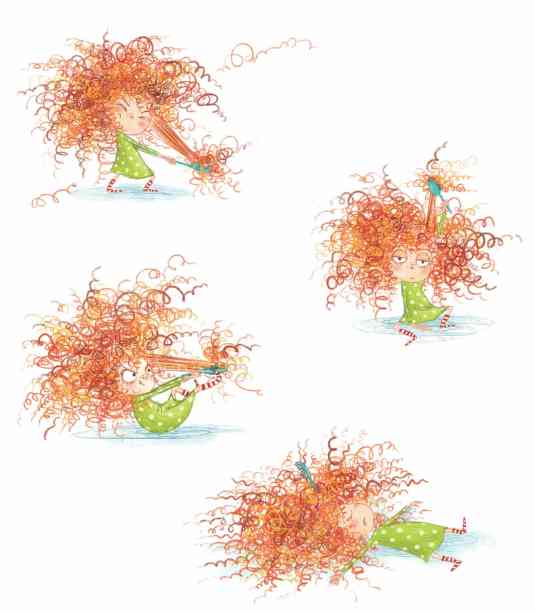
illustrator: Laura Ellen Anderson
pull
tease
stretch
surrender
(redheads are known to be wild, but red curly hair seldom shows its roots when you ride the twists)
06 Jun 2019 Leave a comment
in Poetry
One of my pdf books about a beloved Camden.

This is a PDF about a thunderstorm
2 children who try to help a frightened dog
and their Nana and Don.
06 Jun 2019 Leave a comment
in from inferior to poet, Poetry Tags: an internal library, believe fervently, child regrets wishing her toys to life, from inferieor to poet, Maxine Kumin, Radcliffe, Tufts, wonen thought inferior
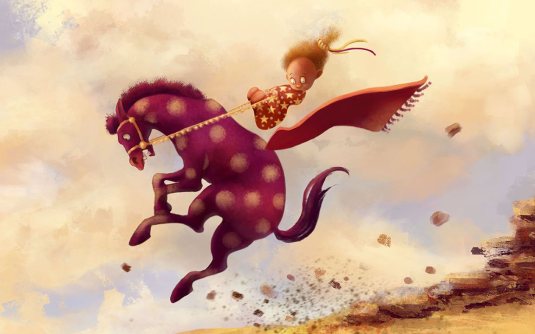
A Child Regrets Wishing Her Toys to Life
It’s the birthday of poet Maxine Kumin (books by this author), born in Philadelphia (1925). She was a good student and wrote poetry from the time she was a young girl, but she was equally interested in swimming, and even trained to become an Olympic swimmer as a teenager. When she was 18, Kumin was offered a job with Billy Rose’s Aquacade, a famous traveling dance-and-swimming show; but her father considered the spectacle too risqué and refused to give his permission. He did approve of her academic talents, so she went to Radcliffe and studied literature and history. She had continued to write poetry, and she showed her poems to one of her young professors, Wallace Stegner, who at the time was still an unknown novelist. Stegner handed them back with a note in red pencil: “Say it with flowers, but, for God’s sake, don’t try to write poems.” She was so hurt that she didn’t even try to write another poem for many years.
In the meantime, she got a master’s degree in comparative literature, met and married an Army engineer, and moved to the suburbs, where she concentrated on raising her children. During her third pregnancy, she was feeling restless, and she happened upon a book called Writing Light Verse, which cost $3.95. She decided that if she hadn’t published anything by the time her child was born she would give up forever. She was six months pregnant when The Christian Science Monitor accepted one of her poems and paid her $5 for it. It was just four lines long; it read: “There never blows so red the rose / so sound the round tomato, / as March’s catalogues disclose / and yearly I fall prey to.” She began publishing light verse in magazines like Ladies’ Home Journal and The Saturday Evening Post. The Post required Kumin’s husband to send a letter from his employer certifying that her poem was original, since, she later said, “Women, along with people of color, were still thought to be intellectually inferior, mere appendages in the world of belles lettres.”
She was happy enough writing light verse, although she wished she knew some other poets. In 1957, she enrolled in a local poetry-writing workshop. One of her classmates was the poet Anne Sexton, and the two women became close friends and writing peers — they eventually installed separate phone lines in each of their homes so that they could be in constant communication. Very slowly Kumin began to have poems accepted that were not just light verse. She said, “Until the Women’s Movement, it was commonplace to be told by an editor that he’d like to publish more of my poems, but he’d already published one by a woman that month.”
Her professor at the poetry workshop recommended her for a position at Tufts, where he taught, and so she began a long career as a teacher and mentor. As a teacher, she often asked her students to memorize 30 to 40 lines of poetry a week so that they grew familiar with the sound of poetry. She said: “The other reason, as I tell their often stunned faces, is to give them an internal library to draw on when they are taken political prisoner. For many, this is an unthinkable concept; they simply do not believe in anything fervently enough to go to jail for it.”
Her books include Up Country (1972), The Long Approach (1985), Where I Live (2010), and And Short the Season (2014).
Kumin died in 2014 at her home in Warner, New Hampshire. She was 88.
Notice how talented Maxine Kumin was at choosing the men in her life!
05 Jun 2019 Leave a comment
in Poetry, tea for two Tags: how better could it be?, I'm for you, MagPark, tea for two, you're for me

illustrated by Mag Park
teafortwoandI’mforyouandyou’reformehowbettercoulditbe?
poem by Jeanne (5/5/19)
03 Jun 2019 Leave a comment
in Poetry, wearing the calligraphy tuxedo Tags: Bookhand miniscules, classic, in formal attire, John Stevens Calligraphy, linear perfection, precise, Roman majuscules, scrolls to adore, the bell of the balls letters, thick and thin contrast, wearing the calligraphy tuxedo
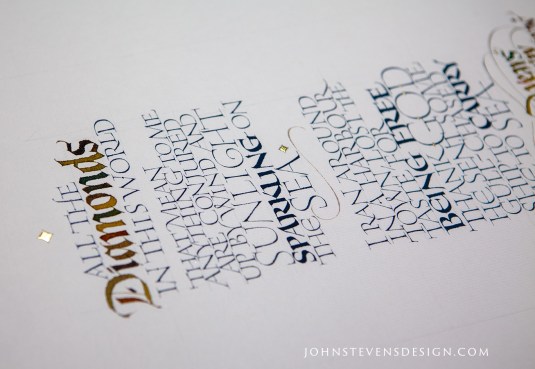
John Stevens Calligraphy in formal attire
classic
precise
linear perfection
thick and thin contrast
Roman majuscules
Bookhand miniscules
scrolls to adore
the bell of the balls letters
02 Jun 2019 Leave a comment
in amazing cat photography, Poetry Tags: amazing cat photography, Bohemian Rhapsody, cat photography, creative work, Elizabeth Rose Stanton, four artists, Hall of Fame, hear it and know, religions of the soul, the best rock band ever: Queen, the best rock music ever, the operatic theme

the best rock band ever: Q U E E N
Last night we viewed and listened to the best rock music ever.
“Bohemian Rhapsody” (dvd from Netflix)
the cat photography boggled my mind.
the creative work of all four artists is unmatched.
and acknowledged by the Hall of Fame
and religions of the soul!
hear it and know…

photo by Elizabeth Rose Stanton
” We liked the operatic theme best!”


 The Vibrant Channeled Creator