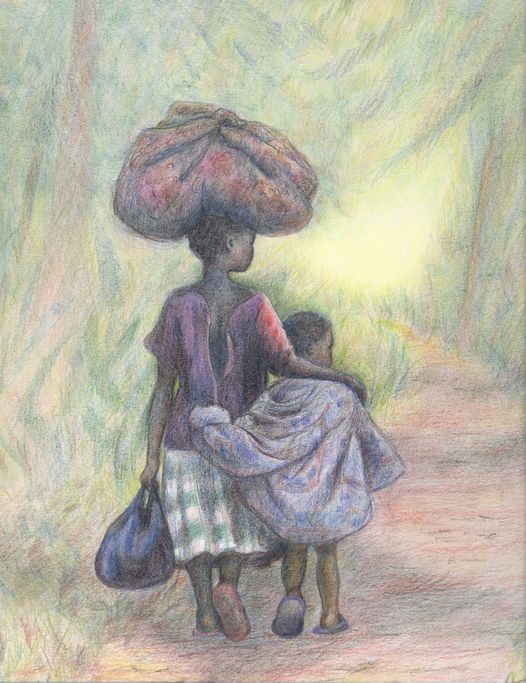
The world, and the elements, can symbolize completion and cycles. Sometimes you are back where you started from.

the-world

A woman dances inside an almond-shaped space surrounded by symbols of the four elements, all of which are visible to her. The World can signify completion and cycles. You feel like you have taken your last stride, only to realize that you are back where you started. But now, you have a better grasp of the situation. You have accomplished something recently, attained some level of completeness, pleasure, or satisfaction by working hard, or even just holding on. This could be related to your education, a relationship, lifelong goal, or meaningful journey. You think this part of your life has come to an end, yet you will continue to develop and be ready to go on a new adventure soon.
The World marks the end of one chapter and the beginning of a new one. Everything is coming into place for you, and everything will come to a good finish and a happy ending. You have the opportunity to achieve your heart’s dream.
The culmination of a massive and irreversible shift, of tectonic breadth, is indicated by the World. This shift symbolizes achievement and an opportunity for you to put an end to the Old and make a strong start to the New. It’s a sign of growing maturity, inner harmony, more knowledge, and satisfaction. It indicates that you’re getting closer to a more complete feeling of enlightenment, as well as the sense of self-assurance that comes with age. It also symbolizes the dissolving of borders, sometimes in a spiritual sense, but more often in a merely physical one, suggesting future trips or adventures.
What exactly is victory? How does it feel to have everything you require? To be at peace with yourself and with the world? We get glimpses of it now and again. A wonderful meal with friends and family. A big cup of tea, a nice blanket, and a lengthy conversation with someone you care about. When you arrive at your ultimate destination after a long and exhausting trip. The world seems as though it belongs to you when you are happy, healthy, and complete. The World card represents completeness – the sense you receive when a story comes to a satisfying conclusion. A sense of peace.
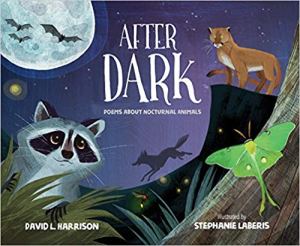
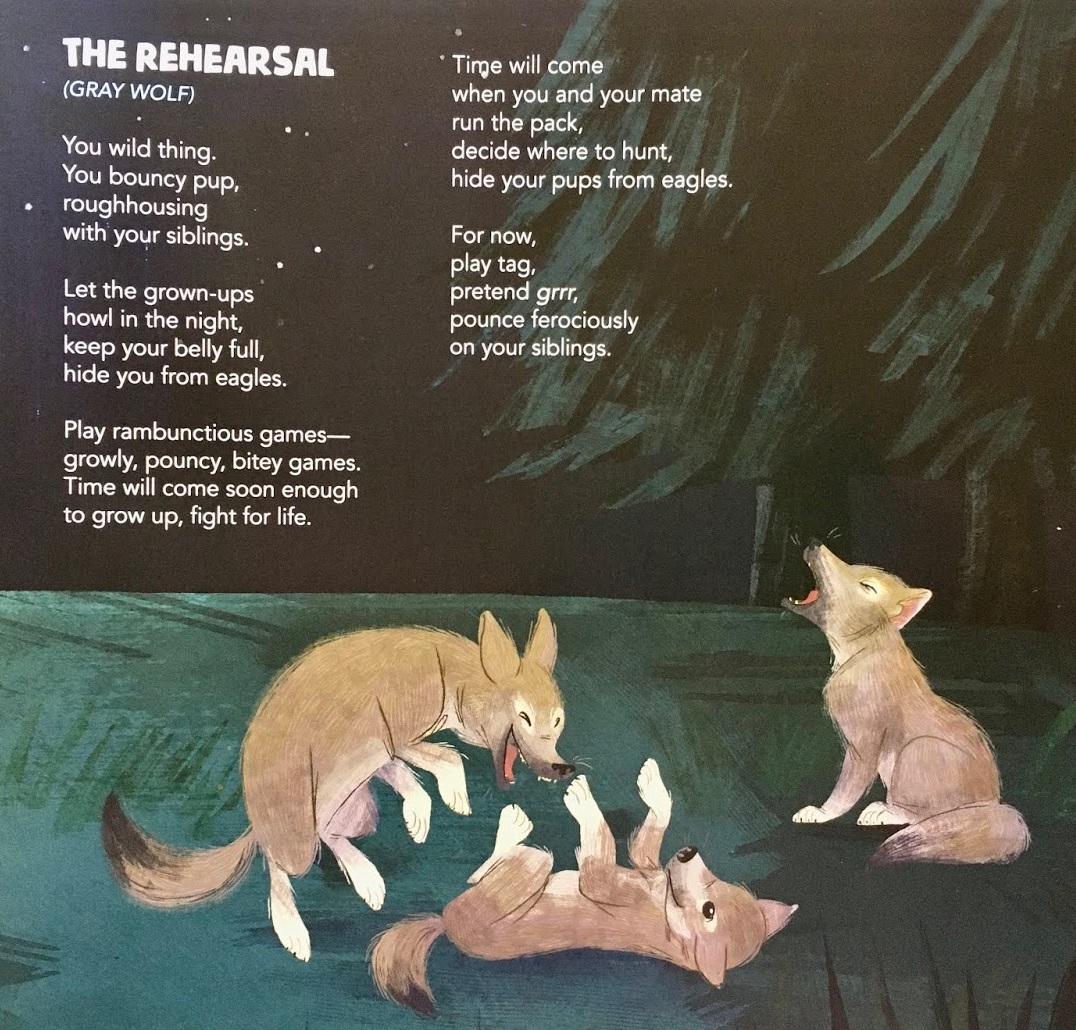
An interview between David Harrison and Matt Forest Esenwine about the “creative process” for David’s book: “After Dark”

after-dark-cover

An interview between David Harrison and Matt Forrest Esenwine about his creative process writing the book.
1 Where do your ideas come from?
2 Why did you feel this book needed to be written?
3 How did you begin the process?
4 What surprised you the most about the book, either through the research or the writing?
5 What do you know, not know and don’t know you don’t know? eg:Male porcupines scream before approaching the female during mating season.
6 What scene do you want to bring to life?

If you want to see the whole interview, go to the following link: 

Poetry Friday: Research, revision, and resilience: the “After Dark” blog tour arrives!

A story about being open and catching inspiration,,,

Epiphany

It was on this day in 1791 that the Bill of Rights was adopted by the United States, becoming the most sacred and debated laws in the history of our country. One of the people most responsible for the content of the Bill of Rights was a man named George Mason, who might not have even been a part of the process if he hadn’t been a lifelong friend of George Washington’s. He was a wealthy landowner in Virginia, and he liked to debate political ideas, but he wasn’t interested in politics because he shied away from public life.
Then, when the Revolutionary War broke out and George Washington was named Commander of the Continental Army, George Mason reluctantly took over his friend’s seat on the Virginia legislature. When the Virginia legislators held a convention to reorganize their state government, George Mason arrived late and found himself assigned to the committee to write the new state constitution.
So it was only by chance that Mason wound up writing Virginia’s “Declaration of Rights.” Mason had read the philosopher John Locke as a young man, and he shared Locke’s idea that all people are born with certain rights, and that government’s purpose should be to protect those rights. And George Mason believed that the best way to protect those rights would be to list them in the constitution itself. Virginia’s “Declaration of Rights,” was the first time in modern history that a government specified the absolute rights of individuals.
While George Mason was working on Virginia’s “Declaration of Rights,” he took under his wing a 25-year-old legislator named James Madison. Madison was deeply influenced by Mason’s ideas about freedom, and he passed them along to his friend Thomas Jefferson.
Mason mostly sat on the sidelines during the rest of the Revolutionary War, but after the war he was asked to participate in the Constitutional Convention. The trip from his home in Virginia to Philadelphia was the greatest distance he ever traveled, and it was a trip he quickly began to regret. He found that he disagreed with the other delegates on numerous issues, especially slavery, which he thought should be outlawed in the new constitution.
But more than anything, George Mason fought for the inclusion of a list of rights in the national constitution, just as he had written it into the Virginia Constitution. But when he brought his idea for a bill of rights to a vote, it failed by a wide margin. And so, when it came time to sign to new U.S. Constitution, George Mason was one of the only men there who refused. His decision created quite a stir, and it even ruined his lifelong friendship with George Washington. The two men never visited each other again.
But Mason hoped that his protest would encourage an eventual passage of a bill of rights, and it was ultimately his former protégé, James Madison, who made the Bill of Rights a reality. Madison introduced the Bill of Rights into the first session of Congress in 1789, and he used Virginia’s Declaration of Rights as the model. Madison originally supported the adoption of 17 amendments, which was eventually trimmed to 12, of which 10 were adopted, including the freedom of religion, freedom of speech, the right to bear arms, the right to privacy, and the right to a fair trial. George Mason died in 1792, a year after those freedoms and rights became law. (written by Garrison Keillor)

freedom of religion

freedom of speech

the right to bear arms

the right to privacy

the right to a fair trial

Today I am co-creating the miracle of order…

CalligPrahna.GoKo

Today I create a hot sunrise:

the order of light.

For breakfast,

the miracle of eggs.

The morning,

a blog of poem and graphic.

And last,

I cook whole foods to manifest my love.

Poem by Jeanne

All rights.

12/14/23

THURSDAY, DECEMBER 14, 2023″Let us consider the fact that in Baptism, the celebrant, touching the ears and the lips of the baptized, says: “May the Lord Jesus, who made the deaf hear and the mute speak, grant that you may soon receive his word and profess the faith”.”

The Smart Witch

I cannot tell you
how the light comes.
What I know
is that it is more ancient
than imagining.
That it travels
across an astounding expanse
to reach us.
That it loves
searching out
what is hidden
what is lost
what is forgotten
or in peril
or in pain.
That it has a fondness
for the body
for finding its way
toward flesh
for tracing the edges
of form
for shining forth
through the eye,
the hand,
the heart.
I cannot tell you
how the light comes,
but that it does.
That it will.
That it works its way
into the deepest dark
that enfolds you,
though it may seem
long ages in coming
or arrive in a shape
you did not foresee.
And so
may we this day
turn ourselves toward it.
May we lift our faces
to let it find us.
May we bend our bodies
to follow the arc it makes.
May we open
and open more
and open still
to the blessed light
that comes.

  • Jan Richardson

the energy of a 16th century explorer, Sir Francis Drake…


It was on this day in 1577 that Sir Francis Drake set out on a three-year-long journey around the world. At that time the Pacific was controlled by the Spanish and it was forbidden to all but Spanish ships. But Queen Elizabeth I commissioned Drake to undertake a top-secret mission to sail around the southern tip of South America and explore the Pacific Coast of the Americas. Drake left for the voyage on this day in 1577. He set sail from Plymouth, England, as captain of the Pelican, with four other ships and more than 150 men. Two of the ships were abandoned along the way, and the third returned to England after a storm in the Straits of Magellan. Drake was left with only one ship, which he renamed the Golden Hind.
Drake sailed all the way up the coasts of South and North America, surprising the Spanish along the way. They’d never seen a hostile ship in their waters before. He captured ports and ships, plundered gold and silver, Spanish coins, precious stones and pearls. He sailed as far north as Vancouver hoping to find the Northwest Passage, and then turned west and crossed the Pacific. He eventually returned to England in 1580 via the Cape of Good Hope, making him the first Englishman to sail around the world.
from the Writer’s Almanac by Garrison Keillor

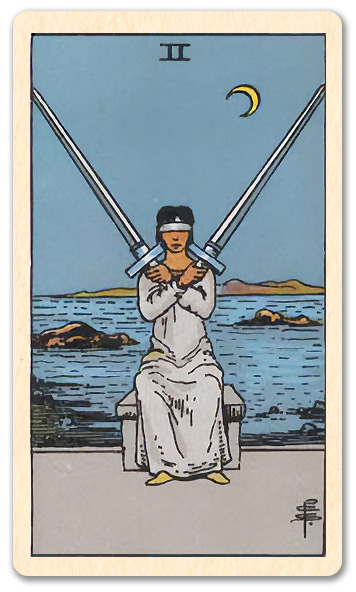
When the Lord comes, I will be awake, ready to host Him with charity,,,like a sentinel…

two-of-swords

“So, in a special way during these weeks, let us prepare the house of the heart with care, so that it is orderly and hospitable. In fact, keeping watch means keeping the heart ready.”

2008-wc-qma2008

the servant in the Bible is the “trusted person” of the master, a relationship of collaboration and affection.

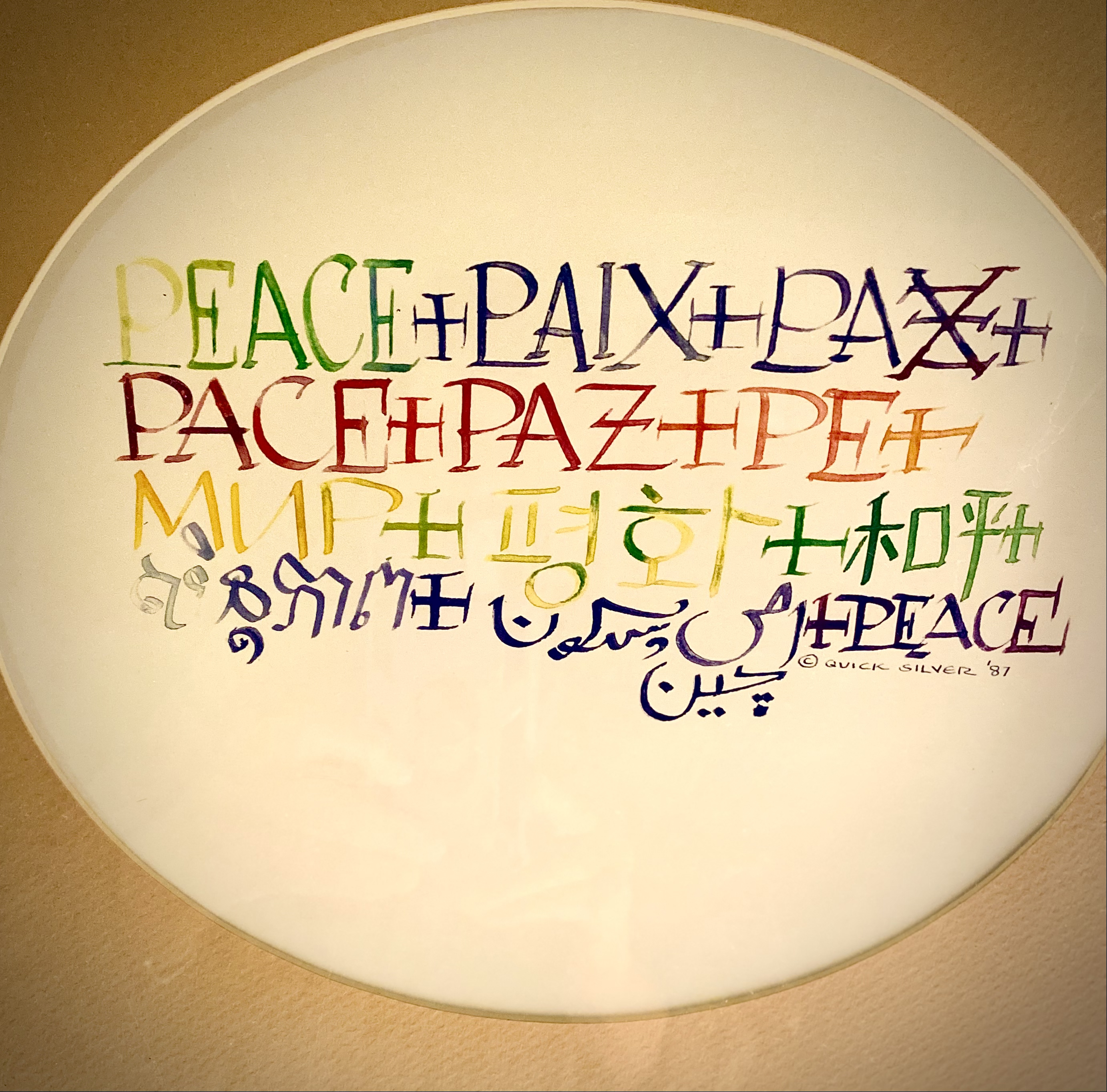
peace

Do you put the individual above all, and tech at the center of everything?

336887735_1175469369824303_8558584006798436527_n

Previous Older Entries Next Newer Entries