My True Destiny: a place at the table with God, in the world of God…

277173852_3180934958792729_5530474047782304355_n

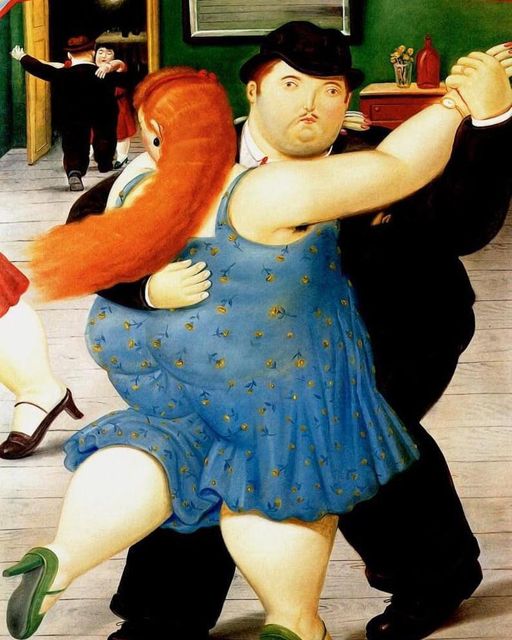
“Old age is the fitting time for the moving and joyful witness of expectation. The elderly man and woman are waiting, waiting for an encounter. In old age the works of faith, which bring us and others closer to the Kingdom of God, are by now beyond the power of the energy, words, and impulses of youth and maturity. But precisely in this way they make the promise of the true destination of life even more transparent. And what is the true destination of life? A place at the table with God, in the world of God.”
Pope Francis

THURSDAY, DECEMBER 22, 2022
 
“It is very beautiful to think of life with the Lord as a relationship of friendship that grows day by day. Have you thought about this? It is the way! We think of God loving us, wanting us to be friends!
 
Friendship with God has the ability to change the heart; it is one of the great gifts of the Holy Spirit, mercy, which enables us to recognize the fatherhood of God. We have a tender Father, a loving Father, a Father who loves us, who has always loved us: when one experiences this, the heart melts, and doubts, fears, feeling of unworthiness fall away.
 
Nothing can oppose this love of encountering the Lord.” 

Pope Francis
How to experience the exact meaning of Christmas…

article-0-0BF52554000005DC-623_308x185

from Geneen Roth 12/21/22
The first is that if you remember past holidays as perfect and glorious, most likely your brain has chosen to retain the Disney version of events rather than the truth of what really happened. Which is this: During the holidays, someone’s feelings always get hurt, someone ends up with a cheap necklace instead of a beautiful amethyst ring, someone walks out in a huff. There is no such thing as an all-good season. We’re imperfect beings and mistakes are made.
Don’t try for perfection. Do the best you can within your limits and let the rest take care of itself. Despite the voice that tells you otherwise, you are not in control of the immediate universe. And since you can’t achieve world domination, maybe you should try to control what you can control, which is how you react to your thoughts, especially, in this present context, your thoughts about what when and how much to eat.
My second thought is that you might ask yourself what you want now. If the answer is that you want long arms so that you can grab all the cookies or that you want to hide the plum pudding in your bedroom so you can eat it all before bed tonight, you know that the child in you is directing the show. That child is opening your mouth, putting the food in, grabbing for more. And you are letting her/him. You are reacting to your thoughts as if you ARE your thoughts. As if there is no adult present.
Take a moment, take 15 moments, and write down some notes about your ideal holiday. Mention people’s names and particular things you want to give (and what you’d like to receive). Name the foods you want to have. Now, read over your words and notice where you got those ideas. Are they the longings of a lonely child or of a satisfied adult? Do they resemble feelings you had the year your mother died or the year you got divorced or had your first child?
Notice if what you want now, from this holiday, has to do with this year, or does it relate to a holiday celebration that happened — or that you wish had happened — 20 years ago. Ask yourself if this vision is relevant to your life and desires now. Allow yourself to hear the child in your longing, if she is there. And if your longing is really a child’s longing, be tender with that child. But don’t confuse her with your adult self. If, for instance, you find yourself alone during this holiday, it doesn’t have to mean you are unlovable. A child might equate being alone with being lonely, but you don’t have to see it that way. You can be alone and still be aware of the love that is around and in you.
If you happen to be surrounded by people on the holiday, notice their faces, their laughter, their idiosyncrasies, but then also be conscious that you, the adult, may need to take care of yourself in ways that you normally don’t when guests are around. You might need to take a walk or a nap. Or push away the last piece of cake. Or not automatically give that last piece away if you really want it.
Holidays, especially now, can be illuminated, tender, horrible, painful, fragile, glorious times because they exaggerate our longings, our love, our generosity, and our selfishness — and they evoke dreamy dreams of angels and peace and miracles. But if we are aware that the holidays, like life, are often more messy than magical, and if we can combine our childlike longings with the tenderness and power of our adult selves, then we are more likely to ride through this season with a measure of grace in our lives and ease in our bodies.

WEDNESDAY, DECEMBER 21, 2022
 
“The highest dignity of the human being consists of bearing witness to the truth, following one’s own conscience at all costs, without duality and without compromise. This means being clear, transparent people, being sincere, communicating with others in an open, clear, respectful way. In this way one contributes to spreading light in the environments where one lives, making them more humane, more liveable.” 
 
Pope Francis
 

Marriage would be such a dull affair…Poets should never marry…

307880633_5462336570550275_3746917555156701873_n

Sometimes woman and man can both lead. And then the life pulses back and forth in flesh and bones and soul!

It’s the birthday of the Irish revolutionary Maud Gonne, the lifelong muse of poet W.B. Yeats, born in Aldershot, England, in 1865. She and Yeats were the same age, born only a few months apart, and they first met when they were 25 years old. He was introduced to her by a friend, the Irish nationalist John O’Leary, and later referred to the day when he met her as “when the troubling of my life began.”
She was tall and exquisitely beautiful. In his Memoirs, Yeats wrote: “I had never thought to see in a living woman so great beauty. It belonged to famous pictures, to poetry, to some legendary past. A complexion like the blossom of apples, and yet face and body had the beauty of lineaments which Blake calls the highest beauty because it changes least from youth to age, and a stature so great that she seemed of a divine race.”
Yeats immediately fell in love with Maud Gonne, and he asked her to marry him in 1891, but she refused. It was the first of many proposals of marriage that he made and that she rejected. They remained close to each other throughout their lives, though, and agreed at one point that they had a “spiritual union” to each other.
In response to one of Yeats’ many marriage proposals, Maud Gonne told him: “You would not be happy with me. … You make beautiful poetry out of what you call your unhappiness and you are happy in that. Marriage would be such a dull affair. Poets should never marry.”
The Poetry Almanac Dec 20, 2022

“Writing is a performance, like singing an aria or dancing a jig” —Stephen Greenblatt

TUESDAY, DECEMBER 20, 2022
“Perhaps we lament over some dreams that have been shattered and we see that our best expectations often need to be put together with unexpected, disconcerting situations… We do not need to give in to negative feelings, like anger or isolation – this is the wrong way! Instead, we need to attentively welcome surprises, the surprises in life, even crises. When we find ourselves in crisis, we should not make decisions quickly or instinctively, but let them pass through the sieve… When someone experiences a crisis without giving in to isolation, anger, and fear, but keeps the door open for God, He can intervene. He is an expert in transforming crises into dreams – yes, God opens crises into new horizons we never would have imagined before, perhaps not as we would expect, but in the way He knows how. And these, brothers and sisters, are God’s horizons – surprising – but infinitely more grand and beautiful than ours! May the Virgin Mary help us live open to God’s surprises.” 
Pope Francis

the sheep have eyes wide open…..

297289855_2377403005743379_3524291264232555385_n

The sheep in the dark, eyes wide open see the colors of life and waves of glory…

Sheep in the Winter Night
by Tom Hennen

Inside the barn the sheep were standing, pushed close to one

another. Some were dozing, some had eyes wide open listening

in the dark. Some had no doubt heard of wolves. They looked

weary with all the burdens they had to carry, like being thought

of as stupid and cowardly, disliked by cowboys for the way they

eat grass about an inch into the dirt, the silly look they have

just after shearing, of being one of the symbols of the Christian

full of light gathered on summer pastures. Above them their

white breath was suspended, while far off in the pine woods,

night was deep in silence. The owl and rabbit were wondering,

along with the trees, if the air would soon fill with snowflakes,

but the power that moves through the world and makes our

hair stand on end was keeping the answer to itself.


“Sheep in the Winter Night” by Tom Hennen from Darkness Sticks to Everything. © Copper Canyon Press, 2013. Reprinted with permission.

Can you perceive the passing of God in the humble and hidden?

306322197_5789496091112955_8894600956285894702_n

the Simpsons by Matt Groening

 Am I alert, awake and aware of God’s presence?I

It has become a point of pride to appear as a guest voice on The Simpsons. The usual pop culture suspects are well represented, but Groening often draws from a deep pool of literary glitterati as well. Alumni include David Mamet, James Patterson, Michael Chabon, and Jonathan Franzen. Even the notoriously reclusive Thomas Pynchon has “appeared” twice, but his animated counterpart always wears a paper bag over his head.
Groening has described the characters as “creatures of consumption and envy, laziness and opportunity, stubbornness and redemption. Just like the rest of us. Only exaggerated.”

SATURDAY, DECEMBER 17, 2022
“Advent is a time in which, instead of thinking about gifts for ourselves, we can give words and gestures of consolation to those who are wounded, as Jesus did with the blind, the deaf and the lame.” 
Pope Francis

Am I alert, aware and awake to God’s presence?

302078145_784371162961395_6343264582537437899_n

WEDNESDAY, DECEMBER 14, 2022
“Brothers and sisters, in this Season of Advent, let us be shaken out of our torpor and let us awaken from our slumber! Let’s try to ask ourselves: am I aware of what I am living, am I alert, am I awake? Do I try to recognize God’s presence in daily situations, or am I distracted and a little overwhelmed by things? If we are unaware of his coming today, we will also be unprepared when he arrives at the end of time. Therefore, brothers and sisters, let us remain vigilant! Waiting for the Lord to come, waiting for the Lord to come close to us, because he is there, but waiting alert. And may the Holy Virgin, Woman of waiting, who knew how to perceive the passing of God in the humble and hidden life of Nazareth and welcomed him in her womb, help us in this journey of being attentive to wait for the Lord who is among us and passes by.” 
Pope Francis
 Am I alert, awake and aware of God’s presence?

If we are aware that the holidays , like life, are often more messy than magical, and if we can combine our childlike longings with the tenderness and power of our adult selves, then we are more likely to ride through this season with a measure of grace in our lives and ease in our bodies.

Sometimes Christmas looks like this in Genoa:

Geneen Roth On 12/13/22

Italian Couple Exposed in Photo-Booth Tryst
by David Citino


Caught in flagrante,
stowing away

in steerage, a do-it-yourself love boat.

Privacy is hard to come by. Lovers

need to find new ways to say So long.

They had an hour before his sad train

withdrew from the terminal,

leaving her unsatisfied in the way

only one left bereft on the brink can be.

They’d have gotten away with it

had their passion not pounded, rocked

the booth, shaking the curtain, two actors

fumbling for the same grand entrance,

as tourists and commuters thronging

n the Genoa train station swelled

to an audience outside the hot-flashing

Bower of Bliss. We can’t be content

with the art of being human in the dark,

our grand dance. We need to make

acts of art of the very acts of life,

so that later—in the tranquility

we’re doomed as humans to undergo

for long spells, or briefly every now

and then—we can know what it is

not to be silent, cold, alone.

“Italian Couple Exposed in Photo-Booth Tryst” by David Citino, from The Invention of Secrecy. © Ohio State University Press, 2001. Reprinted with permission.

TUESDAY, DECEMBER 13, 2022


“I invite you to pray, before the creche, that the Nativity of the Lord will bring a ray of peace to children all over the world, especially those forced to live the terrible and dark days of war, this war in Ukraine that destroys many lives, so many lives, and many children.” 

Pope Francis
 

Why do I write and illustrate?

MV5BOTcwNjMzMTU0NV5BMl5BanBnXkFtZTgwMzQ0MjUyNDE@._V1_

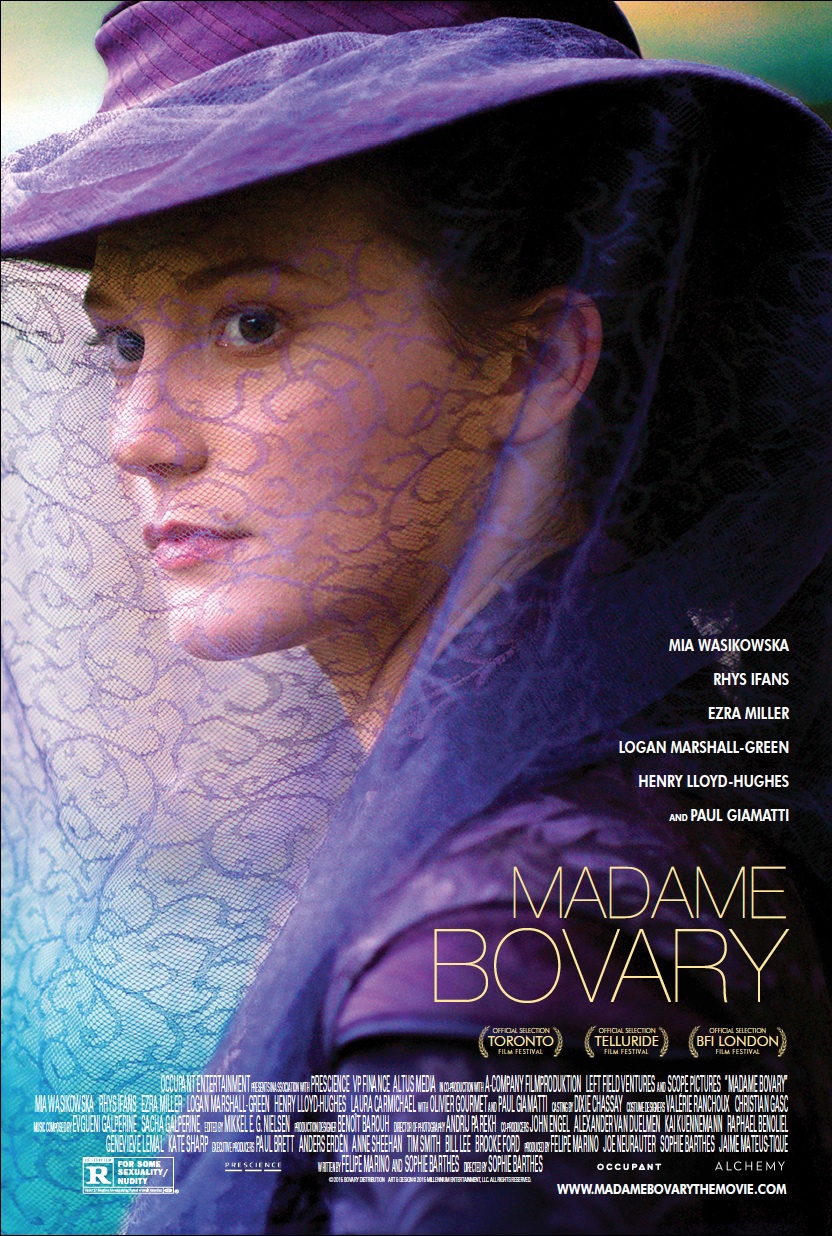
Today is the birthday of Gustave Flaubert (1821), born in Rouen, France.From Madame Bovary, chapter nine: “Deep down in her heart, she was waiting and waiting for something to happen. Like a shipwrecked mariner, she gazed out wistfully over the wide solitude of her life, if so be she might catch the white gleam of a sail away on the dim horizon. She knew not what it would be, this longed-for barque; what wind would waft it to her, or to what shores it would bear her away. She knew not if it would be a shallop or a three-decker, burdened with anguish or freighted with joy. But every morning when she awoke she hoped it would come that day.”Flaubert wrote: “It is a delicious thing to write, to be no longer yourself but to move in an entire universe of your own creating. Today, for instance, as man and woman, both lover and mistress, I rode in a forest on an autumn afternoon under the yellow leaves, and I was also the horses, the leaves, the wind, the words my people uttered, even the red sun that made them almost close their love-drowned eyes.”

Was Emily Dickinson a mystic?

ab6bc2c26a0bdbb1e24d82cf8b7289f8

I’ll tell you how the Sun rose…
by Emily Dickinson


I’ll tell you how the Sun rose —

A Ribbon at a time —

The Steeples swam in Amethyst —

The news, like Squirrels, ran —

The Hills untied their Bonnets —

The Bobolinks — begun —

Then I said softly to myself —

“That must have been the Sun”!

But how he set —

I know not —

There seemed a purple stile


That little boys and girls


Were climbing all the while-


Till when they reached the other side,


A dominie in Gray-


Put gently up the evening Bars-


And led the flock away.-

“I’ll tell you how the sun rose…” by Emily Richardson.

It’s the birthday of Emily Dickinson (books by this author), born in Amherst, Massachusetts (1830). She lived in a brick house known as the Homestead, and took great pleasure in tending the gardens and growing all kinds of plants in the glass greenhouse that her father built for her and her sister, Lavinia. Emily received a good early education, attending Amherst Academy for seven years, and then Mount Holyoke Female Seminary. While there, she was terribly homesick for Amherst, and she rebelled against the school’s strict rules. She returned home to Amherst after her first year, never to go back to Mount Holyoke.
She started writing poetry in her teens, but most of her writing at that time was in the form of letters, many of which have survived. Her mother was stricken with a mysterious illness in 1855, and Emily and Lavinia were homebound for several years while they took care of her. And as her 20s wore on, Emily became more and more reclusive anyway, preferring to interact with people through letters and keep company with her family and her gardens.
Dickinson was a prodigious writer, and wrote nearly 2,000 poems, but she only published about 10 of these in her lifetime. She would send poems to friends, or include them with gifts of baked goods, and even her close family was unaware of her output. There’s one person who did know, and that was the Dickinsons’ Irish maid. Margaret Maher had been born in Tipperary and had immigrated to the United States in around 1855. The Dickinsons hired her in 1869. Maher originally intended it to be a temporary position, because she was planning to move to California to join her brother. Instead, she ended up working for the Dickinson family for 30 years, and she became part of the family. The two women got on very well, even though they were quite different in temperament; Emily described her as “good and noisy, the North Wind of the Family.” The poet would spend hours in the kitchen with Margaret, baking breads and cakes, and scribbling poems on chocolate wrappers and the backs of shopping lists. Maher was literate and she even dabbled in poetry herself now and then; the two women wrote poems back and forth to each other. Some scholars believe that Maher’s Irish syntax made it into some of Dickinson’s work. In any case, Dickinson trusted Maher with her poems — literally. She stored them in the trunk that Maher had brought over from Ireland.
Dickinson left strict instructions for Maher to burn her poems after she died, but when the time came, Margaret couldn’t bring herself to do it. In a quandary, she brought the poems to Lavinia, Emily’s sister. Lavinia had already burned most of her sister’s letters, but she agreed with Maher that the poems should be published. Maher also supplied the only daguerreotype that we have of Emily Dickinson. The family didn’t like the picture, but Maher kept it, and gave it to the publisher to include with the first edition of Dickinson’s poems.
When Emily Dickinson died, her surviving family honored one of her last requests: her coffin was carried not by Amherst’s leading citizens, but by six Irish farmworkers — all employees of the Dickinson family. Thomas Kelly, Maher’s brother in law, was the chief pallbearer, and they carried her coffin out through the servants’ door.

I love the modesty of this woman, the way she took the position of a servant, the way her family acted together for each others good.

Who is a special mentor for Don?

YaleNews_hopper-grace.UNIVAC.102635875-CC_0

Grace Murray Hopper (1906-1992) @ Yale University

A Hero for Don from The Writer’s Almanac Dec 9, 2016
Today is the birthday of computer pioneer Grace Hopper, born in New York City (1906). She studied math and physics in college, and eventually got a Ph.D. in mathematics from Yale. Then World War II broke out, and Hopper wanted to serve her country. She joined the Naval Reserve in 1943, where she was assigned to work on Mark I, a machine that might help calculate the trajectory of bombs and rockets. She learned how to program that early computing machine, and wrote the first instruction manual for its use. She also worked on Mark I’s successors. One day in 1947, a moth got inside the works of Mark II and caused all kinds of problems with the calculations. Eventually, the moth was found and extracted, and one of the operators taped it inside the logbook and wrote below it: “First actual case of bug being found.” Hopper loved to tell that story, so she is often credited with coining the term “bug” to refer to an unexplained computer problem. The word had actually been in use among inventors for many years, to refer to annoying little setbacks and problems. The story made the rounds, though, and the term became popular.
In 1952, Hopper noticed that most computer errors were the result of humans making mistakes in writing programs. So she attempted to solve that problem by writing a new computer language that used ordinary words instead of just numbers. It was one of the first computer languages, and the first designed to help ordinary people write computer programs, and she went on to help develop it into the computer language known as COBOL, or “Common Business-Oriented Language.”
Hopper retired from the U.S. Navy in 1966 with the rank of commander. They asked her to return the following year, to help them standardize their computer languages. By the time she retired for good in 1986, she was the Navy’s oldest acting officer. She was 79 when she retired with the rank of rear admiral.

Previous Older Entries Next Newer Entries