a christian always brings peace…negotiates, scratches your back….free of cheating and cunning…

img_2954

This is her old family summer cottage and she is busy freshening the place up and disposing of hereditary trash, while I watch her do it. Today I held a screen in a door while she tightened the screws. That was my one assignment of the day, that and toweling off her back after her shower. “Scratch my back,” she says sometimes, and I do and I am good at it. So apparently she intends to keep me, which is good to know.

We washed the dishes — H.H. believes that a dish towel only spreads germs so the dishes were racked up and left to dry overnight — and I put my hand on the niece’s shoulders and told the two of them to go home, which they wanted to do but didn’t know how to express it, and I sat on the porch with the lady and scratched her back, up high, between the shoulder blades. “Higher,” she says and I massage her elegant shoulders. This is not a chore, there’s not much creativity involved, it comes under friendship and sharing. Justice is a fine idea but I’m going for wild good fortune and now I have it in my hands.
written by Garrison Keillor
FRIDAY, JULY 22, 2022
“A Christian always brings peace… This is the distinctive sign: the Christian is a bearer of peace, because Christ is peace. From this, we can recognize whether we are his. If instead we spread gossip and suspicions, create divisions, hinder communion, place our own belonging before all else, we do not act in the name of Jesus. Those who foment rancour, incite hatred and override others, do not bring peace… Placing peace and order in your own heart, defusing greed, extinguishing hatred and rancour, fleeing from corruption, fleeing from cheating and cunning: this is where peace begins.”
Pope Francis
 
Feast of Saint Mary Magdalene
Psalm 63
My soul is thirsting for you, O Lord my God.
O God, you are my God whom I seek;
for you my flesh pines and my soul thirsts
like the earth, parched, lifeless and without water.
My soul is thirsting for you, O Lord my God.
Thus have I gazed toward you in the sanctuary
to see your power and your glory,
For your kindness is a greater good than life;
my lips shall glorify you.
My soul is thirsting for you, O Lord my God.
Thus will I bless you while I live;
lifting up my hands, I will call upon your name.
As with the riches of a banquet shall my soul be satisfied,
and with exultant lips my mouth shall praise you.
My soul is thirsting for you, O Lord my God.
You are my help,
and in the shadow of your wings I shout for joy.
My soul clings fast to you;
your right hand upholds me.
My soul is thirsting for you, O Lord my God.


be honest, be together, and behave…….

pope-francis-meets-a-group-of-franciscan-nuns-during-his-weekly-in-picture-id956384244

Pope Francis meets a group of Franciscan nuns during his weekly general audience, in St. Peter’s Square, at the Vatican, Wednesday, May 9, 2018. (Photo by Massimo Valicchia/NurPhoto via Getty Images)

THURSDAY, JULY 21, 2022
“Brothers, sisters, let us not place our trust in riches and let us not fear our poverty, material and human. The more we are free and simple, small and humble, the more the Holy Spirit guides the mission and makes us protagonists of his wonders. Leave room for the Holy Spirit! Homily.”
Pope Francis


Runways Cafe II
by Marilyn Hacker
For once, I hardly noticed what I ate

(salmon and broccoli and Saint-Véran).

My elbow twitched like jumping beans; sweat ran

into my shirtsleeves. Could I concentrate

on anything but your leg against mine

under the table? It was difficult,

but I impersonated an adult

looking at you, and knocking back the wine.

Now that we both want to know what we want,

now that we both want to know what we know,

it still behooves us to know what to do:

be circumspect, be generous, be brave,

be honest, be together, and behave.

At least I didn’t get white sauce down my front.


“Runways Café II” by Marilyn Hacker, from Love, Death, and the Changing of the Seasons. © W.W. Norton and Company, 1995.

I’m trying hard to sit at a table…

Wison

Here In The Psalm
by Sally Fisher
I am a sheep

and I like it

because the grass

I lie down in

feels good and the still

waters are restful and right

there if I’m thirsty

and though some valleys

are very chilly there is a long

rod that prods me so I

direct my hooves

the right way

though today

I’m trying hard

to sit at a table

because it’s expected

required really

and my enemies—

it turns out I have enemies—

are watching me eat and

spill my drink

but I don’t worry because

all my enemies do

is watch and I know

I’m safe if I will

just do my best

as I sit on this chair

that wobbles a bit

in the grass

on the side of a hill.
“Here In The Psalm” by Sally Fisher from Good Question. © Bright Hills Press, 2016. Reprinted with permission.

 
WEDNESDAY, JULY 20, 2022
“The Lord always changes our life… Because those who receive Jesus feel they have to imitate him, to do as he did, which was to leave heaven to serve us on earth, and they come out of themselves. So, if we ask ourselves what our task in the world is, what we must do as a Church in history, the answer of the Gospel is clear: mission. To go on mission, to bear the proclamation, to make it known that Jesus came from the Father.”
Pope Francis


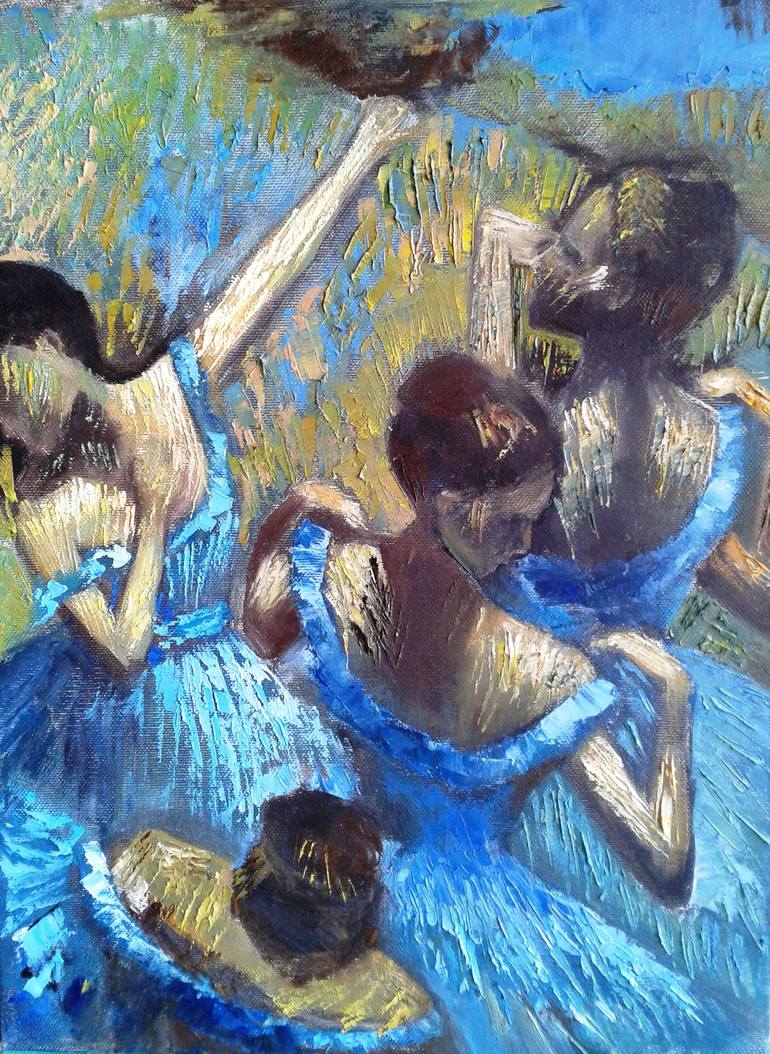
If painting weren’t so difficult, it wouldn’t be so much fun…Edgas Degas

1660327-HSC00001-7


It’s the birthday of Edgar Degas (1834), the French Impressionist painter best known for his studies of female dancers, like The Dancing Class (1871) and The Dance Class (1874). In 1880, his sculpture The Little Fourteen-Year-Old Dancer was exhibited, but drew criticism for its realism, with some critics deeming it “ugly.” Degas had dressed his dancer in a cloth tutu and given her real hair. He never exhibited any sculpture in public again during his lifetime.
Degas was born in Paris. His father was a banker and his mother an amateur opera singer from New Orleans. He was a precociously talented child, but when he came of age, his father urged him to attend law school, which Degas did, though he didn’t apply himself to his studies and soon left to study at the École des Beaux Arts. He also received permission to “copy” at the Louvre in Paris, a common practice for aspiring artists in the 19th century, who would gather to draw from works by Raphael and Delacroix. Degas met the artist Ingres, who told him, “Draw lines, young man, and still more lines, both from life and memory, and you will become a good artist.”
By 1862, he’d befriended fellow painter Edward Manet and been rejected by the prestigious Salon, the official art exhibition of the Académie des Beaux-Arts in Paris, which found his work unfinished and hasty. Degas favored interesting angles for his subjects, which may have been due to his poor eyesight. He said: “No art was ever less spontaneous than mine. What I do is the result of reflection and of the study of the great masters; of inspiration, spontaneity, temperament, I know nothing.” He joined with other outsider artists to exhibit work on their own, but he was irascible, mocking Monet for painting outdoors.
Degas continued to paint ballet dancers because it earned him the most money. His anti-Semitism became virulent as he aged, though, which cost him friends and commissions. Auguste Renoir said: “What a creature he was, that Degas! All his friends had to leave him; I was one of the last to go, but even I couldn’t stay until the end.”
In his last years, nearly blind, Degas stopped painting and took to wandering the streets of Paris. He died when he was 83. After his death, acquaintances found more than 150 wax sculptures in his studio. The original sculpture of The Little Fourteen-Year-Old Dancer has since been cast in bronze.
Edgar Degas said, “If painting weren’t so difficult, it wouldn’t be so much fun.”

Cinderella’s Diary
by Ron Koertge
I miss my stepmother. What a thing to say,

but it’s true. The prince is so boring: four

hours to dress and then the cheering throngs.

Again. The page who holds the door is cute

enough to eat. Where is he once Mr. Charming

kisses my forehead goodnight?
Every morning I gaze out a casement window

at the hunters, dark men with blood on their

boots who joke and mount, their black trousers

straining, rough beards, calloused hands, selfish,

abrupt…
Oh, dear diary—I am lost in ever after:

those insufferable birds, someone in every

room with a lute,

the queen calling me to look

at another painting of her son, this time

holding the transparent slipper I wish

I’d never seen.
“Cinderella’s Diary” by Ron Koertge from Vampire Planet. © Red Hen Press, 2016.

TUESDAY, JULY 19, 2022
“Let us help one another to be leaven in the dough of this world. Together we can and must continue to care for human life, the protection of creation, the dignity of work, the problems of families, the treatment of the elderly and all those who are abandoned, rejected or treated with contempt. In a word, we are called to be a Church that promotes the culture of care, tenderness and compassion towards the vulnerable. A Church that fights all forms of corruption and decay, including those of our cities and the places we frequent, so that in the life of every people the joy of the Gospel may shine forth. This is our “fight”, and this is our challenge. The temptation to stand still is great; the temptation of that nostalgia which makes us look to look at other times as better. May we not fall into the temptation of “looking back” which is becoming fashionable today in the Church.”
Pope Francis

leap on the first beautiful man you find…

278529642_1332371277247649_8956406039280083451_n

Good Girl
by Kim Addonizio
Look at you, sitting there being good.

After two years you’re still dying for a cigarette.

And not drinking on weekdays, who thought that one up?

Don’t you want to run to the corner right now

for a fifth of vodka and have it with cranberry juice

and a nice lemon slice, wouldn’t the backyard

that you’re so sick of staring out into

look better then, the tidy yard your landlord tends

day and night — the fence with its fresh coat of paint,

the ash-free barbeque, the patio swept clean of small twigs—

don’t you want to mess it all up, to roll around

like a dog in the flower beds? Aren’t you a dog anyway,

always groveling for love and begging to be petted?

You ought to get into the garbage and lick the insides

of the can, the greasy wrappers, the picked -over bones,

You ought to drive your snout into the coffee grounds.

Ah coffee! Why not gulp some down with four cigarettes

and then blast naked into the streets,and leap on the first

beautiful man you find? The words ruin me, haven’t they

been jailed in your throat for forty years, isn’t it time

you set them loose in slutty dresses and torn fishnets

to totter around in five-inch heels and slutty mascara?

Sure it’s time. You’ve rolled over long enough.

Forty, forty-one. At the end of all this

there’s one lousy biscuit, and it tastes like dirt.

So get going. Listen: they’re howling for you now:

up and down the block your neighbors’ dogs

burst into frenzied barking and won’t shut up.
“Good Girl” by Kim Addonizio, from Tell Me. © American Poet Continuum.

MONDAY, JULY 18, 2022
“May the Lord free us from watering down the Gospel to make it neutral – it is never neutral, it does not leave things the way they are; it accepts no compromise with the thinking of this world, but instead lights the fire of the kingdom of God amid the reign of human power plays, evil, violence, corruption, injustice and marginalization. Ever since Jesus rose from the dead, and became the watershed of history, “there began a great fight between life and death, between hope and despair, between being resigned to the worst and struggling for the best.””
Pope Francis

Watch a play and learn conflict resolution…

292219282_5306307702794165_4684952432443184129_n

It’s the birthday of playwright Tony Kushner (books by this author), born in Manhattan (1956). One of his friends became sick with AIDS in the mid-1980s, a time when the disease was only first beginning to be identified. Kushner had a dream about an angel coming through the roof of his friend’s bedroom, and he wrote a poem about it called “Angels in America.” A couple of years later, he started writing a long play about the AIDS virus, and a group of characters living in Reagan-era New York, including a married Mormon man who realizes he is gay; Roy Cohn — the lawyer who prosecuted supposed communists during the McCarthy era; a former drag queen who becomes Cohn’s nurse; the ghost of Ethel Rosenberg; and an angel. It was in two parts, called “Millennium Approaches” and “Perestroika,” and the whole play was called Angels in America. It won the Pulitzer Prize and Tony Awards.
Kushner has written many plays since then, including Homebody/Kabul (2001) and The Intelligent Homosexual’s Guide to Capitalism and Socialism with a Key to the Scriptures (2009).
Earlier this year, the City University of New York announced that they would issue an honorary degree to Kushner — and then decided to revoke that honor because a pro-Israel member of the board of trustees took issue with Kushner’s critique of Israeli policy. Kushner, who is Jewish, was outraged, as was just about everyone associated with CUNY. Several past recipients of honorary degrees, including the writers Michael Cunningham and Barbara Ehrenreich, declared that they were returning their degrees in protest. Soon after, a higher authority at CUNY stepped in and announced that the university had decided to award him the degree after all.
Tony Kushner said: “I think that’s what theater is about. You believe it and you don’t believe it simultaneously, which engages a certain part of your brain that has to do with being skeptical about the nature of what you’re experiencing in life. That’s why theater is important. You learn to go out into the world after you see a play that you really loved and look at politics and love and all sorts of other human phenomena in the same way. It’s real and yet it isn’t.”

SUNDAY, JULY 17, 2022
“What can I do for the Church? Not complaining about the Church, but committing myself to the Church. Participating with passion and humility: with passion, because we must not remain passive spectators; with humility, because being committed within the community must never mean taking centre stage, considering ourselves better and keeping others from drawing near. That is what a synodal Church means: everyone has a part to play, no individual in the place of others or above others. There are no first or second class Christians; everyone has been called.”
Pope Francis

Modern Love……..trees and shadows…

292246913_764061308354276_3352089029224879514_n

Modern Love
by Douglas Dunn
It is summer, and we are in a house

That is not ours, sitting at a table

Enjoying minutes of a rented silence,

The upstairs people gone. The pigeons lull

To sleep the under-tens and invalids,

The tree shakes out its shadows to the grass,

The roses rove through the wilds of my neglect.

Our lives flap, and we have no hope of better

Happiness than this, not much to show for love

Than how we are, or how this evening is,

Unpeopled, silent, and where we are alive

In a domestic love, seemingly alone,

All other lives worn down to trees and sunlight,

Looking forward to a visit from the cat.


“Modern Love” by Douglas Dunn, from Selected Poems 1964-1983. © Faber and Faber. Reprinted with permission.

THURSDAY, JULY 14, 2022
“Dear friends, each of your families has a mission to carry out in our world, a testimony to give. We the baptized are especially called to be “a message that the Holy Spirit takes from the riches of Jesus Christ and gives to his people”. For this reason, I would like you to ask yourselves this question: What is the word that the Lord wants to speak through our life to all those whom we meet? What “step forward” is he asking of our family, my family, today? Everyone should ask this. Stop and listen. Let yourselves be changed by him, so that you too can change the world and make it “home” for all those who need to feel welcomed and accepted, for all those who need to encounter Christ and to know that they are loved. We need to live with our eyes raised to heaven.”
Pope Francis

“My goodness, my Guinness”

Jesus@33

Jesus had wrinkles at 33 years of age; he took on our suffering to redeem us for his father.

WEDNESDAY, JULY 13, 2022
“Deep within the heart of each person is the desire for love not to end, for the story of a love experienced together not to be cut short, for the fruits of love not to be dispersed. Everyone has this desire. No one wants a love that is short-term or is marked with an expiration date. So we suffer greatly whenever failings, negligence and human sins make a shipwreck of marriage. But even amid the tempest, God sees what is in our hearts… Brothers and sisters, forgiveness heals every wound.”
Pope Francis

It’s the birthday of the British mystery writer Dorothy L. (Leigh) Sayers (books by this author), born in Oxford (1893). She was one of the first women to graduate from Oxford University, which she did in 1915, with a degree in medieval literature. She moved to London and got a job as a copy editor at the largest advertising agency in England, and she was extremely successful there. She came up with slogans like “My goodness, my Guinness,” and “Lovely day for a Guinness,” and the phrase “It pays to advertise!” Her job gave her a secure income, and she was able to find time to write for herself. In 1923, she published her first novel, Whose Body?, introducing her famous detective Lord Peter Wimsey, the amateur detective whom she featured in 11 novels and 21 short stories. Her Lord Peter Wimsey novels were extremely popular in England. She was famous for coming up with outrageous causes of death like poisoned teeth fillings, a cat with poisoned claws, and a dagger made of ice

Capture the light…


PumpkinIslandLight

Pumpkin Island Light Deer Isle, Maine oil on linen
Copyright © Will Hillenbrand, All rights reserved.

O My Love the Pretty Towns
by Kenneth Patchen
O my love

The pretty towns

All the blue tents of our nights together

And the lilies and the birds glad in our joy

The road through the forest

Where the surly wolf lived

at the top of the mountain

And the little

Rain falling on the roofs of the village

O my love my dear lady

The world is not very big

There is only room for our wonder

And the light leaning winds of heaven

Are not more sweet or pure

Than your mouth on my throat

O my love there are larks in our morning

And the finding flame of your hands

And the moss on the bank of the river

And the butterflies

And the whirling-mad

Butterflies!

And the snow at the top of the mountain

And the little

Rain falling on the roofs of the village

O my love my dear lady

The world is not very big

There is only room for our wonder

And the light leaning winds of heaven

Are not more sweet or pure

Than your mouth on my throat

O my love there are larks in our morning

And the finding flame of your hands

And the moss on the bank of the river

And the butterflies

And the whirling-mad

Butterflies!


“O My Love the Pretty Towns” by Kenneth Patchen from Collected Poems. © New Directions, 1967. Reprinted with permission.

TUESDAY, JULY 12, 2022
“Mary teaches us also to live eucharistically, in other words to give thanks, to cultivate praise, and not to be fixated only on problems and difficulties. In the course of life, today’s fervent petitions become tomorrow’s prayers of thanksgiving… The Sacrament of Reconciliation will thus be both an end and a beginning: your lives will be renewed each day and will become a perennial song of praise to Almighty God.”
Pope Francis

And Mary arose and went with haste…

286863483_10220226432201328_1724396872315773408_n

MONDAY, JULY 11, 2022
““Mary arose and went with haste” (Lk 1:39). After receiving the message of the angel and saying “yes” to her vocation to become the mother of the Saviour, Mary immediately went to visit her cousin Elizabeth, who was in her sixth month of pregnancy. Mary did not stay home and think about the great privilege she had received or the many problems it would bring. No! Mary did not allow herself to be paralyzed by pride or fear. She was not one of those people for whom all it takes to be comfortable and secure is a good sofa: “couch potatoes”. If her elderly relative needed a helping hand, she was ready to set out immediately to be there for her.”
Pope Francis

the Writer’s Almanac Jul 11,2011
The Modesty of Jhumpa Lahiri
Lahiri had no idea that The Interpreter of Maladies was a contender for any prizes, and then one day she got a phone call. She said: “I was in my apartment. We had just come back from a short trip to Boston and I was heating up some soup for my lunch. My suitcases were still not unpacked. And the phone rang. It was one or two in the afternoon. The person who called me was from Houghton Mifflin, my publisher, but no one I knew, and she said, ‘I need to know what year you were born.’ And then she asked some other fact like where I was born. I just told her. Sometimes people need some information for a reading, for a flyer or something. And then she said, ‘You don’t know why I am calling, do you?’ And I said, ‘No, why are you calling?’ And she said, ‘You just won the Pulitzer.'” It was the first time a paperback had ever won the Pulitzer. The Interpreter of Maladies became an immediate best-seller. Lahiri was uncomfortable with her new fame — she said, “If I stop to think about fans, or best-selling, or not best-selling, or good reviews, or not-good reviews, it just becomes too much. It’s like staring at the mirror all day.” So she doesn’t read reviews, and she keeps her Pulitzer wrapped in bubble wrap.

Previous Older Entries Next Newer Entries