O my Luve is like a red, red rose, That’s newly sprung in June; O my Luve is like the melody, That’s sweetly play’d in tune. So fair art thou, my bonnie lass, So deep in luve am I; And I will luve thee still, my dear, Till a’ the seas gang dry. Till a’ the seas gang dry, my dear, And the rocks melt wi’ the sun; I will luve thee still, my dear, While the sands o’ life shall run. And fare the weel, my only luve! And fare thee weel a while! And I will come again, my luve, Tho’ it were ten thousand mile!
Today is the birthday of Dolly Parton (books by this author), born in Sevier County, Tennessee (1946). She was one of 12 kids, born and raised in a little cabin in the Smoky Mountains. She grew up “dirt poor,” in her words, and her father paid the doctor who delivered Dolly with a bag of oatmeal. One day, when she was about eight or nine years old, her ambition kicked in. “I didn’t hear a voice, but it was a knowing that came to me,” she remembered, “and it said, ‘Run. Run until I tell you to stop.’” She first started performing professionally when she was ten and appeared at the Grand Ole Opry when she was 13. The day after she graduated from high school she went off to Nashville. She had her first number one hit with “Joshua” in 1971. Parton has never forgotten the poor people in the region where she grew up. Her theme park, Dollywood, is now the largest employer in Sevier County. She formed the Imagination Library which sends a free book every month to every kid under the age of five. She’s donated money to hospitals and provided schools with much-needed technology. And after a wildfire devastated the region in late 2016 she hosted a telethon that raised nine million dollars which she used to financially support families who lost their homes in the fire. The My People fund will give each family a thousand dollars a month for the next six months. Dolly Parton has penned thousands of songs, an autobiography in 2021, as well as the childrens book Coat of Many Colors (2019).
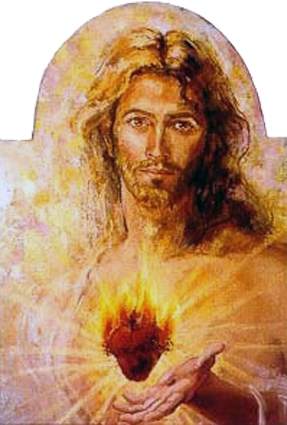
All of us are part of the Body of Christ, from the least to the most important. Beating with the heart of the Holy Spirit, animated by true life!
The Little Ways That Encourage Good Fortune by William Stafford
Wisdom is having things right in your life and knowing why. If you do not have things right in your life you will be overwhelmed: you may be heroic, but you will not be wise. If you have things right in your life but do not know why, you are just lucky, and you will not move in the little ways that encourage good fortune.
The saddest are those not right in their lives who are acting to make things right for others: they act only from the self— and that self will never be right: no luck, no help, no wisdom.
Share Garrison Keillor and Friends I’m a Minnesotan and I live in New York because my wife is in love with me and she loves New York. It is exactly that simple. She loves opera and fine art and interesting foods and observing human eccentricity and you don’t find much of that out in the Corn Belt. I don’t belong here. People hear me talk and can tell I’m an outsider because I pronounce it “tock” whereas they say “towalk” and also because I say, “After you, please, go right ahead, I’m in no hurry” and New Yorkers say, “Watcher back!” and at a dinner party New Yorkers all talk over each other, conversations are multilayered, and I, who was brought up to wait my turn, sit silently for three hours and the other guests go home wondering, “Who was the weird guy? Obviously a non-English speaker.”
New Yorkers exercise freedom of speech; I don’t. The other night, at a French restaurant, I ordered cassoulet and paid $24 for a bowl of beans with chunks of pork, rather inferior to the casserole Mabel served to the kids in the grade school cafeteria for which I paid 35 cents at the time. My dinner companions asked, “How is it?” and I said, “Excellent,” because I was brought up not to complain. Maybe in another ten years I’ll call the waiter over and say, “Take this back to the kitchen and take it off my bill.” I will be 89, an age at which one should be able to speak one’s mind. But I’m okay being out of place. My dad once said, “You couldn’t pay me enough to live in New York,” and as a postal clerk, he was probably right about that, but love makes the difference. I admire New Yorkers. I went to the Bronx to see the Minnesota Twins get crushed by the Yanks and on the D train up to the ballpark, packed in tight with people avoiding contact despite being less than six inches apart, the train sways and a Black woman’s elbow bumps my chest and I observe the tattoos on her neck and feel a sense of solidarity: not a word is spoken. A Minnesotan would hesitate to mention her race for fear of being considered racist but I did and it is what it is and if you don’t like it, sue me.  It’s astonishing that the city works as well as it does. We hail a cab and go to the Met and for less than we’d pay for a flight to Des Moines, we see a great performance of “Rigoletto,” which, for me, is more memorable than a night in Des Moines could be, and Rigoletto is a great baritone role, and as a baritone I appreciate that, and the assassin is played by a basso who sings the longest lowest note in opera and the audience goes wild, very rare that subterranean singing evokes such enthusiasm. It’s a great evening and we exit, thrilled, into the chilly night and wave down a cab and are transported jiggety-jig back home. COVID is raging around us, but we wore our masks through the show, and we’re feeling fine. There’s a crisis in New York every day, sometimes three or four. Some water mains go back to Victorian times and a pipe bursts or lightning strikes and the power goes out or giant rats come up out of a toilet, but New Yorkers learn to endure. You lose power and you light candles, a water main bursts and your faucet goes dry so you get along on gin for a day or two. A good dog should be able to occupy an attacking rat until you can grab a hair dryer and scare the rodent away, unless the power is out in which case you whack it with a leaf from the dining room table, but if there’s no water, even more rats may come up out of the toilet, and you’ll have to reach for the acetylene torch you keep under the bed and take on the whole herd. New Yorkers live with the anticipation of crisis, and when a day goes by without one, it feels luxurious. And that’s how I feel at this very moment. No rats, water comes out of the tap, lights are on, my love lies in bed beside me. She reaches over and takes my hand. This is a very good day. 
January is good for the soul,
Down in my warm rabbit hole.
In a pillowy bed
From toes to head
I keep myself under control.
Garrison Keillor-limerick
1/19/22
Christmas is gone and the illusion that childhood innocence can be recovered (it can’t) and we’re free of obligatory joyfulness and able to savor sadness again and relish our loneliness in this uncaring world, and the meals are penitential meals because my pants got too tight and my shirt wouldn’t button at the neck, so it’s time for celery and Ry-Krisp and herbal tea, which give a sweet sense of righteousness, which is good for vanity, feeling that the jowl is shrinking and lard that hangs over the belt is gradually coming under control and this — dare I mention it? — leads to inclinations of an erotic nature, something that disgusts you children, the thought that an old coot and his lady would commingle skin to skin and whisper and sigh and moan and even shriek for joy, but this is why we’re grateful when the Christmas guests go home and we needn’t stifle our pleasures.
February’s in view,
Two valentines, me and you,
Lie down for a nap
And whisper and wrap
Ourselves in each other
And kiss and O brother,
It’s thrilling and utterly new.
The surest thing there is is we are riders, And though none too successful at it, guiders, Through everything presented, land and tide And now the very air, of what we ride.
What is this talked of mystery of birth But being mounted bareback on the earth? We can just see the infant up astride, His small fist buried in the bushy hide.
There is our wildest mount, a headless horse. But though it runs unbridled off its course, And all our blandishments would seem defied, We have ideas yet that we haven’t tried.
My family all carry familiarities, of which we are all familiar in 2017!
The Writer’s Almanac for Tuesday, January 18, 2022 It’s the birthday of the physician and lexicographer Peter Mark Roget (books by this author), born in London, England (1779). He was a working doctor for most of his life, but he was also a Renaissance man, a member of various scientific, literary, and philosophical societies. In his spare time, he invented a slide rule for performing difficult mathematical calculations and a method of water filtration that is still in use today. He wrote papers on a variety of topics, including the kaleidoscope and Dante, and he was one of the contributors to the early Encylopaedia Britannica. He was 61 years old, and had just retired from his medical practice, when he decided to devote his retirement to publishing a system of classifying words into groups based on their meanings. Other scholars had published books of synonyms before, but Roget wanted to assemble something more comprehensive. He said, “[The book will be] a collection of the words it contains and of the idiomatic combinations peculiar to it, arranged, not in alphabetical order as they are in a Dictionary, but according to the ideas which they express.” He organized all the words into six categories: Abstract Relations, Space, Matter, Intellect, Volition, Sentient and Moral Powers; and within each category there were many subcategories. The project took him more than 10 years but he finally published his Thesaurus of English Words and Phrases in 1852. He chose the word “thesaurus” because it means “treasury” in Greek. Roget’s Thesaurus might have been considered an intellectual curiosity except that at the last minute Roget decided to include an index. That index, which helped readers find synonyms, made the book into one of the most popular reference books of all time. It is considered one of the great lexicographical achievements in the history of the English language and it has been helping English students pad their vocabularies for more than 150 years.
It’s the birthday of Martin Luther King Jr. (books by this author), born on this day in Atlanta (1929). He is best known for his work as a leader during the civil rights movement and his commitment to nonviolence. On April 4, 1967, King delivered a speech called “Beyond Vietnam” in which he strongly denounced America’s involvement in the Vietnam War. He was concerned that the war was recruiting poor and minority soldiers, that it was draining resources from much-needed social programs at home, and that it was an unjust war anyway, targeting the poor people of Vietnam. He said, “A nation that continues year after year to spend more money on military defense than on programs of social uplift is approaching spiritual death.” Throughout the next year he continued to speak out against the war and said that the civil rights movement and the peace movement should come together for greater strength. He began a “Poor People’s Campaign” to fight economic inequality. On April 4, 1968, exactly one year after his first anti-war speech, King was assassinated while he was standing on the balcony of his Memphis motel room. He was preparing to lead a protest march in solidarity with garbage workers who were on strike. He said, “If a man hasn’t discovered something that he will die for, he isn’t fit to live” and he said: “Here and there an individual or group dares to love, and rises to the majestic heights of moral maturity. So in a real sense this is a great time to be alive. Therefore, I am not yet discouraged about the future. Granted that the easygoing optimism of yesterday is impossible. Granted that those who pioneer in the struggle for peace and freedom will still face uncomfortable jail terms, painful threats of death; they will still be battered by the storms of persecution, leading them to the nagging feeling that they can no longer bear such a heavy burden, and the temptation of wanting to retreat to a more quiet and serene life. Granted that we face a world crisis which leaves us standing so often amid the surging murmur of life’s restless sea. But every crisis has both its dangers and its opportunities. It can spell either salvation or doom. In a dark confused world the kingdom of God may yet reign in the hearts of men.”








 The Vibrant Channeled Creator