
illustrator: Marcin Piwowarski
the wind and the sea
batter me – sting my skin – burn my eye
clear sky : same sea scrolls
Jeanne Poland's Poetry Blog
05 Jun 2020 Leave a comment
in Poetry, stormy sky Tags: batter me, burn my eye, clear sky, illustrator, Marcin Piwowarski, same sea scrolls, sting my skin, stormy sky, the wind and the sea
illustrator: Marcin Piwowarski
the wind and the sea
batter me – sting my skin – burn my eye
clear sky : same sea scrolls
04 Jun 2020 Leave a comment
in Poetry, social distancing Tags: bird, illustration by Stella Maris Mongodi, Mouse, muse at vanity, social distancing, where is the cat? that is the question
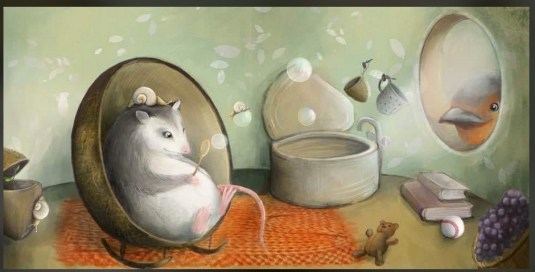
illustrated by Stella Maris Mongodi
where is the cat?
that is the question… bird – mouse
muse at vanity…
03 Jun 2020 Leave a comment
in Poetry, the Howl by Allen Ginsberg Tags: angel headed hipsters, angry fix, by Allen Ginsberg, cold water flats, contemplating jazz, illuminated, Madness, Mohammedan angels, naked, negro streets, poverty, starving, supernatural darkness, tatters, the howl

Allen Ginsberg was made famous by his poem: “Howl” in Octobet of 1955 in
San Francisco.
“Howl,” at the Six Gallery Reading —
the poem that begins with the lines:
“I saw the best minds of my generation destroyed by madness,
starving hysterical naked,
dragging themselves through the negro streets at dawn
looking for an angry fix,
angel headed hipsters burning for the ancient heavenly connection
to the starry dynamo in the machinery of night,
who poverty and tatters and hollow-eyed high sat up
smoking in the supernatural darkness
of cold-water flats
floating across the tops of cities contemplating jazz,
who bared their brains to Heaven under the El
and saw Mohammedan angels staggering on tenement
roofs illuminated.”
02 Jun 2020 Leave a comment
in frog vs toad, Poetry Tags: frog vs toad, frogs are more romantic and sing, Julia Rohan Zoch, nothingness, place them on a table, Plains Spadefoot Toadby Tom Hennen, pretty eyes, rely on their wits, the toad and I have not moved, thirty -fourhours, toads live twice as long, toads smarter than frogs, which will jump?, whispering peepers
 Julia Rohan Zoch
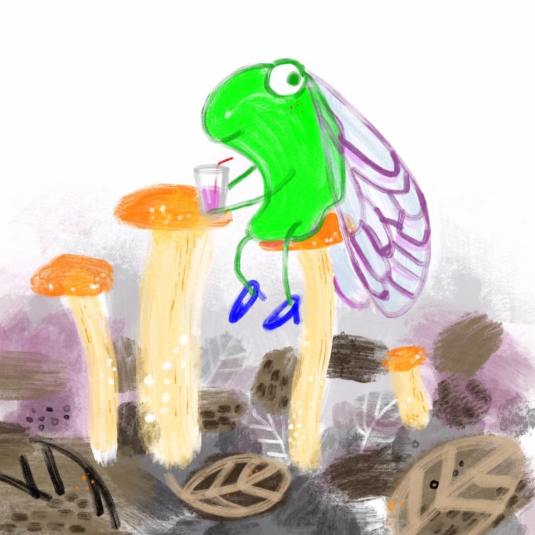
Julia Rohan Zoch
Plains Spadefoot Toad
by Tom Hennen
Toads are smarter than frogs. Like all of us who are not good-
looking they have to rely on their wits. A woman around the
beginning of the last century who was in love with frogs wrote
a wonderful book on frogs and toads. In it she says if you place
a frog and a toad on a table they will both hop. The toad will
stop just at the table’s edge, but the frog with its smooth skin
and pretty eyes will leap with all its beauty out into nothing-
ness. I tried it out on my kitchen table and it is true. That may
explain why toads live twice as long as frogs. Frogs are better at
romance though. A pair of spring peepers were once observed
whispering sweet nothings for thirty-four hours. Not by me.
The toad and I have not moved.
Tom Hennen, “Plains Spadefoot Toad” from Darkness Sticks to Everything: Collected and New Poems. Copyright © 2013 by Tom Hennen.
01 Jun 2020 Leave a comment
in For Bed Not Car, Poetry Tags: and gring my teeth, and make me cry, attacking!, but more for bed, But not while I am driving, erst glands of milk for suckling held secure, For Bed Not Car, hold thembizarre, not car, please, see stars that call to me to sparto bursting, The busts are driving; busy busts, with your busts, you mar their use, You might burst my busts first curse them, You must grab my breast as it is soft

For Bed Not Car
You must grab my bust
as it is soft
But not while I am driving,
please.
The busts are driving, busy busts!
You might burst my busts
first curse them…
erst glands of milk
for suckling held secure
but more for bed, not car
you mar their use…hold them bizarre
and make me cry and grind my teeth
see stars that call to me to spar to bursting!
with your busts, attacking!
31 May 2020 Leave a comment
in Poetry Tags: he did say, I am charged with untold and untellable wisdom, I am silent, I require nothing more, of the people who regard themselves as the custodians of the morals of the world.", pervades us, shortly before he died, surrounds us, that sex was "the thing in my work which has been most misunderstood — that has excited the roundest opposition, the common man, the good gray poet, The poet who captured the spirit of the United States, the sharpest venom, the subtle air ...the impalpable holds ua, the unintermitted slander, Walt Whitman, when my love sits with me and holds my hand, wisdom

“Of the Terrible Doubt of Appearances” by Walt Whitman.
When he whom I love travels with me or sits a long while
holding me by the hand,
When the subtle air, the impalpable, the sense that words and
reason hold not, surround us and pervade us,
Then I am charged with untold and untellable wisdom, I am
silent, I require nothing further,
It’s the birthday of Walt Whitman (books by this author), born in West Hills, Long Island, New York (1819). Whitman worked as a printing press typesetter, teacher, journalist, and newspaper editor. He was working as a carpenter, his father’s trade, and living with his mother in Brooklyn, when he read Ralph Waldo Emerson’s essay “The Poet,” which claimed the new United States needed a poet to properly capture its spirit. Whitman decided he was that poet. “I was simmering, simmering, simmering,” Whitman later said. “Emerson brought me to a boil.”
Whitman began work on his collection Leaves of Grass, crafting an American epic that celebrated the common man. He did most of the typesetting for the book himself, and he made sure the edition was small enough to fit in a pocket, later explaining, “I am nearly always successful with the reader in the open air.” He was 37 years old when he paid for the publication of 795 copies out of his own pocket.
Many of Whitman’s poems were criticized for being openly erotic. One of Whitman’s earliest reviews had called the book “a mass of stupid filth,” accusing Whitman of “that horrible sin not to be mentioned among Christians.” But rather than censoring himself, Whitman added 146 poems to his third edition.
He began to grow a literary reputation that swung from genius to moral reprobate, depending on the reader. Thoreau wrote, “It is as if the beasts spoke.” Willa Cather referred to Whitman as “that dirty old man.” Emerson praised Whitman’s collection as “the most extraordinary piece of wit and wisdom America has yet contributed,” and the critic William Michael Rossetti proclaimed that Whitman was a talent on par with Shakespeare.
Whitman left New York when his brother was wounded in the Civil War, traveling to Virginia and then to Washington, D.C., to serve as a volunteer Army hospital nurse. He had a reputation for unconventional clothing and manners. He wrote, “I cock my hat as I please, indoors and out.” With the help of well-placed friends, Whitman eventually found work as a low-level clerk in the Department of the Interior. But when former Iowa Senator James Harlan discovered Whitman worked in his department, he had him dismissed, proclaiming Leaves of Grass was “full of indecent passages,” and that Whitman himself was a “very bad man” and a “free lover.”
Whitman’s friend William Douglas O’Connor immediately came to his defense. He arranged for Whitman to be transferred to the attorney general’s office, and he published a pamphlet refuting Harlan’s charges. Titled The Good Gray Poet: A Vindication, the small book praised Whitman’s “nobleness of character” and went on to quote from positive reviews — and to ridicule Harlan as an under-read philistine.
The pamphlet became more than a vindication: it helped to radically alter the average reader’s perception of Whitman as both a writer and as a man: Out with the image of the bawdy nonconformist and in with the “good gray poet,” the nickname for Whitman that is still popular to this day.
Whitman spent the last 20 years of his life revising and expanding Leaves of Grass, issuing the eighth and final edition in 1891, saying it was “at last complete — after 33 y’rs of hackling at it, all times & moods of my life, fair weather & foul, all parts of the land, and peace & war, young & old.”
Today, most scholars agree that Whitman was likely gay. When he was asked directly, toward the end of his life, Whitman declined to answer. But he did say, shortly before he died, that sex was “the thing in my work which has been most misunderstood — that has excited the roundest opposition, the sharpest venom, the unintermitted slander, of the people who regard themselves as the custodians of the morals of the world.”
30 May 2020 Leave a comment
in Jeanne d'Arc 3, Poetry Tags: France and England, France began to love itself, given an army to commandliberated Orleans, Jeanne d 'Arc, Mark Twain, voices of saints
Saint Jeanne d’Arc a film by Bruce Demont viewed on KimStim thru TSL, Hudson NY

It was on this day in 1431 that Joan of Arc was burned at the stake in Rouen, France. In the centuries that have passed, she’s become a national icon in France. She is to the national identity of France, novelist Julian Barnes notes, what Robin Hood is to England.
Statues of Joan of Arc stand all over parks and churches in France, and nearly every French town has a street named for her, called “Jeanne d’Arc.” One 19th-century historian wrote that Joan of Arc “loved France so much that France began to love itself.”
Joan of Arc was a 13-year-old peasant girl when she began to hear voices in her garden. The voices, she recounted, were those of saints Michael, Margaret, and Catherine, and they eventually told her that she needed to save France. At the time, France was engaged in the Hundred Years War, and the English had the French town of Orleans under siege. In April of 1429, Joan of Arc asked the French government for troops that she could lead to liberate the captured Orleans. She’d met with the crown prince and theologians, and they thought she could be of use in the fight against the English, and so Joan of Arc was given an army to command.
She went into battle wearing a white suit of armor and carrying up high a banner depicting an image of the Trinity. An English arrow hit her in the shoulder, but she was OK. Her army succeeded in liberating Orleans: English troops fled, and Joan’s army took over their surrounding forts.
In another battle, Joan of Arc — now known as “the maid of Orleans” — was taken hostage by Burgundian troops and sold to the English. She was imprisoned for over a year, often chained to a wooden block, while interrogators attempted to extract confessions out of her. Then, on February 21, 1431, she was brought to trial under an ecclesiastical court. She stuck to her story that she had heard the voices of saints and it was they who commanded her to serve France. Interrogators demanded that she retract her statements. She was convicted of heresy and brought before a large crowd to be sentenced, condemned, and handed over to secular officials. Then, on this day, when she was 19 years old, she was burned at the stake.
In 1456 (25 years after she died), a posthumous retrial was held at which she was exonerated. In 1920, she was canonized a Catholic saint. Joan of Arc has been portrayed in more than 20 films; the first was made by director Georges Melies in 1899. And she’s the subject of more than 20,000 books.
One of these is by Mark Twain, who spent 12 years researching her life and wrote a book called Personal Recollections of Joan of Arc, first serialized in Harper’s Magazine and then published as a book in 1896. It’s a fictional account and purports to be written by Joan of Arc’s page and personal secretary. But the book is mostly devoid of the humor that Mark Twain is famous for. He genuinely admired Joan of Arc, and wrote an earnest book about her.
Mark Twain later said, “I like Joan of Arc best of all my books; and it is the best; I know it perfectly well.”
28 May 2020 Leave a comment
in Poetry Tags: Brush lettering, human hands, international, japanese lettering, solidarity






25 May 2020 Leave a comment
in ordinary still, Poetry Tags: extraordinary, Geneen Roth, highlights awaken it, love breaths its strength into it, ordinary still, shadows delineate it, we are transformed to divine

Geneen Roth
the ordinary
becomes extraordinary
when highlights awaken it
when shadows delineate it
when love breaths its strength into it
and
then we are transformed to
divine!
23 May 2020 Leave a comment
in a bridge of hope, Poetry Tags: a bridge of hope, as we hope in you, be upon us, between dispair and hope, is a bridge, JimBurns, let your steadfast hope, Psalm 33, the unconditional love of God

Let your steadfast love,
O Lord,
be upon us,
even as we hope in you. (Psalm 33:22)
The unconditional love of God
is a bridge
between despair and hope.
–Daily Meds, Jim Burns


 The Vibrant Channeled Creator