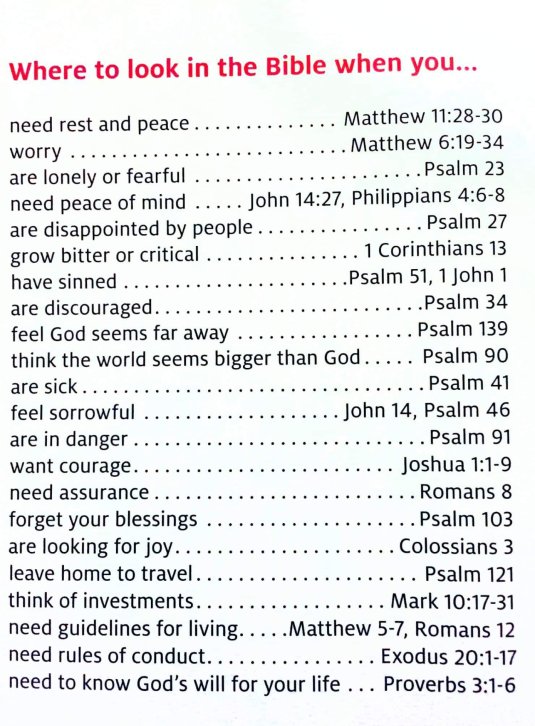
notice the psalms
most frequently cited!
chanted
harmonized
to soothe the savage
and oil our foreheads with balm:
the psalms!
try this for a listen;
Jeanne Poland's Poetry Blog
21 Sep 2019 Leave a comment
in Poetry, the bible tells me so, Tags: are in danger, are lonely, chanted, forget your blessings, harmonized, hymnal, need rest, need rules of conduct, need to know God's will for your life, oil our foreheads with balm, psalms, soothe the savage, the bible tells me so,, where to look in the bible when you..., worry
notice the psalms
most frequently cited!
chanted
harmonized
to soothe the savage
and oil our foreheads with balm:
the psalms!
try this for a listen;
20 Sep 2019 Leave a comment
in Poetry
swimming to save
 Hồ Bơi Miền Quê
I learned to swim in a cage like this too. I’m very thankful to the man who taught me to swim; later on I taught 1,000 children how to swim; I saved 13 people from drowning, diving to the ground – and fighting there vs. the panic of the victims…
it’s necessary that every human being learns to swim – I had wonderful decades in my life, swimming through rivers and lakes, in the ocean too… At Night in Vietnam
 The 3 photos are by Lan Nguyen Kim
19 Sep 2019 Leave a comment
in autumn in the grand tetons, Poetry Tags: a path of fire, autumn in the grand tetons, eye, inflames our nose, orange burns its trail, photo by Charles Schultz, soul

photo by Charles Schultz
orange burns its trail:
a path of fire
inflames our nose, eye…soul!
14 Sep 2019 Leave a comment
in Poetry, Religion...Science Tags: Ivan Pavlov, learned conditional reflexes, mundane to sacred, naturalist-physician, Religion...Science, scientists who are religious, study of Science, The Experimental Psychology and Psychopathology of Animals, theological seminary

from mundane to sacred
Today is the birthday of physiologist Ivan Pavlov, born in Ryazan, in central Russia (1849). His father was the village priest, and Pavlov was all set to follow in his footsteps — even enrolling in theological seminary — when he read Darwin’s work and became interested in the study of science. He left the seminary and began a course of study in physics, mathematics, and natural sciences at the University of St. Petersburg; later he received his medical degree at the Imperial Medical Academy. He left religion behind because he couldn’t reconcile his passion for scientific proof with a life of faith, and was surprised when he came across other scientists who were religious. One day, walking to his laboratory, he saw a medical student cross himself outside a church. “Think about it!” Pavlov told his colleagues. “A naturalist, a physician, but he prays like an old woman in an almshouse!”
In 1890, he was named head of the Physiology Department at the Institute for Experimental Medicine, and five years later he was named Chair of Physiology at the Imperial Medical Academy. It was during this time that he did his most groundbreaking work. In 1903, he published a paper called “The Experimental Psychology and Psychopathology of Animals.” In it, he explained his theory of conditional reflexes. Unlike innate reflexes, which are instinctual, conditional reflexes are learned. Pavlov came up with this theory in the course of studying the digestive systems of dogs. He noticed that the dogs would begin salivating when the lab assistant brought in their food; this was a natural reflex, and it didn’t surprise him. But then after a while, the dogs began drooling whenever the lab assistant entered the room, even if there was no food present. Pavlov speculated that the dogs’ behavior had changed because they had learned to associate the presence of the lab assistant with the presentation of food. He turned on a metronome at the same time that the dogs were fed. Eventually, the dogs would salivate whenever they heard the metronome — even without food — which meant that Pavlov had created a new, learned reflex in his subjects. He was even able to fine-tune the response so that it only happened when the metronome was set at a particular speed. He also learned that the reflex could be unlearned: if he used the metronome too many times without later providing food, the dogs stopped associating the sound with a meal, and they stopped salivating.
from the Poetry Almanac 9/14/19
13 Sep 2019 Leave a comment
in Poetry, the sacred flag Tags: 42'x30, a sacred object, Fort Mc Henry, Francis Scott key, largest flag in existence, Major Armistead, the sacred flag, The Star Spangled Banner

It was on this day in 1814 that Francis Scott Key was inspired to write the words to “The Star-Spangled Banner,
by witnessing the British attack on Fort McHenry in Baltimore Harbor…
…just after sunrise on September 14th, he saw the American flag still flying over the fort. In fact, Francis Scott Key might never have even seen the flag if the fort commander, Major Armistead, hadn’t insisted on flying one of the largest flags then in existence. The flag flying that day was 42 feet long and 30 feet high.
Francis Scott Key began writing a poem about the experience that very morning. It turned out that the battle at Baltimore was the turning point of the war. Before the war, the American flag had little sentimental significance for most Americans. It was used mainly as a way to designate military garrisons or forts. But after the publication of “The Star-Spangled Banner,” even non-military people began to treat the flag as a sacred object.
12 Sep 2019 Leave a comment
in How do I Love You?, Poetry Tags: as much as I miss my saints, better after death, candlelight, everyday's most quiet need, freely, How do I Love You?, Let me count the ways, passionately, purely, smiles, tears, The ends of ideal grace, the height my soul can reach, with childhood faith, with my breathe

Don in 1988
Sonnet 43: How do I love thee, let me count the ways
by Elizabeth Barrett Browning
How do I love thee? Let me count the ways.
I love thee to the depth and breadth and height
My soul can reach, when feeling out of sight
For the ends of being and ideal Grace.
I love thee to the level of everyday’s
Most quiet need, by sun and candlelight.
I love thee freely, as men strive for Right.
I love thee purely, as they turn from Praise.
I love thee with the passion put to use
In my old griefs, and with my childhood’s faith.
I love thee with a love I seemed to lose
With my lost saints—I love thee with the breath,
Smiles, tears, of all my life!—and, if God choose,
I shall but love thee better after death.
11 Sep 2019 Leave a comment
in Generations, Poetry Tags: breathing through nose, energy inheritance, flowing hair, Generations, Jeanne, Lena, lips pursed for discernment, Margaret, mudra, relaxed eye lids, the current passed on

energy inheritance
mudra
flowing hair
relaxed eye lids
breathing through nose
lips pursed for discernment
the current passed on
Lena
Margaret
Jeanne
09 Sep 2019 Comments Off on Mrs God Knew
in Mrs God Knew, Poetry Tags: And yet, Consider the Lillies, entitled to our preferences, I prefer circles to lines, lacking definition, like a sheet of steel, liked earth better back then, low clouds, Mrs God Knew, non-organic pain, shortening of stride, sit quietly, The Bright Side, weariness

The Bright Side
by Connie Wanek
God was getting old,
but he’d been this way forever,
Mrs. God said. He always claimed
he liked Earth better “back then.”
“It’s hard, I know.”
She sat beside him,
just beyond the water’s reach.
“I prefer circles to lines,” said God.
“Well,” she half-smiled,
“We are all entitled to our preferences.”
What was age but weariness?
A shortening of the stride,
non-organic pain, low clouds
that lacked definition, but not duration,
like a sheet of steel.
Best to sit quietly, Mrs. God knew,
because very soon he would say,
“And yet…”
“The Bright Side” by Connie Wanek from Consider the Lilies: Mrs. God Poems. © Will o’ the Wisp Books, 2018.
07 Sep 2019 Leave a comment
in Letting Jesus In..., Poetry Tags: Buddy Holly, Criskets, dusty roads, Jesus likes to be outside, Jesus Plan for Buddy Holly, lantern, Letting Jesus In..., lilies, mustard crop, overshoes, Shari Wagner, sheep, sparrows, The Beatles, The farm wife turns off the TV evangelist by Shari Wagner, we will know a tree by its fruit, Western Bop
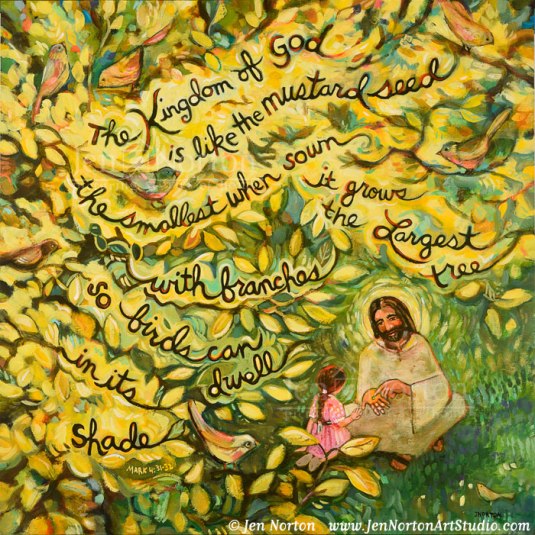
The farm wife turns off the TV evangelist
by Shari Wagner
The Jesus I grew up with
likes to be outside.
If he’s not fishing, he’s picking figs
or showing us his mustard crop.
He prefers dusty roads, the common sparrow,
and lilies of the field.
When he knocks on your door
holding a lantern, you know it’s time
to buckle on overshoes
and go with him to feed the sheep.
But this preacher, who looks straight
into the camera and claims he knows
Jesus, says what he wants
is for me to believe in him
so he can come inside.
That sounds shifty to me.
Like a wolf with his paws dipped in flour.
Jesus who heals the blind
said we will know a tree by its fruit.
“The farm wife turns off the TV evangelist” by Shari Wagner from The Farm Wife’s Almanac. © Dream Seeker Books, 2019
What was Jesus’ plan for Buddy Holly?
It’s the birthday of singer and songwriter Charles Hardin “Buddy” Holly, born in Lubbock, Texas, in 1936. By the age of 13, Holly was playing what he called “Western Bop” at local clubs. He was 19 when an agent discovered him and signed him to a contract with Decca records. The following year, Holly returned to Lubbock and, with three friends, formed The Crickets, who then released “That’ll Be the Day,” which sold more than a million copies. Buddy Holly’s career was short: He died in February of 1959 in a plane crash in northern Iowa. Soon after, an English band that admired The Crickets decided to call themselves The Beatles.



 The Vibrant Channeled Creator