The art of being wise is the art of knowing what to overlook…

nightvisions

He wrote a lot about the psychology of pragmatism.

He argued that a person’s beliefs were true if they were useful to that person and he said, “Believe that life is worth living and your belief will help create the fact.”


He also wrote, “Common sense and a sense of humor are the same thing, moving at different speeds.

A sense of humor is just common sense, dancing.”

William James

It’s the birthday of the man who coined the term “stream of consciousness” and who said that “the art of being wise is the art of knowing what to overlook” — psychologist and philosopher William James (books by this author) (1842), born in New York City to one of the most prominent intellectual families in the history of America. His brother was writer Henry James, his sister was diarist Alice James, his dad was a famous theologian, and his godfather was Ralph Waldo Emerson.
He was tone-deaf, got motion sickness easily, suffered from depression and was suicidal for long intervals, had chronic back pain, recurring digestive ailments, and problems with vision. He told people he had “soul-sickness.”
He got an M.D. at Harvard but never practiced medicine; instead, he spent his life in academia at Harvard. There he taught physiology, then anatomy, and then, for many years, psychology and philosophy. Over the years he lectured to many future famous Americans, including Teddy Roosevelt, W.E.B. DuBois, and Gertrude Stein, a favorite of his. On an in-class exam he gave, Gertrude wrote, “Dear Professor James, I am so sorry but I do not feel a bit like writing an examination paper on philosophy today.” He wrote back, “Dear Miss Stein, I understand perfectly. I often feel like that myself.”
He was an enormously prolific writer. Scholar John McDermott put together a bibliography of William James’ writings that was 47 pages long. His most well-known work is probably the 1,200-page Principles of Psychology, published in 1890 after more than a decade of research and writing. While working on the book he did first-person research on the psychology of mystical experience, and to aid in this he sometimes used narcotics. He said that he could only really understand the German idealist philosopher Hegel when he was under the influence of laughing gas.
He wrote a lot about the psychology of pragmatism. He argued that a person’s beliefs were true if they were useful to that person and he said, “Believe that life is worth living and your belief will help create the fact.”
He also wrote, “Common sense and a sense of humor are the same thing, moving at different speeds. A sense of humor is just common sense, dancing.”
He hung out with Freud, Jung, Helen Keller, Mark Twain, Bertrand Russell, and many other intellectuals. He once said, “Wherever you are, it is your own friends who make your world” and he said, “Properly speaking, a man has as many social selves as there are individuals who recognize him.”
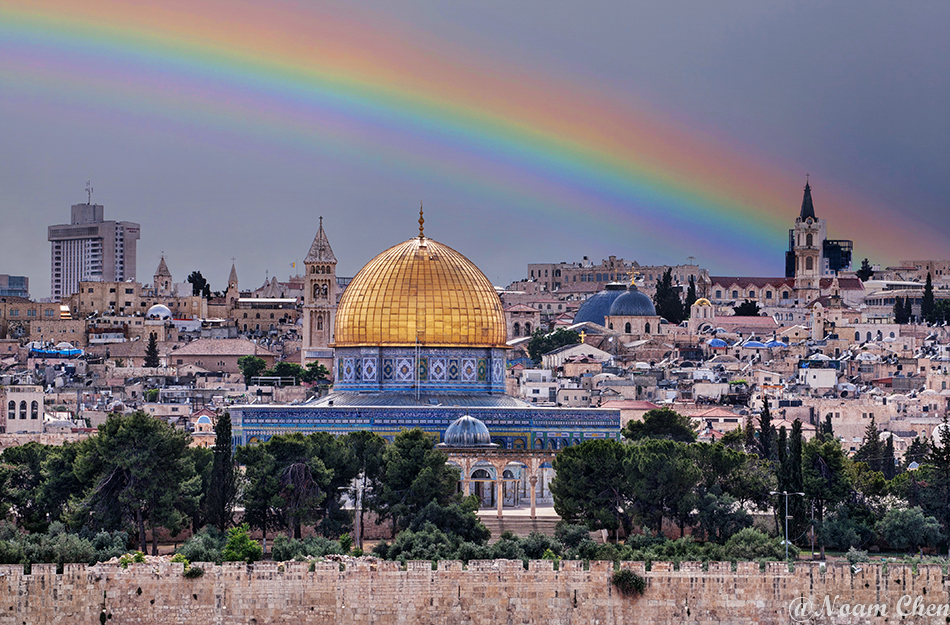

Allah?

beautiful-photos-jerusalem

He is Allah, other than whom there is no deity,

Knower of the unseen and the witnessed.

He is the Entirely Merciful, the Especially Merciful.

He is Allah, other than whom there is no deity, the Sovereign,

the Pure, the Perfection, the Bestower of Faith, the Overseer,

the Exalted in Might, the Compeller, the Superior.

Exalted is Allah above whatever they associate with Him.

He is Allah, the Creator, the Inventor, the Fashioner;

to Him belong the best names.

Whatever is in the heavens and earth is exalting Him.

And He is the Exalted in Might,

the Wise.

(Translation of Qur’an: Chapter 59, Verses 22-24)

free, efficient, equal…

IMG_0745

It was on this day in 1790 that the first State of the Union Address in American history took place. George Washington delivered it in New York City which was the capital of the U.S. at the time. He spoke before the Senate and House of Representatives, giving a fairly short speech, about the equivalent of three single-spaced typewritten pages.
“Gentlemen of the Senate and House of Representatives:“… The welfare of our country is the great object to which our cares and efforts ought to be directed, and I shall derive great satisfaction from a cooperation with you in the pleasing though arduous task of insuring to our fellow citizens the blessings which they have a right to expect from a free, efficient, and equal government.”

The Poetry Almanac 1/8/22

And the first shall be last…

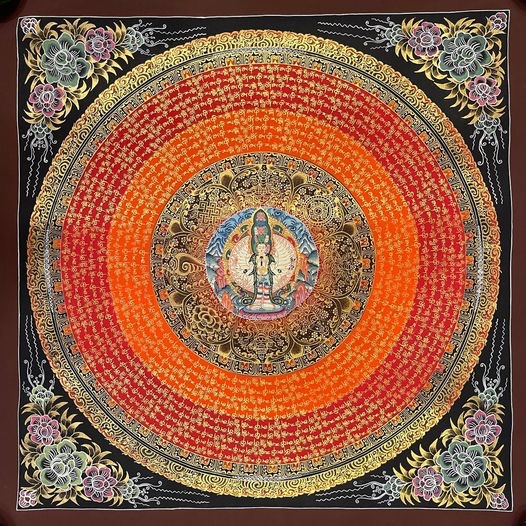
MantraMandala

Art of Tibet

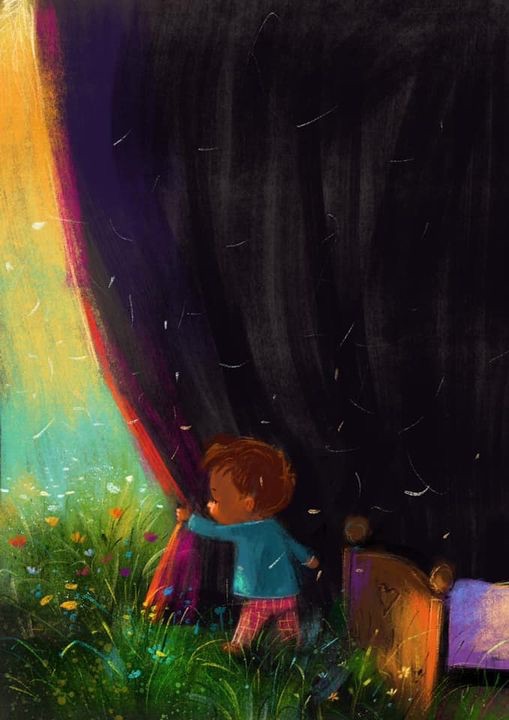
MarcinPiwowarski1:6:22

MarcinPiwowarski illustrations 1/6/22

round and round

the light creeps

then kisses

tips of tenderness

the next minute waits for you, unspoiled…

RackenLake

Gustav Fjaestad – Sunlight from Racken Lake, nd.

“The chief beauty about time
is that you cannot waste it in advance.
The next year, the next day, the next hour are lying ready for you,
as perfect, as unspoiled,
as if you had never wasted or misapplied
a single moment in all your life.
You can turn over a new leaf every hour
if you choose.”
Arnold Bennett

Elizabeth Strout said, “I write pieces, and move them around.

And the fun of it is watching the truthful parts slide together.

What is false won’t fit.”

epiphany for you…

epiphany

As a child, I obsessively needed a nightlight, so afraid was I of the dark. My brother and I, who shared a bedroom, would often argue over that nightlight. They claimed not to be able to sleep with it on. I was convinced I couldn’t sleep with it off. Of course, we were all wrong. What was it about that light that so comforted me? What was it about a tiny light, twinkling like a star in the midst of a darkened night that still gives me comfort as an adult?
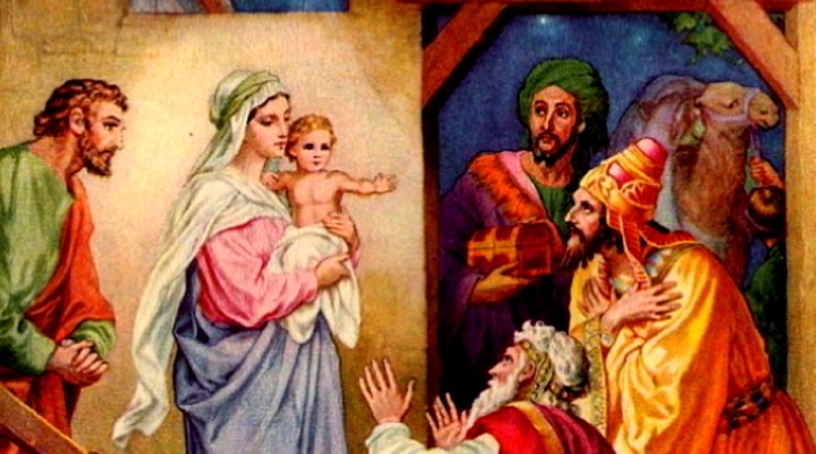
Matthew tells us in his Gospel that Magi from the east saw the star at its rising. They followed it to Jerusalem, where they went to Herod, asking to see the newborn king of the Jews. But Herod knew nothing of this king. He knew nothing of this star. And the news the Magi brought of a newborn king filled him not with the same joy with which they sought the child but with murderous rage. Herod knew nothing of this star because he was blind to its light. He was unable to recognize the light which this newborn king would bring to the world. Rather, he could see only the darkness of his own desires and the fear that this king would be his undoing. He was blind to the star because he was blind to the power of God’s love. He lived his life guided not by light and love but by his desire for power. He lived his life guided by darkness and fear.
In the feast of Epiphany, we celebrate the revelation of God’s light to the nations. In doing so, we celebrate our belief that salvation is not meant for a mere chosen few but for the whole world. God’s light is revealed to all who are eager to open their eyes to see that light for what it is. God’s love is revealed to all who are willing to open their hearts by a star shining in the darkened sky. God’s power is revealed in the person of a tiny, defenseless infant, whom Herod and the other rulers of this world would seek to destroy. God’s mercy is revealed the act of total, self-giving love, in which all is given and nothing is asked in return. And that mercy is still revealed to us today every time we give of ourselves for others—every time we show mercy to those around us—every time we lift the cross for those who are unable to carry the cross on their own—every time we are willing to see in another person the presence of the living God.
But in celebrating Epiphany—in celebrating God’s manifestation to the nations, we are not celebrating a light that has come and gone, like a flash in the night. We are not looking back with nostalgia to a better day that can never return. When our first reading on Christmas Eve told us that a people who walked in darkness have seen a great light, it wasn’t just referring to a people who lived two or three thousand years ago. We are that people who walked in darkness. At times, we are blinded, like Herod, by our disordered desires for power, pleasure, or prestige. We are people who at times give in to rage because we have forgotten who we are and who God has created us to be.
And yet, despite of all that blinds us, our eyes have been opened. Our eyes have been opened by God’s grace, which allows us to see, which allows us to believe. We are that people who have seen a great light, upon whom the glory of the Lord shines even today. We are that people to whom Christ manifests himself, revealing his love to us in unexpected ways. We are that people who are called to search not the darkened skies but our hearts for a sign of God’s love revealed to the nations—of God’s love revealed to us—that God is still alive and active in our world, giving of himself to us, emptying himself of everything so that we might be filled.
If we can see God’s light revealed in the symbol of a star in the sky, set to guide us and lead us to salvation, then we can certainly see God’s light revealed even in a world darkened by sin and suffering, by poverty, by cynicism, by sickness. If we can see God’s power revealed in a defenseless infant born into the poverty of a stable, then we can certainly recognize God’s power revealed in our weakness, in our sorrow, in our suffering. If we can believe that God emptied himself two thousand years ago to be born into the world as one of us, then we must believe that God continues to reveal himself even today. We see God’s image in the face of friend and stranger. We see God’s hand in acts of kindness, in selfless acts of love. We recognize God’s abiding presence in ourselves—in you and in me and in every human being—in every person who, through the waters of baptism, is called to bear Christ’s image to the world and to share his love by giving of themselves, by allowing themselves to be poured out so that there will be no more hunger, no more poverty, no more war, no more hatred, so that the kingdom of God can be established not in some mythological time gone by or some dreamed of day in the future, but today—in our world—in our very midst.
You and I—we must reflect the light of Christ shining on a darkened world to give hope to those who are hopeless. We must reflect the light of Christ shining on a world that is cynical, to be a sign of love to those who have never known love. We must rise up in splendor, to give witness to the great light which has overwhelmed the darkness of our world and shows us the glory of a God who loves us so much that he became one of us, in order that we might even one breath at a time, one heartbeat at a time, become ever more and more like him, in order that we might no longer be afraid.
Image credit: Heinrich Hofmann, Public domain, via Wikimedia Commons.
* Tags: Epiphany, Fr. John Keehner, Magi, Three Kings
The Writer’s Almanac for Wednesday, January 5, 2022

one breath and then another…

onebreath

THE MORE YOU HONOR YOURSELF, THE MORE THE PEOPLE AROUND YOU WILL APPRECIATE YOUR PRESENCE

Be unapologetically authentic.

Share your inner world with your surroundings.

Don’t ask for permission to follow your heart’s desires

and prove to yourself that you have more to share with the world.

East meets west…

eq6w76OwMsgxd0ckvOT8_rp5lPlHF4-I9IblkAJg9xLQ8VmqELxs-DbxFJ_FTcSbyxyzhhpiwkKVmp-b6H0S4GikJBiaKw-otRXKtgaeJLERCYfjfbbD0v2CIy9K2DAW

New York Subway

by Hilda Morley

The beauty of people in the subway


that evening, Saturday, holding the door for whoever


was slower or

left behind
(even with


all that Saturday-night


excitement)
& the high-school boys from Queens, boasting,


joking together


proudly in their expectations

& power, young frolicsome

bulls,


& the three office-girls


each strangely beautiful, the Indian

with dark skin & the girl with her haircut


very short and fringed, like Joan

at the stake, the corners

of her mouth laughing


& the black girl delicate

as a doe, dark-brown in pale-brown clothes

& the tall woman in a long caftan, the other day,

serene & serious & the Puerto Rican


holding the door for more than 3 minutes for

the feeble, crippled, hunched little man who


could not raise his head,


whose hand I held, to


help him into the subway-car—

so we were

joined in helping him & someone,

seeing us, gives up his seat,
learning


from us what we had learned from each other.

Hilda Morley, “New York Subway” from To Hold My Hand: Selected Poems 1955-1983. © 1983 Hilda Morley published by The Sheep Meadow Press.

The year of the Ancient of Days…

201383220_23847675633500367_1934947248096660654_n.png

It is the year of:

The Light “Lord of Lords”
Quakers

Abba “Father”
Hebrew

El Shaddai “Yahweh”
Jehovah Adonai

God Jesus “Yeshua”
Christ “the Annointed”
“Khristos in Greek
Christians

Alpha & Omega
Healer in Latin

“Deus” the Latin Word
“Domine Deus” Romanian

Bog in Slavic languages
Allah “the god”
Islam

“to Him belong the best named”
Muslems

Ar-Rahim
the most merciful

Khuda God “Tangri “Allah in Turkey
Sufism
“Hu”means revealed

Bahai Faith Almighty
“All possessing, all powerful ,all wise”
Incomparable Gracious Helper
All glorious Omniscient
All glorious expressed in Arabic:
the complete incarnation of names and attributes of God

“Shanqdi”King above in Chinese
Zhu Lord in Heaven

Maykapaly Creator
Fililipino
Bathala “God Almighty”

N Kosi King
African
Rastafari Jehovah

Basque “Jaun “the Lord
Mormon Elohaim
Jehovah Witnesses “He causes to become”

Islam: Allah the God
Muslums “to Him belong the best names”
Ar-Rahim the most merciful

Ancient of Days
Dominus Deus
All glory to you
in 2022!

find blessings in 2022…

illuminated-r2-1536x806

Commentary:


Blessings come in many forms. Some blessings appear in the form of disappointments, of not getting our way or what we want. But often the things we want, we only want for a moment or a day – and then our craving for that thing or even that person evaporates. Sometimes the worst thing that could happen to us is to get exactly what we’ve prayed for.
To be patient means to “dwell in the moment”, to “be still and present”, allowing the design of all things to take their place. Impatience comes from living according to the clock. Time controls your mind, your heart, your sense of self-worth. “I do not have the patience to sit still and reflect upon what I thought about today or what I said to others.” And yet the words you use each day are the instruments through which you create the experiences of your life. Do you have any idea how powerful each word really is?
Commentary:
Reflect on these questions:
* How does my impatience serve me?
* How often during each day do I think in terms of time?
* And in how many ways does “time-thinking” contribute to my stress?
* Time is another way of experiencing the “gift of life”, of observing it pass in front of our eyes. How shall I spend the hours and days of my life?
* Do I want them to be stress-filled?
The grace of patience allows me to break free of the illusion that the next minute has something more to offer than this present moment. Believing that I am standing in the midst of an empty moment – as if any moment could be empty – is a profound illusion. I am the one in charge of filling in the moments of my life. My life is not supposed to be delivered to me, as if something is owed to me. With patience, I see more of what is in my own world in every single second.
Everything is possible for one who believes, still more for one who hopes, even more for one who loves, and most of all for one who practices and lives these three graces.
Commentary:
Faith, hope and love are nectar for the human spirit. We can live without a lot of things but we cannot sustain ourselves for long without hope or love or believing in something greater than ourselves. The practice of these graces – even in the smallest ways – can change the life of another person. Pessimism, complaining and dismissing opportunities because you are not given a guarantee of success and financial protection with that opportunity will eventually lead you into depression and hopelessness, as you are living the practice of “hopelessness”. Faith, hope and love exist because life is a labyrinth, turning this way and that, always letting us believe that we are not really on a path at all. Suddenly we discover we have all along been on a geometrically perfect path leading directly to an aligned center. Faith and hope along the path is the only wise choice. And as for being loving, my suggestion is that you go for broke. Decide to make this life an experiment on how loving you can be in one life. Decide that your cause of death will be: Died from love-exhaustion. Why not? Go for it. People die of despair and loneliness all the time – I know it. I meet people disintegrating from loneliness and heartache in my workshops all the time. Even though they may end up developing cancer or some other illness, I know that the energetic precursor for some people – not all, but some – was loneliness.
Finally, this passage to dwell upon as you enter the New Year:
“Let me not tell my life again what I want to do with it and what I expect from it;
Now I will listen to my life direct me. Who am I? What creative talents have I been born with? What does my soul know to be the Truth? I am ready to listen.”
I’d like to thank all of you for your support of all my work. I wish you the very best for the coming New Year.
Love,
Caroline Myss

Previous Older Entries Next Newer Entries