
Can the bearded pa-
triarch and breasted matri-
arch both rule at once?
Jeanne Poland's Poetry Blog
06 Mar 2016 Leave a comment
in Humans, Patriarch & Matriarch, Poetry Tags: bearded patriarch, both rule at once, breasted matriarch, Patriarch & Matriarch
Can the bearded pa-
triarch and breasted matri-
arch both rule at once?
05 Mar 2016 1 Comment
in Dancing Never Dies, Poetry, sounds Tags: buzz, click, creak, croak, hum, sing, sounds, we are one, whistle, with all life forms
We are one with all
life forms who creak, sing, whistle,
buzz, croak, hum, and click!
04 Mar 2016 Leave a comment
in artist, Local Noses, Poetry Tags: LocalNoses, spy the length of bread, the buildings know, the noses of the local folk

illustrator: Anikleyeva
The buildings know the
noses of the local folk;
spy the length of bread!
03 Mar 2016 1 Comment
in Dr Seuss, Poetry, Writing Tags: Cat in the Hat, Dr Seuss, elementary age children, pseudonym, writing

It’s the birthday of writer and illustrator Dr. Seuss (books by this author), born Theodor Seuss Geisel in Springfield, Massachusetts (1904). He went to Dartmouth College, where he was editor in chief of his college’s humor magazine. One night, he was caught drinking gin in his room with a group of friends, which was not only against the school rules but also illegal under Prohibition. He wasn’t kicked out, but he had to resign from all his extra-curricular activities, including the humor magazine. Geisel couldn’t accept this turn of events, so he continued contributing to the magazine but used a pseudonym: “Seuss.” It was his middle name and his mother’s maiden name.
After Dartmouth, he went to England to attend Oxford University, but he dropped out. For the next decade or so, he published cartoons in magazines and made most of his money creating ads for Standard Oil. His best-known Standard Oil campaign was for Flit, a mosquito insecticide, which he advertised with the slogan “Quick, Henry, the Flit!”
In the fall of 1936, he was coming home from Europe, stuck below deck during a long rainy stretch. He started making up words to fit the rhythm of the ship’s engine, and the poem he composed in his head became his first children’s book: And to Think That I Saw It on Mulberry Street (1937). His manuscript was rejected more than 20 times; editors disliked the fantasy, the exuberant language, and the lack of clear morals. One day, after receiving yet another rejection, he finally decided to give up and burn his manuscript. He was thinking about this as he walked down Madison Avenue in New York, when he bumped into an old classmate from Dartmouth, who had recently become a children’s book editor for Vanguard Press. After hearing his story, the classmate took Geisel back to his office and introduced him to some executives, and it wasn’t long before he had a book deal. He said later: “If I had been walking down the other side of Madison Avenue, I’d be in the dry-cleaning business today.” For the next 20 years, Geisel continued to publish children’s books and work on cartoons and ad campaigns. And he drew posters for the war effort during World War II.
In 1954, Life magazine published an article about the low rates of literacy among elementary-aged children across the nation. The writer concluded that most primer books, of the Dick and Jane variety, were just too boring to engage and teach kids. The editor at the education division of Houghton Mifflin gave Seuss a list of about 250 words and challenged him to write a book that a first-grader would love, using only those words. Seuss agreed, expecting it would be a quick project, but he found it extremely difficult even to get started. Not only did he have a very small list to work from, but he also was accustomed to making up nonsense words, which he couldn’t do. He kept coming up with ideas but was unable to express them with such a limited vocabulary. Finally, he decided that he would read through the list once again, and if he could find two words that rhymed, that would be the subject of the book. He saw “cat” and “hat,” and he had a title. A year and a half later, he had completed the manuscript using 236 words. When The Cat in the Hat (1957) was published, it was an unprecedented commercial and critical success, and made Seuss a household name.
His other books include Horton Hatches the Egg (1940), How the Grinch Stole Christmas! (1957), One Fish Two Fish Red Fish Blue Fish (1960), Green Eggs and Ham (1960), Hop on Pop (1963), and The Lorax (1971).
He said: “I like nonsense; it wakes up the brain cells. Fantasy is a necessary ingredient in living; it’s a way of looking at life through the wrong end of a telescope.”
03 Mar 2016 1 Comment
in beauty, Borders, Poetry Tags: Borders, Cherkasov, chiaroscuro, flight, might, morphs, mythical animals, sight

illustrator: Cherkasov
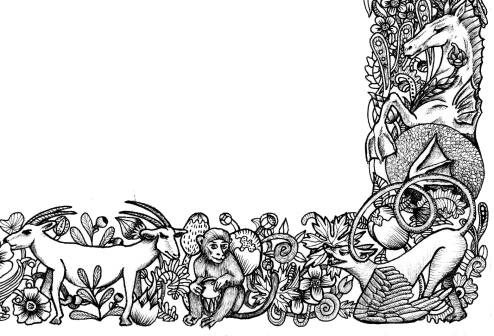

Can you find the 16 mythical animals in the borders?
Every border morphs
with flight, might and sight: behold
chi·a·ro·scu·ro!
02 Mar 2016 1 Comment
in Family Activity, Poetry, Slush Tags: family and friends, Hesham Solieman, publishers, Slush, slush pile, strangers
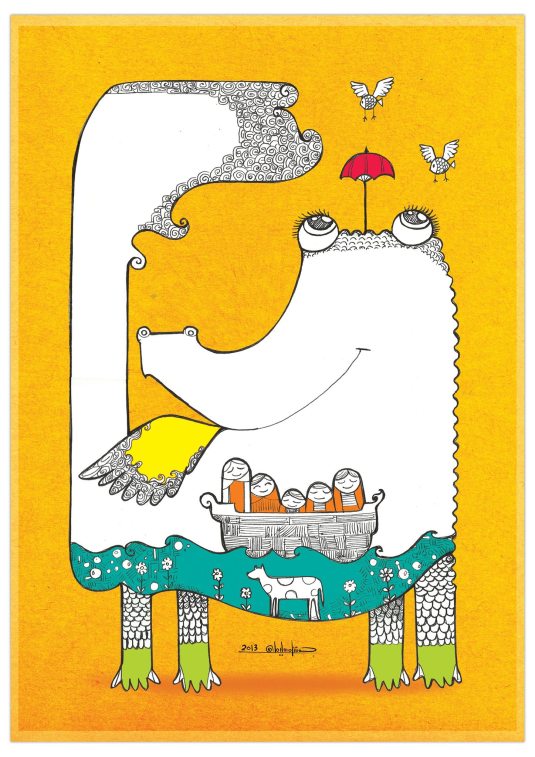
illustrator: Hesham Solieman
The slush pile waits for
strangers; so make publishers
family and friends
01 Mar 2016 Leave a comment
in fly through faith trust love, Poetry, Teaming With Life Tags: Boston MA, conscience, direction, illustrator:JByronSchachner, purpose, Robert Lowell, Teaming With Life, torment, vocation, writing is solid
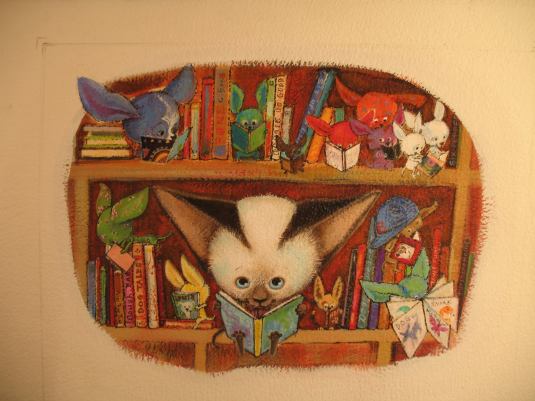
illustrator: J Byron Schachner
It’s the birthday of poet Robert Lowell (books by this author), born in Boston, Massachusetts (1917). He once said, “Sometimes nothing is so solid to me as writing — I suppose that’s what a vocation means — at times a torment, a bad conscience, but all in all, purpose and direction.”
29 Feb 2016 Leave a comment
in Dad, Poetry, Velez Tags: George Velez, human heart, publisher, relationships beyond time, space, spawn of SVA, Velez, writer and illustrator
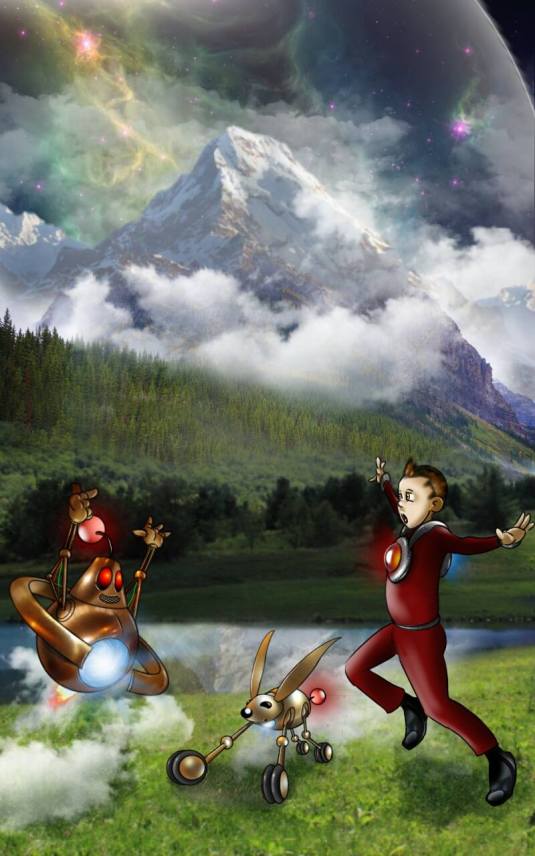
illustrator: George Velez
Spawn of SVA:
relationships beyond time
space ‘n human heart
28 Feb 2016 Leave a comment
in Bug, Poetry, sphinx Tags: above the moon, clear and serene, continual cheerfulness, Michael de Montaigne, sphinx, the highest wisdom
Michael de Montaigne
He said, “The highest of wisdom is continual cheerfulness: such a state, like the region above the moon, is always clear and serene.”
27 Feb 2016 Leave a comment
in Bug, Good Life Cat, Poetry Tags: God Be With You Bug!, Good Life Cat, Grandmas Eileen and Jeanne, Grandpas Rich and Don, You blessed Quenby and Michael every day!




God be with you, Bug!
Grandma’s Eileen and Jeanne
Grandpa’s Rich and Don!
You blessed Quenby and Michael every day!


