
illustrator: J Byron Schachner
News from Geneen Roth:
“Life is messy …and magnificent”
“As temporary, fragile and vulnerable as our bodies are,
they are the most direct portals to the only forever there is.”
Jeanne Poland's Poetry Blog
24 Jun 2019 Leave a comment
in Poetry, wriggling portal Tags: fragile, J Byron Schachner, Life is messy, magnificent, most direct portals to the only forever there is, News from Geneen Roth, temporary, vulnerable, wriggling portal
illustrator: J Byron Schachner
News from Geneen Roth:
“Life is messy …and magnificent”
“As temporary, fragile and vulnerable as our bodies are,
they are the most direct portals to the only forever there is.”
22 Jun 2019 Leave a comment
in burnt in the furnace, Poetry Tags: Barbara Crooker, burnt in the furnace, Field with Wheat Stacks, foolishly in love, JByron Schachner, kernal from the shaff, roll on down, separated, threshed, wave after wave
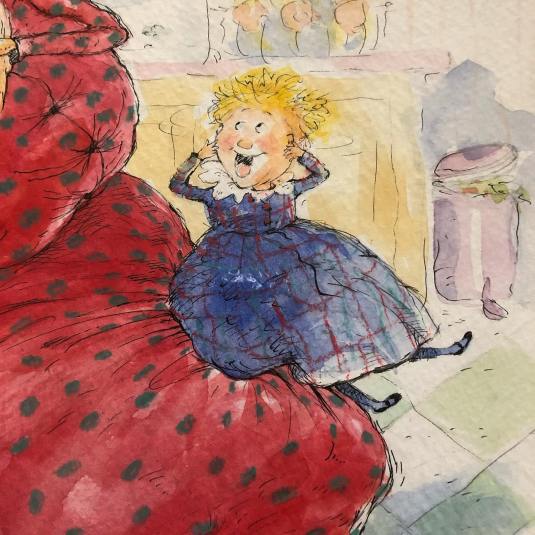
illustrator: J Byron Schachner
Field with Wheat Stacks
~Vincent Van Gogh
by Barbara Crooker
He fell in love with a simple field
of wheat, and I’ve felt this way, too;
melted, like a pool of mint chip
ice cream, foolishly in love,
even though we know
how it turns out in the end:
snicked by the scythe, burnt
in the furnace of the August
sun, threshed, separated, kernel
from chaff. But right now,
it’s spring, and the wheat aligns
in orderly rows: Yellow green.
Snap pea. Sage. Celadon.
His brush strokes pile on,
wave after wave, as the haystacks
liquefy, slide off the canvas,
roll on down to the sea.
“Field with Wheat Stacks” by Barbara Crooker from Les Fauves. © C&R Press, 2017. Reprinted with permission.
21 Jun 2019 Leave a comment
in Poetry, summer solstice, summer soltice Tags: corn, direct radiation, longest day, Northern Hemisphere, rice, sixty eight degrees, summer solstice, tilted planet, wheat

Today is the summer solstice and the first day of summer in the Northern Hemisphere. For those of us in the north, today will be the longest day of the year and tonight will be the shortest night. The entire Earth is about 3 million miles farther from the sun at this time of the year. The difference in the temperature is due to the fact that our planet is tilted on its axis, and at this time of year, the Northern Hemisphere is tilted toward the sun, receiving more direct radiation for longer periods of time each day. It is that slight tilt, only 23 1/2 degrees, that makes the difference between winter and summer. The rise in temperature allows most of the plants we eat to germinate. Wheat and many other plants require an average temperature of at least 40° F to grow. Corn needs a temperature of 50° F, and rice needs a temperature of 68° F.
from the Writer’s Almanac june 21, 2019
20 Jun 2019 Leave a comment
in He's got my whole world in His hands..., Poetry Tags: Adrian Mangoumet, But still you light my way, He's got my whole world in His hands..., I might be tiny and you enormous, Omnipotent Creator, redeemer, sanctifier, You might be omniscient and I fragmented

I might be tiny
and You, enormous;
You might be omniscient
and I fragmented;
But still You light my way,
Omnipotent Creator, Redeemer, Sanctifier!
18 Jun 2019 Leave a comment
in Poetry, young-old Tags: a goose-a swan, all the trees are green, Charles Kingsley, creep home, dog your day, find one face you loved when young, have your course, healthy all, lass a queen, male-female, sport is stale, trees are brown, wheels run down, world is old, young-old

male-female young-old healthy all
Young and Old
by Charles Kingsley
When all the world is young, lad,
And all the trees are green;
And every goose a swan, lad,
And every lass a queen;
Then hey for boot and horse, lad,
And round the world away;
Young blood must have its course, lad,
And every dog his day.
When all the world is old, lad,
And all the trees are brown;
And all the sport is stale, lad,
And all the wheels run down;
Creep home, and take your place there,
The spent and maimed among:
God grant you find one face there,
You loved when all was young.
17 Jun 2019 Leave a comment
in Poetry, Selfies Tags: Selfies

Meredith purples

the window lets in sky
I spy
blue sky-
I sigh…
a quasi
bird’s eye.
15 Jun 2019 Leave a comment
in getting your illustrations out there, Poetry Tags: ad executive, Algonquin Books, aphorisms, dropping color on their heads, getting your illustrations out there, headache, Loss and What I wore, love, stand on your head, Walter Koessler

illustrator: Walter Koessler (dropping color on their heads)
It’s the birthday of advertising exec-turned-writer Ilene Beckerman (books by this author), born in Manhattan (1935). She didn’t begin her writing career until the age of 60, and even then, she became a published author almost by accident. She had written and illustrated a book for her five children, something to remember her by. She said: “My purpose was to say things to my children one doesn’t have the time to say. I wanted them to know I wasn’t always their mother. I was a girl, I had best friends, we did stupid things together. I was on a bus with my friend once eating dog bones so people would look at us. I wanted them to know.”
She took the book she’d written down to the ad agency she owned, to use the machines there to make a dozen photocopies. She put them in big red binders, with the illustrations she had sketched in plastic sheet protectors, and handed them out to her children and a few close friends. She was done, or thought she was. Then, the cousin of a friend got a hold of one of the binders and sent it over to Algonquin Books. Pretty soon, the publisher was calling her about publishing her book. Beckerman said that they offered her “an advance that had a comma in it. I think I fainted.”
The book came out in 1995, and was called Love, Loss, and What I Wore. It’s the story of her life growing up in Manhattan in the 1930s, ’40s, and ’50s, accompanied by drawings of the clothes that she was wearing during that time. She insists that clothing plays an integral part in many women’s memories, that they can recall important events or distinct spans of their lives by what they were wearing at the time. When the book came out, bookstores were not sure whether to market it as memoir or fashion. It was later made into a play by Nora Ephron and Deli Ephron.
Beckerman insists that clothes are the least important part of her book, which she considered a memoir.
The book contains advice and aphorisms from her grandmother, who raised her, such as, “If you have to stand on your head to make somebody happy, all you can expect is a big headache.”
14 Jun 2019 Leave a comment
in Poetry, Svitlana Tags: clear days, de Marchenerzahler, moonlight nights, no cares at all, oceans to sail, Quicksilver, sleep with, Svitlana
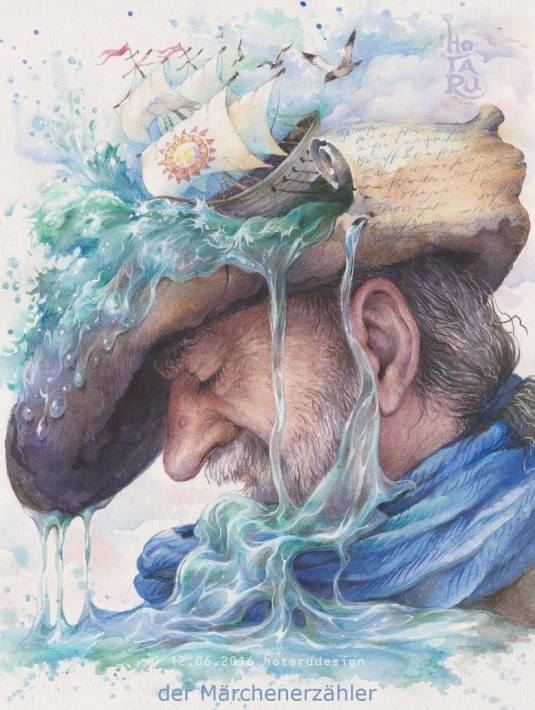
illustrator: Svitlana Holovchenko
there are oceans to sail
and clear clear days to sail with
moonlight nights to sleep with
no cares at all
quicksilver
13 Jun 2019 Leave a comment
in faithful, Poetry Tags: all days, all nights, faithful, I'm doubtful, I'm faithful, some dark days, some sunny days, Spirit is faithful, Spirit transforms me

some sunny days, I’m faithful
some dark days, I’m doubtful
all days, Spirit is faithful
all nights, Spirit transforms me


 The Vibrant Channeled Creator