When people eat from the same pot, something magical happens…

58827446-watercolor-illustration-family-in-kitchen-preparing-meal

Watercolor illustration in retro style

Today is the birthday of author Michael Pollan (books by this author), born on Long Island, New York (1955). He’s the author of several books on food and the food industry, notably The Omnivore’s Dilemma: A Natural History of Four Meals (2006), which The New York Times named one of the 10 best books of the year. His most recent book is This is Your Mind on Plants (2021), his second foray into plant-based psychedelics.
Pollan first became interested in the subject of food through his interest in gardening. “I got interested in gardens,” he says:
[B]ecause I was interested in nature and wilderness and Thoreau and Emerson. I brought all their intellectual baggage to my garden here in New England and found that it didn’t work out very well, because ultimately Thoreau and Emerson’s love for nature was confined to the wild. They didn’t conceive of a role for us in nature other than as admirer and spectator … which is a problem when a woodchuck eats all your seedlings.”
Pollan is a big advocate of the family meal. Convenience foods and fast food found their way into the American diet in a big way in the 20th century: first, during World War II, with new technology that processed food and made it more shelf-stable; and then later, when women began entering the work force in greater numbers, but were still solely responsible for putting meals on the table. Pollan argues that today’s working couples need to figure out ways to divide household duties in such a way that makes having home-cooked, family dinners possible. “[T]here’s something magical that happens when people eat from the same pot,” Pollan says. “The family meal is really the nursery of democracy. It’s where we learn to share; it’s where we learn to argue without offending. It’s just too critical to let go, as we’ve been so blithely doing.”
The Writer’s Almanac for Sunday, February 6, 2022


You are not the size of clothes you wear…

ImageImageravenousButterflies

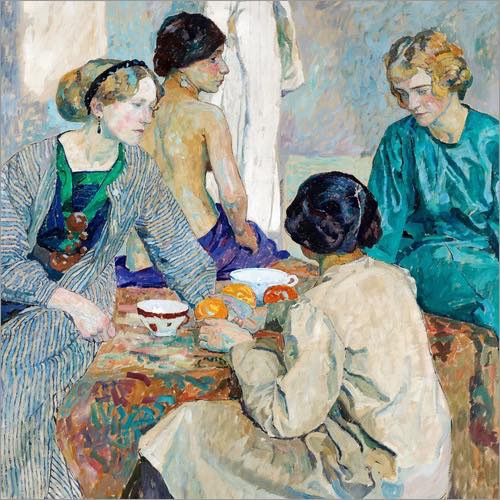
Carl Wilhelm Wilhelmson – In the Studio, 1912.

“You are not your age,
Nor the size of clothes you wear,
You are not a weight,
Or the colour of your hair.
You are not your name,
Or the dimples in your cheeks,
You are all the books you read,
And all the words you speak,
You are your croaky morning voice,
And the smiles you try to hide,
You’re the sweetness in your laughter,
And every tear you’ve cried,
You’re the songs you sing so loudly,
When you know you’re all alone,
You’re the places that you’ve been to,
And the one that you call home,
You’re the things that you believe in,
And the people that you love,
You’re the photos in your bedroom,
And the future you dream of,
You’re made of so much beauty,

But it seems that you forgot,
When you decided that you were defined,
By all the things you’re not… “


Erin Hanson – Not.

Today will bring new opportunities for profit…

pjimage-2022-02-04t182624-1643979390

Basant Panchami Horoscope Today, Feb 5                    Image source: FREEPIK

Aquarius
Today is going to be a good day for you. Today new opportunities for profit will come. Today, the help of your spouse will prove to be effective for you in completing the stalled work. Today, you will actively participate in social work, which will increase your identity among people. Today, suddenly a relative will come to the house. Today there will be good news from the maternal side.

Scorpio
Today luck will be kind to you. Today, you will discuss important work with a colleague. Today the opinion of others will prove to be effective for you. The day is good for married people of this zodiac. Today your relationship with your spouse will become strong. Today you can get help from some special people to increase your business. People doing business of clothes will get more profit than daily.

the story is the first thing and the last thing…

Triple_Self_Portrait_5_6_crop_web


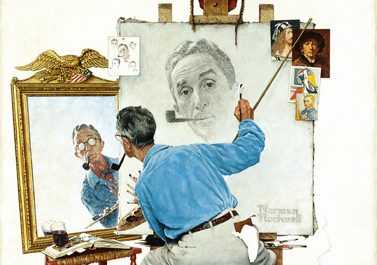
Norman Percevel Rockwell was born in New York City and grew up in cramped, shabby apartments. He was sickly, skinny, underweight, bad at math, probably dyslexic, and wore corrective shoes. But he was also a talented drawer from a young age and when he was 14 he began attending the Chase Art School, which is now the Parsons School of Design. He did early work for Boys’ Life magazine and the Boy Scouts of America. About art he said, “The story is the first thing and the last thingNorman Percevel Rockwell was born in New York City and grew up in cramped, shabby apartments. He was sickly, skinny, underweight, bad at math, probably dyslexic, and wore corrective shoes. But he was also a talented drawer from a young age and when he was 14 he began attending the Chase Art School, which is now the Parsons School of Design. He did early work for Boys’ Life magazine and the Boy Scouts of America. About art he said, “The story is the first thing and the last thingNorman Percevel Rockwell was born in New York City and grew up in cramped, shabby apartments. He was sickly, skinny, underweight, bad at math, probably dyslexic, and wore corrective shoes. But he was also a talented drawer from a young age and when he was 14 he began attending the Chase Art School, which is now the Parsons School of Design. He did early work for Boys’ Life magazine and the Boy Scouts of America. About art he said, “The story is the first thing and the last thing

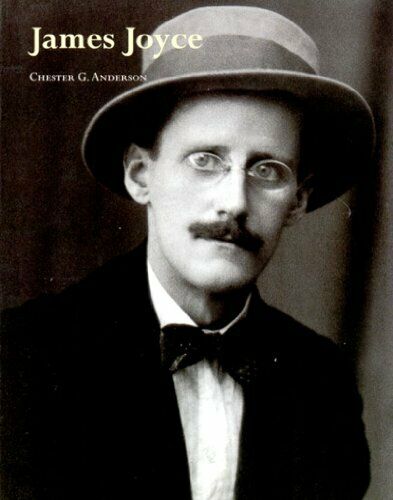
James Joyce said: ” the artist , like the God of creation, remains within or behind or beyond or above his handiwork, invisible, refined out of existence, indifferent, paring his fingernails.”

JamesJoyce

Joyce was afraid of thunder and lightning — during electrical storms he would hide under bedcovers — and he was also afraid of dogs, and walked around town with rocks in his pockets in case he encountered any roaming mutts. He didn’t care for the arts, other than music and literature, and he especially had no patience for art like painting. Over his desk he kept a photograph of a statue of Penelope (from Greek mythology, the wife of Odysseus/Ulysses) and a photograph of a man from Trieste whom Joyce wouldn’t name but said was the model for Leopold Bloom. On his desk he had a tiny bronze statue of a woman lying back in a chair with a cat draped over her shoulders. All of his friends told him it was ugly, but he kept it on his desk anyway. One of his Parisian friends remarked, “He had not taste, only genius.”

James Joyce treated people invariably as his equals, whether they were writers, children, waiters, princesses, or charladies. What anybody had to say interested him; he told me that he had never met a bore. … If he arrived in a taxi, he wouldn’t get out until the driver had finished what he was saying. Joyce himself fascinated everybody; no one could resist his charm.”

An oak tree takes time to grow to the green sprig…

271140649_312701017459300_941556246579776318_n

The Weight

by Linda Gregg
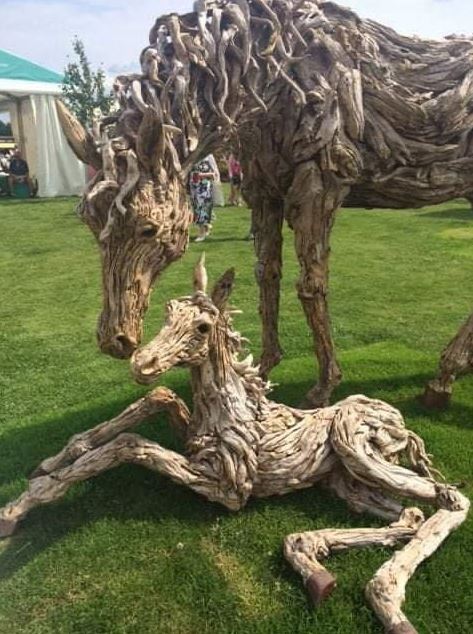
Two horses were put together in the same paddock.

Night and day. In the night and in the day

wet from heat and the chill of the wind

on it. Muzzle to water, snorting, head swinging

and the taste of bay in the shadowed air.

The dignity of being. They slept that way,

knowing each other always.

Withers quivering for a moment,

fetlock and the proud rise at the base of the tail,

width of back. The volume of them, and each other’s weight.

Fences were nothing compared to that.

People were nothing. They slept standing,

their throats curved against the other’s rump.

They breathed against each other,

whinnied and stomped.

There are things they did that I do not know.

The privacy of them had a river in it.

Had our universe in it. And the way

its border looks back at us with its light.

This was finally their freedom.

The freedom an oak tree knows.

That is built at night by stars.
 
Linda Gregg, “The Weight”

from All of It Singing: New and Selected Poems. Copyright © 1994

by Linda Gregg.

Used by permission of The Permissions Company, LLC, on behalf of Graywolf Press, Minneapolis,

Minnesota,

http://www.graywolfpress.org

the human race can still recover…

Thomas-Merton

Thomas Merton 20001

Today is the birthday of Thomas Merton , born in Prades, France (1915). His mother was an American and his father was from New Zealand. They were both artists and they met at an art school in Paris. Merton’s mother died of stomach cancer when he was six years old; ten years later his father died of a brain tumor.
Merton converted to Catholicism in 1938 while he was a student at Columbia University. He taught English for a while at St. Bonaventure College, but he continued studying Catholicism and the spiritualism of William Blake. On December 10, 1941, he quit his job and entered the Abbey of Our Lady of Gethsemani in Kentucky to begin his life as a Trappist monk. He continued studying and kept journals full of his questions and musings. His superior at the monastery, Father Abbot Dom Frederic Dunne, noticed his talent for writing and encouraged him to continue. He began by translating religious texts and writing biographies of the saints.
In 1961 Merton wrote, “It is possible to doubt whether I have become a monk (a doubt that I have to live with), but it is not possible to doubt that I am a writer, that I was born one and will most probably die as one.” Over the course of his life Merton wrote more than 70 books, 2,000 poems, and numerous essays and lectures. He’s perhaps best known for his spiritual autobiography and conversion narrative, The Seven Storey Mountain (1948). It’s been compared to the Confessions of St. Augustine. He ends the book with the line Sit finis libri, non finis quaerendi: “Here ends the book, but not the searching.”
From The Seven Storey Mountain:
“It is only the infinite mercy and love of God that has prevented us from tearing ourselves to pieces and destroying His entire creation long ago. People seem to think that it is in some way a proof that no merciful God exists, if we have so many wars. On the contrary, consider how in spite of centuries of sin and greed and lust and cruelty and hatred and avarice and oppression and injustice, spawned and bred by the free wills of men, the human race can still recover, each time, and can still produce man and women who overcome evil with good, hatred with love, greed with charity, lust and cruelty with sanctity.”
The Writer’s Almanac for Monday, January 31, 2022

Change is a powerful tonic…

Futuristic network digital space

High angle view of futuristic digital network space.

Engineers are changing the world.

Change is a powerful tonic. My Uber driver has a GPS device with a woman’s voice telling him precisely how to take me to JFK to catch a flight. Years ago, the old cabbies Gus and Butch and Spike were proud of their knowledge of the city and now the GPS device opens up the game to newcomers, immigrants, Muhammad and Rafael and Aisha and Eliana. It’s an amazing invention, the inflexion of the woman’s voice is so natural, not robotic. If engineers can develop a device programmed to navigate the streets of New York, then surely they can create a reliable electronic lawyer, and when they do, we’re on the way to reducing the cost of government by 50 or 75 percent. If programmers can’t design a more capable U.S. senator than Ted Cruz, then my name is Kyrsten Sinema.
Change is a tonic and we need it desperately in this country, which has become all too set in concrete. The U.S. Senate is a very ornate 19th-century chamber where not much happens and so it’s practically empty most of the time. A senator will stand up and address a roomful of unoccupied desks, arguing for or against the filibuster, which is as archaic as the dial telephone or tuberculosis, and meanwhile the Royalist party is attempting to suppress voting, which has become too popular in the wrong places, and the suppression is happening in broad daylight, just like the guy I saw years ago on West 90th Street in Manhattan, busting a car window with a broom handle and reaching in to steal the radio, and I said, “What are you doing??” and he said, “None of your business.”

Roth

Love The One You’re With
People usually come to my retreats because they want to lose weight. They want to stop suffering. They want to be happy. I talk to them about trusting themselves and about listening to their bodies. Once you do that, I say, everything — your relationship with food, yourself, your body — tends to fall into place.
But to get them to really pay attention to their bodies, I often have to remind them of the good fortune of having a body. I have to point out that they are not just walking heads with various and sundry appendages.
“Huh?” they say. “Do you think we actually forget our bodies? The ripples on our thighs? The second and third chins underneath our chin?” Exactly my point.
We usually look at ourselves from the outside. We notice our imperfections first, and then we zero in on them, obsess about them. We are often so focused on what is wrong with our bodies that we forget to remember what is right. As if we are the sum of what is wrong with us.
A woman in one of my recent retreats said, “My mind is what is special about me. You keep saying to be aware of my body, but I hate my body. It’s fat and ordinary; freckled and lumpy. But my mind! My mind is fast and quick and sharp. I graduated summa cum laude from college because of my mind, not my body. I’d much rather forget that I have a body and live in my mind.”
But here’s the problem with that: Minds don’t exist without bodies. You need a body to be able to take action on the plans that your mind creates. Your body is where life happens to you. Your body is your home. And it’s hard to live in a home that you are constantly trashing.
A longtime student of mine was recently misdiagnosed with a brain tumor. I’d worked with her over a three-year period as she struggled with being 20 pounds above her natural weight. She hated her body with a vengeance. “I want to get rid of my thighs,” she’d say. “I can’t stand looking at them.” Yet in the two weeks between being diagnosed and then re-diagnosed — in addition to going through the cascade of denial, grief, and anger — she never once thought about cellulite, the size of her thighs, or the wrinkles around her eyes. She felt more grateful for the scent of the air, the sight of her child running, the feeling of warm water on her skin than she had ever felt in her life. When faced with the prospect of losing her body, she was suddenly aware that it was a great blessing to have a body at all.
Whenever you hear yourself treating your body — or body parts — with contempt, stop immediately and feel the human body you are sitting in. Think about the fact that you can actually take a breath, and then another one. Think about what it would be like if you had emphysema or lung cancer and couldn’t take a long, cool draft of air. Would you really give up your ability to breathe freely for thinner thighs or less underarm jiggle?
Then think about the people you know who have died, and what most of them would have given to have just one more minute in their bodies, no matter what their size. To speak to a person they love. To notice a yellow crocus poking through the snow in early spring. To walk, to run, to touch, to listen, to taste.
Ahh. To taste. Think about what it would be like not to be able to taste food, about how it would feel to lose your hunger. When my father was dying, he lost his appetite for food. Nothing, not even his favorite rice pudding, could bring back the excitement of eating. I realized then that just being hungry is thrilling.
Think about wanting to eat. Eating. And then tasting the food with those 10,000 taste buds that are miraculously situated on and underneath the tongue so that you can taste anything, everything, especially chocolate, which, as far as I am concerned, is one of the best things about being alive.
Usually, we are so concerned with calories and the glycemic index and whether we should or shouldn’t be eating this or that particular food that we don’t take time to taste it, to let ourselves really have it. Or else we are perennially multitasking: We are talking on the phone, checking our e-mail, putting on makeup, even driving, while eating at the same time. It’s difficult to appreciate the subtle flavors in seven-grain bread when you are intent on making a straight line with your eyeliner, composing that all-important business memo, or not hitting pedestrians on the street. But the upshot of constantly doing everything is that you miss doing any one thing. You miss your life while you are in the midst of it. You miss the joy of having a body while you are well enough to appreciate it. It’s like being at a feast and starving yourself.
Don’t wait until a scary medical diagnosis to take the time to appreciate what you have right now. Instead, give thanks to the body you’re in now. If you think it’s going to get better when you get thin, if you think you are going to suddenly like your body (and therefore your life) when you are 20 pounds lighter, you are wrong. A student of mine once said, “I would die to be as thin as I was five years ago — and five years ago, I would have died to have been thinner.”
All we ever have is now. If you can’t look around now and see the abundance in your life, you won’t be able to notice it in five years either, no matter how thin you are. Happiness is not about changing your circumstances but changing the eyes through which you view your circumstances.
So the next time you’re tempted to start feuding with your thighs, take a moment to thank them for helping carry you from place to place and forming the lap that held your children. When you look in the mirror, don’t grab those love handles roughly and wish them away. Remind yourself that they’re part of the body that allows you to be here to enjoy all life has to offer. When you’re reaching for a cupcake because you think you’re just a bundle of imperfections — isn’t that how it always starts? — stop and focus on the blessing of still having a body despite the years of abuse you’ve probably heaped upon it. You survived the all-red diet, the oat-bran diet, the cabbage diet — all the fad diets that had everything in them except what your body actually needed: a friend, someone to nurture and care for it, to feed it and treat it with kindness.
After all your body has done for you over the years, don’t you owe it at least that much?

Find your own stress level…

Running_Don

Selye said, “The element of chance in basic research is overrated. Chance is a lady who smiles only upon those few who know how to make her smile,” and:
“Find your own stress level — the speed at which you can run toward your own goal. Make sure that both the stress level and the goal are really your own, and not imposed upon you by society, for only you yourself can know what you want and how fast you can accomplish it. There is no point in forcing a turtle to run like a racehorse or in preventing a racehorse from running faster than a turtle because of some ‘moral obligation.’ The same is true of people.”

Previous Older Entries Next Newer Entries