Definition #168 The Way We Live Now

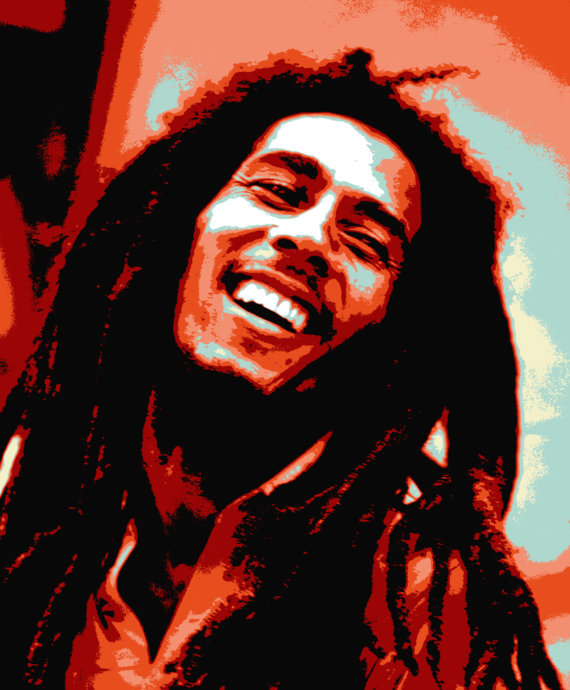
Bob Marley by Ray Ferrer

Bob Marley
by Ray Ferrer

This Morning

by Jo McDougall

As I drive into town
the driver in front of me
runs a stop sign.
A pedestrian pulls down his cap.
A man comes out of his house
to sweep the steps.
Ordinariness
bright as raspberries.

I turn on the radio.
Somebody tells me
the day is sunny and warm.
A woman laughs

and my daughter steps out of the radio.
Grief spreads in my throat like strep.
I had forgotten, I was happy, I maybe
was humming “You Are My Lucky Star,”
a song I may have invented.
Sometimes a red geranium, a dog,
a stone
will carry me away.
But not for long.
Some memory or another of her
catches up with me and stands
like an old nun behind a desk,
ruler in hand.

“This Morning” by Jo McDougall from Dirt. © Autumn House Press, 2001. Reprinted with permission of the author.

Continental Drift by Russell Banks
His novel Continental Drift (1985) was nominated for a Pulitzer Prize and called by Atlantic reviewer James Atlas “the most convincing portrait I know of contemporary America: its greed, its uprootedness, its indifference to the past. This is a novel about the way we live now.”

Definition 166 Pencils

neutral colored pencils align

neutral colored pencils align

Pencils were first mass-produced in Nuremberg, Germany, in 1662, and the Industrial Revolution of the 19th century really allowed the manufacture to flourish.

Before he became known for Walden and “Civil Disobedience,” Henry David Thoreau and his father were famous for manufacturing the hardest, blackest pencils in the United States.

Edison was fond of short pencils that fit neatly into a vest pocket, readily accessible for the jotting down of ideas.

John Steinbeck loved the pencil and started every day with 24 freshly sharpened ones; it’s said that he went through 300 pencils in writing East of Eden (1952), and used 60 a day on The Grapes of Wrath (1939) and Cannery Row (1945).

Definition #165 Vietnam War

John Steinbeck in helicopter

What If I Didn’t Die Outside Saigon

by Walter McDonald

So what do you want? he growled inside the chopper,
strapping me roughly to the stretcher
as if I were already dead. “Jesus,” I swore,
delirious with pain, touching the hot mush of my legs.
“To see my wife. Go home, play with my kids,

help them grow up. You know.” His camouflaged face
was granite, a colonel or sergeant who’d seen it all.
He wore a parka in the rain, a stubby stale cigar
bit tight between his teeth, a nicked machete
like a scythe strapped to his back. He raised a fist

and held the chopper. He wore a gold wrist watch
with a bold sweep-second hand. The pilot glanced back,
stared, and looked away. Bored, the old man asked,
Then what? his cigar bobbing. I swallowed morphine
and choked, “More time. To think, plant trees,

teach my kids to fish and catch a ball.”
Yeah? he said, sucking the cigar, thinner
than he seemed at first. Through a torrent of rain,
I saw the jungle closing over me like night.
“And travel,” I said, desperate, “to see the world.

That’s it, safe trips with loved ones. Long years
to do whatever. Make something of my life. Make love,
not war.” I couldn’t believe it, wisecracking clichés,
about to die. He didn’t smile, but nodded. So?
What then? “What then? Listen, that’s enough,

isn’t that enough?” His cigar puffed
into flame, he sucked and blew four perfect rings
which floated through the door and suddenly
dissolved. Without a word, he leaned and touched
my bloody stumps, unbuckled the stretcher straps

and tore the Killed-in-Action tag from my chest.
And I sat up today in bed, stiff-legged, out of breath,
an old man with a room of pictures of children
who’ve moved away, and a woman a little like my wife
but twice her age, still sleeping in my bed.

“What If I Didn’t Die Outside Saigon” by Walter McDonald from Counting Survivors. © University of Pittsburgh Press, 1995. Reprinted with permission.

The last United States combat troops left Vietnam on this date in 1973. Troop strength in the country had peaked at over half a million soldiers in 1969, which was also the year when war protests at home were reaching their highest levels. In the early 1970s, Nixon began to withdraw troops to aid the transfer of the responsibility over to South Vietnam. At the same time, he increased U.S. bombing of the North and expanded American troops into Cambodia and Laos to try to cut off supply lines. In January 1973, the United States, North and South Vietnam, and the Vietcong signed a peace agreement in Paris. Although this agreement ended the United States’ direct involvement in the war, the cease-fire didn’t hold; within weeks, it was broken by North Vietnam, and the war was back in full force by 1974.

The war was so unpopular, and the anti-war protests so widespread, that returning soldiers were advised to change into civilian clothes before getting off the plane, for their own safety. One soldier, Howard Kern, blamed the public hostility on the media for focusing on the negative. “[They] showed the bad things the military was doing over there and the body counts,” he recalled. “A lot of combat troops would give their C rations to Vietnamese children, but you never saw anything about that — you never saw all the good that GIs did over there.”

After the U.S. ground forces withdrew, 7,000 civilian personnel remained in Saigon to help South Vietnam with the war effort. The last Americans were evacuated in 1975, when Saigon fell to the communists.
Definition #165 Resolving conflict

Who's that filmmaker?

Who’s that filmmaker?

Albany VA

taught us how: change hats; grin wide!

lap-conciliate!

Footnote

On March 27th, 2015 the Stratton VA Hospital, Family Mental Health taught us conflict resolution, handling anger and communication strategies. (Alleviating symptoms of PTSD)

Definition: #164 Oliver’s Plan

John Deere Bday Gift Oliver's Fourth Birthday Built by Jeanne and Don

John Deere Bday Gift
Oliver’s Fourth Birthday
Built by Jeanne and Don

Trinet Poem: (from Catherine Johnson https://poetscornerblog.wordpress.com/

tractor ride
front loader

battery charges forty minute ride uphill.
To hold  four young we’ll need:

hundred batteries,
two tractors
wild ride!

Definition #163 Rabbit Hole

mixed media sarahweymanart

mixed media sarahweymanart

Down rabbit hole Palm

Sunday: up Resurrection

Sunday for Easter!

Footnotes

Tennessee Williams
“A high station in life is earned by the gallantry with which appalling experiences are survived with grace.”
Robert Frost
Poetry, he said, “begins as a lump in the throat, a sense of wrong, a homesickness, a loneliness.”
 On the other hand, when he took a trip to New York City to try to interest editors in his poems, he was too much of a farmer; he wrote: “I had mud on my shoes. They could see the mud, and that didn’t seem right to them for a poet.”
 He said: “One thing I care about and wish young people would care about, is taking poetry as the first form of understanding. If poetry isn’t understanding all, the whole world, then it isn’t worth anything.”

Definition 162 Icicles in March

March Icicles  jail house   in Ghent

March Icicles
jail house
in Ghent

Skates off roof…cascades

down slope  to bite the frost-cold

 ground locked froze-hard ice.

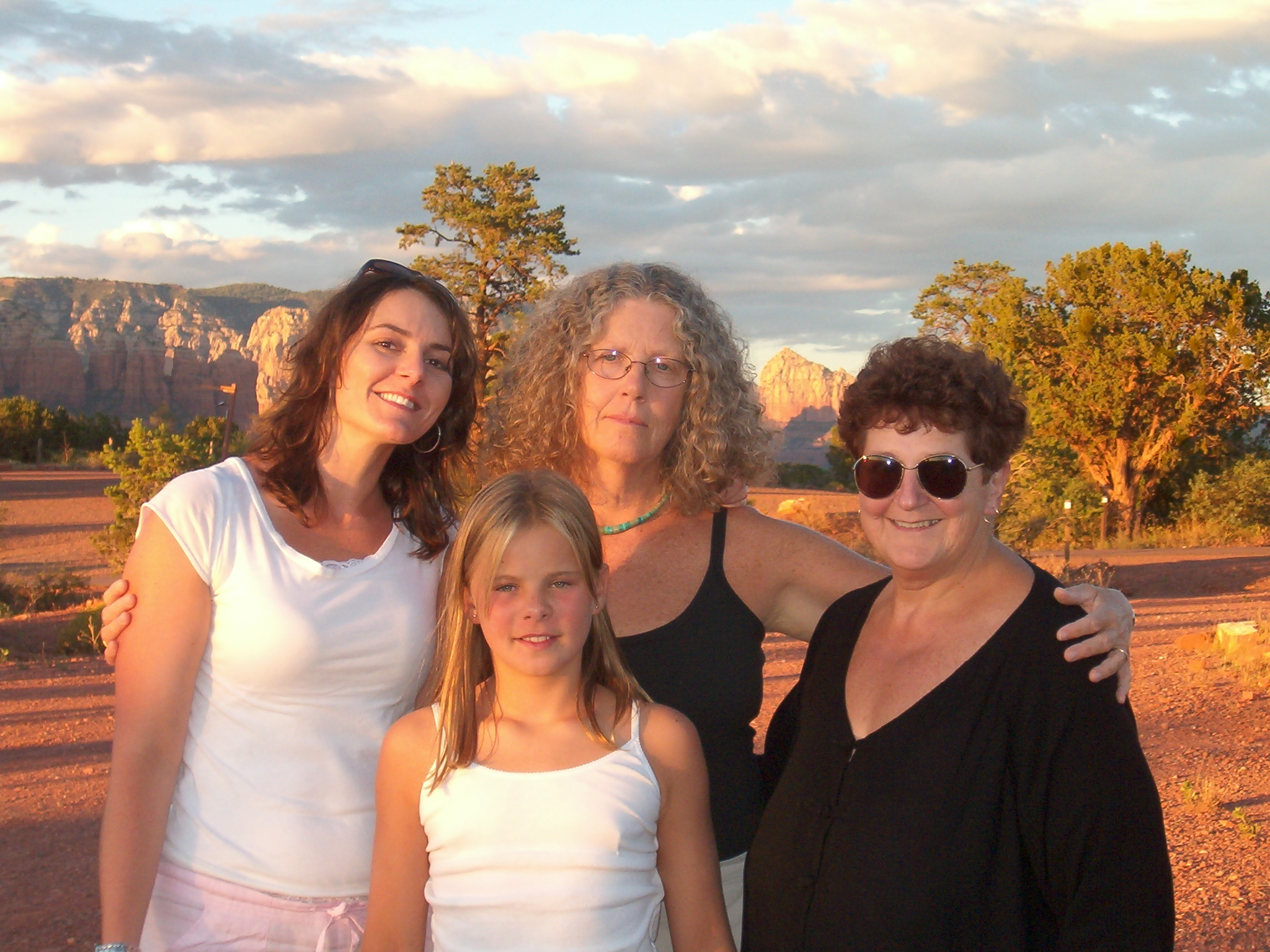
Definition #161 Four Women

Four Women Quenby's Fortieth Birthday March 25, 2015

Four Women
Quenby’s Fortieth Birthday
March 25, 2015

Four Women share sun:

wisdom, roots, blond, brunette hairs:

Sedona’s magic!

Footnotes:

In the Christian tradition, today is Annunciation Day, commemorating the announcement to the Virgin Mary by the Angel Gabriel that she would give birth to the Messiah
It’s the birthday of the feminist writer and activist who said, “A woman without a man is like a fish without a bicycle”:Gloria Steinem
 “I’m a full-time believer in writing habits, pedestrian as it all may sound.
 And the fact is if you don’t sit there every day, the day it would come well, you won’t be sitting there.”
Flannery O’Connor

Definition 160 Ferlinghetti

Penwarn Reserve

Penwarn Reserve

#2

by Lawrence Ferlinghetti

Driving a cardboard automobile without a license
at the turn of the century
my father ran into my mother
on a fun-ride at Coney Island
having spied each other eating
in a French boardinghouse nearby
And having decided right there and then
that she was for him entirely
he followed her into
the playland of that evening
where the headlong meeting
of their ephemeral flesh on wheels
hurtled them forever together

And I now in the back seat
of their eternity
reaching out to embrace them

“#2” by Lawrence Ferlinghetti from A Far Rockaway of the Heart. © New Directions, 1997. Reprinted with permission.

Love in Ten Lines

Love River

Love River

Love you, Button-Head!

Sewed you on , Love!

Love your tart taste!

Love’s bite on lip.

Pricked by your love;

I bleed love’s blood.

Rolls down Love Canal

To the Sea of Love

Back to Love River:

My Love’s open mouth.

Previous Older Entries Next Newer Entries