
arches…reflection
flexibility
endless space to bend
arches…reflection
flexibility
endless space to bend
arches…reflection
flexibility
endless space to bend
Jeanne Poland's Poetry Blog
22 Nov 2019 Leave a comment
in perspective, Poetry Tags: aqua, Arches, azure, cerulean, endless space to bend, flexibility, perspective, reflection
arches…reflection
flexibility
endless space to bend
arches…reflection
flexibility
endless space to bend
arches…reflection
flexibility
endless space to bend
19 Nov 2019 Leave a comment
in Poetry
O I love Cape Cod, don’t you?
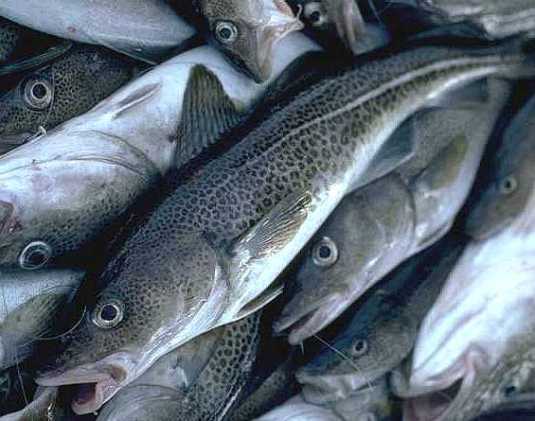
Cod fish in Cape Cod
Do cod fish know they’re in Cape Cod?
Nod, at home beneath the cape?
Smile to go into the stew?
Knew they’d see potatoes too?
Do eels know they’re in Eel River?
And lobsters in the Sound?
Do they say “it’s far-thur
Than you swim?” with Bostonian “a”?
19 Nov 2019 Leave a comment
in Battle Hymn, Poetry Tags: a short, Battle Hymn, consecrated the land, Gettsburg Address, Julia Ward Howe, sacred speech, The Writer's Almanac, youtube
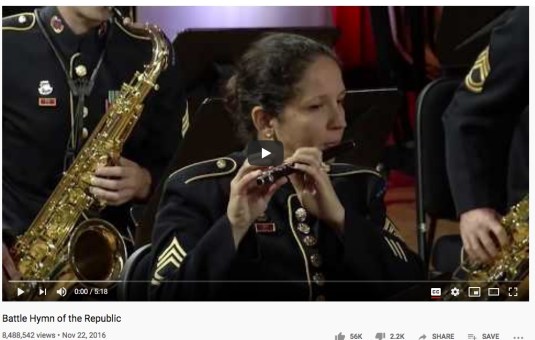
Please click on this link to hear the Battle Hymn:
https://www.youtube.com/watch?v=Jy6AOGRsR80
It was on this date in 1861 that Mrs. Julia Ward Howe sat down and wrote The Battle Hymn of the Republic. The poem was first published in the February 1862 issue of The Atlantic Monthly, and later set to the popular melody “Glory Hallelujah.”
The Writer’s Almanac for Tuesday, November 19, 2019
Gettysburg Address
by Abraham Lincoln
Four score and seven years ago our fathers brought forth on this continent, a new nation, conceived in Liberty, and dedicated to the proposition that all men are created equal.
Now we are engaged in a great civil war, testing whether that nation, or any nation so conceived and so dedicated, can long endure. We are met on a great battle-field of that war. We have come to dedicate a portion of that field, as a final resting place for those who here gave their lives that that nation might live. It is altogether fitting and proper that we should do this.
But, in a larger sense, we can not dedicate — we can not consecrate — we can not hallow — this ground. The brave men, living and dead, who struggled here, have consecrated it, far above our poor power to add or detract.
The world will little note, nor long remember what we say here, but it can never forget what they did here. It is for us the living, rather, to be dedicated here to the unfinished work which they who fought here have thus far so nobly advanced. It is rather for us to be here dedicated to the great task remaining before us — that from these honored dead we take increased devotion to that cause for which they gave the last full measure of devotion — that we here highly resolve that these dead shall not have died in vain- that this nation, under God, shall have a new birth of freedom — and that government of the people, by the people, for the people, shall not perish from the earth.
“Gettysburg Address” by Abraham Lincoln. Public Domain.
18 Nov 2019 Leave a comment
in Poetry, snow power Tags: blanket, energy, freeze, fungus, Julie Rohan Zoch, light, rainbow, roots, snow power, snowflake, weather report, white snow

illustration by Julie Rohan Zoch
what’s under the white snow?
when I see the snowflake design on the weather report
I freeze, breathless!
forget to consider it a blanket
keeping the roots intact
sheltering the fungus which converts soil to new life
and lets me view light
and all the colors of its rainbow:
energy for my soul!
15 Nov 2019 Leave a comment
in Georgia O'Keeffe, Poetry Tags: 1887, barren land, but could paint as I wanted to, can't live where I want to, colorful, do what I want to, Georgia O'Keeffe, gigantic canvases, go macro, home and studio, Negotiate, Nov 15, say what I want to, thorny

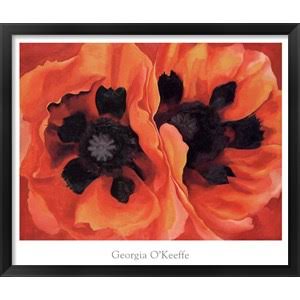
Nov 15,2019
It’s the birthday of artist Georgia O’Keeffe , born in Sun Prairie, Wisconsin (1887). In 1923, she said, “One day seven years ago I found myself saying to myself — I can’t live where I want to — I can’t go where I want to go — I can’t do what I want to — I can’t even say what I want to … I decided I was a very stupid fool not to at least paint as I wanted to.”
When I visited the home and studio of Georgia, I found her determination to see by touch,
to go macro to fill a gigantic canvas with one flower,
to negotiate to share her art with her lover,
to be thorny in a desert.
and colorful in a barren land!
14 Nov 2019 Leave a comment
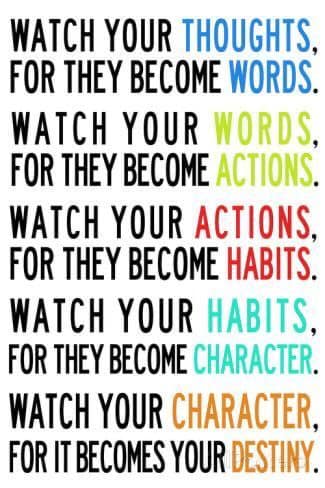
in How to be a Vessel of Power, Poetry Tags: actions become habits, before they become words, character becomes destiny, habits become character, How to be a Vessel of Power, illustrator: J Byron Schachner, watch your thoughts, words become actions
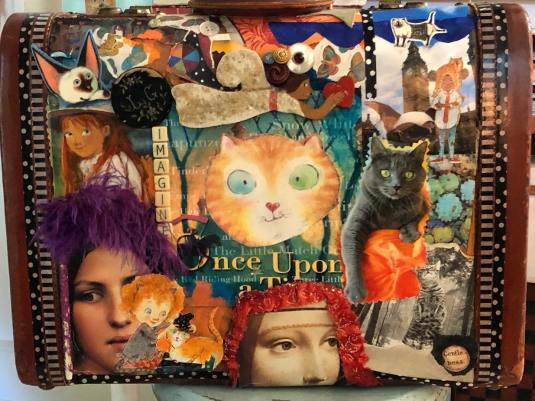
illustrator: J Byron Schachner
13 Nov 2019 Leave a comment
in Poetry, the captivity of babies... Tags: aging baby, air, amazed, being held, breathlessness, escaping babies, impeccable, Margaret Hasse, new blood, nursery, Owen the newborn and the 2 year old, perfect love, seatbelts, sub-culture, the captivity of babies..., The Writer's Almanac, tricky babies, winters here, wise
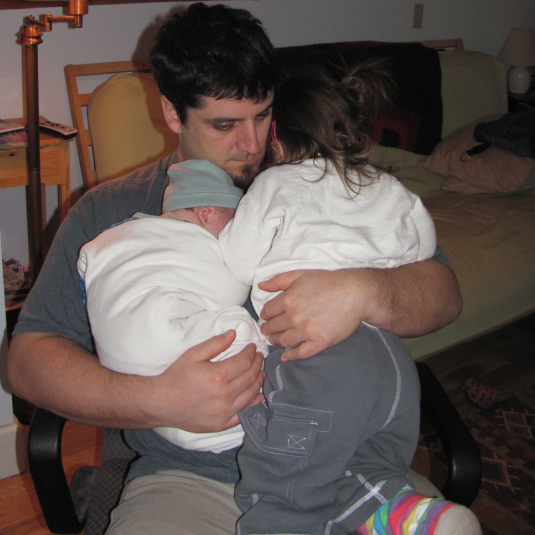
Owen holds the newborn and the 2 year old
The Writer’s Almanac for Sunday, November 10, 201
On the Captivity of Babies by Margaret Hasse
Now that winter’s halfway here,
leaves swirl coldly and babies aren’t seen much
except in the captivity of nurseries s
lumbering with their hands drawn into roses.
Babies are unto themselves,
a little sub-culture, none of whom suspects
how many other babies are being held
all over the world.
Babies escape slowly
from the little pens, the seatbelts,
the restraining arms.
It’s brilliant. Few notice
how tricky babies are.
On occasion, an aunt might fix a BB sharp eye on the little one,
and fire, “My how you’ve grown!”
The escaping baby feels very uncomfortable.
Babies enter the world impeccable and wise.
They leave their little prisons,
put nakedness in abeyance,
take on the clothes of the world,
spend a long time trying to locate
a perfect love
that resembles their first.
From time to time, they achieve glimpses.
As when an aging baby
late for a business appointment
sits dreamily in his car,
cigarette’s blue smoke
lingering in curlicues.
Before him a large leaf
shoved by the windshield wipers, is waving.
Or when a woman who has never run
to breathlessness, does so.
Amazed she does not burst,
she draws in large packages of air,
thinks of air as the new blood.
“On the Captivitiy of Babies” by Margaret Hasse from Stars Above, Stars Below © Nodin Press, 2018. Reprinted with permission
12 Nov 2019 Leave a comment
in Poetry, reviewer of novels Tags: aliens, armour, Armt, Billy Pilgrim, bombers, hot fudge sundae, Kurt Vonnegut, meat locker, preposterous, rage, reviewer of novels, science fiction, slaughterhouse, time, WWII
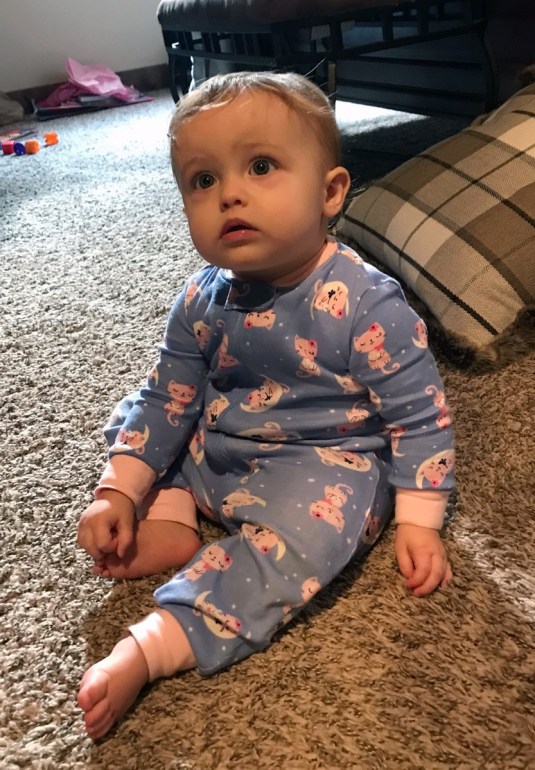
I am a new and novel work of art. Refrain from reviewing me with rage !
Nov 11,2019
It’s the birthday of a writer who was also a veteran, Kurt Vonnegut, born in Indianapolis (1922). He joined the Army, and in December of 1944, he was captured by the Germans during the Battle of the Bulge. He was imprisoned in a slaughterhouse in Dresden. On the night of February 13, 1945, British and American bombers attacked Dresden, igniting a firestorm that killed almost all the city’s inhabitants in two hours. Vonnegut and his fellow prisoners only survived because they slept in a meat locker three stories below the ground.
He spent the next two decades writing science fiction, but he knew he wanted to write about his experiences in Dresden, and finally did in his novel Slaughterhouse-Five (1969), about a man named Billy Pilgrim who believes that he experiences the events of his life out of order, including his service during World War II, the firebombing of Dresden, and his kidnapping by aliens. He decides there is no such thing as time, and everything has already happened, so there’s really nothing to worry about.
Kurt Vonnegut, also wrote Cat’s Cradle (1963), Breakfast of Champions (1973), and many other books. He once said: “Any reviewer who expresses rage and loathing for a novel is preposterous. He or she is like a person who has put on full armor and attacked a hot fudge sundae.”
11 Nov 2019 Leave a comment
in My Veteran, Poetry Tags: but not the marine out of him, Don, My Veteran, take him out of the Marines
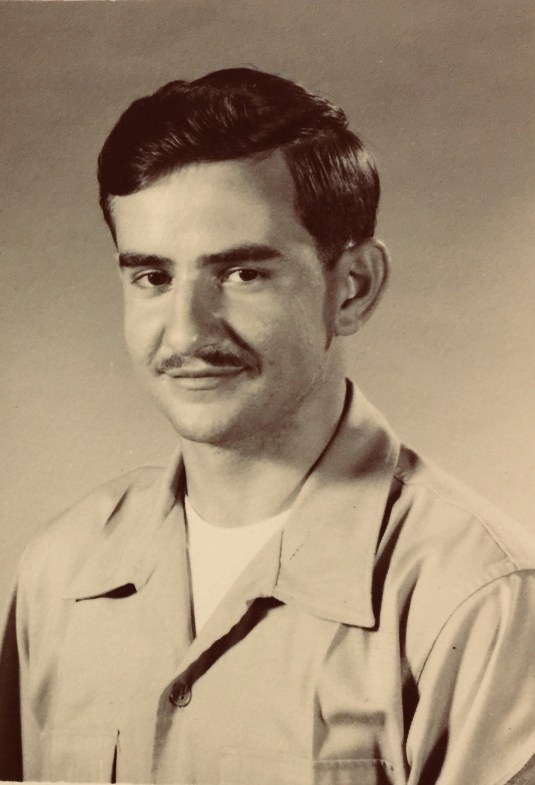
You can take Don out of the marines, but you can’t take the marine out of Don!



 The Vibrant Channeled Creator