Reluctance

demo by Waldman

watercolor illustration by Neil


Reluctance


by Robert Frost

Out through the fields and the woods


And over the walls I have wended;
 I have climbed the hills of view
 And looked at the world, and descended;
 I have come by the highway home,
 And lo, it is ended.
The leaves are all dead on the ground,
 Save those that the oak is keeping
 To ravel them one by one
 And let them go scraping and creeping 
Out over the crusted snow,
 When others are sleeping.
And the dead leaves lie huddled and still,
 No longer blown hither and thither; 
The last lone aster is gone;
 The flowers of the witch hazel wither;
 The heart is still aching to seek,
 But the feet question ‘Whither?’
Ah, when to the heart of man
 Was it ever less than a treason
 To go with the drift of things,
 To yield with a grace to reason, 
And bow and accept the end 
Of a love or a season?
 
“Reluctance” by Robert Frost. Public domain.

Robert’s LOVE of a woman

and

writing poems

divided his paths

evermore…


“haccain” Old English: cut in pieces

Copy & Paste this URL to view the video below:

https://www.youtube.com/watch?v=PcgeYgQkN20

Screen Shot 2019-11-04 at 2.08.41 PM


hack


hack off the branches
rough heavy blows:hack
it, inflict it: cuts of wood

elegance lost to
drudgery’s force, while
pester provokes, vexes the grain

original art
cuts back on the form
drives it, wigs it through the wall

poem by Jeanne

New Movie of Mini-Bikers

When Annika was little

jeannepoland's avatarThe Vibrant Channeled Creator

Please enjoy the new effects and marvelous movie camera available on my iPhone through the OS: Maverick!
We are one tiny step away from retina screen!
Jeanne

View original post

Definition #374 Couch

And with the silhouette, drama!

jeannepoland's avatarThe Vibrant Channeled Creator

night-mountain-wallpaper-awesome

William Cullen Bryant
Be one who wraps the drapery of her couch
About her, and lies down to pleasant dreams.

View original post

Neolithic

withShyamaGolden

It’s the birthday of historian and novelist Tamim Ansary

born in Kabul, Afghanistan (1948), author of the memoir West of Kabul, East of New York (2002). He’s of Arab, Mongolian, and Finnish descent, and according to Contemporary Authors, he’s “the son of the first Afghan ever to marry an American woman who was also the first American woman ever to live in Afghanistan as an Afghan.” His dad was a literature and science professor at the University of Kabul, and his mom taught English at Afghanistan’s first school for girls. When he was a teenager, he won a scholarship to a high school in Colorado, immigrating to the United States.

He majored in literature in Oregon and then, as he describes it, “plunged into the sixties counterculture like a dog into surf.” He wrote for alternative newspapers, waited tables, lived in communes, penned experimental fiction, and spent a lot of time backpacking and road-tripping. He traveled in 1980 through Turkey and North Africa, he said, to “explore Islam” but “found Islamism instead.”

He returned to the U.S. and promptly got a job as a school textbook editor, working for Harcourt Brace Jovanovich all through out the 1980s. Then he started writing his own juvenile nonfiction, especially for kids in elementary school. He’s written a picture book series on American holidays, a series on Native American tribes, and one on starting hobby collections.

Then, in the late 1990s, he decided that he was going to write about the road trips he had taken in his life, focusing on a few of them, and make it into a book he’d call “The Journey of a Life.” For the next year, whenever he could sneak time away from the writing that paid the bills, he sat down and wrote whatever he could remember about his life before America, his childhood and adolescence in Afghanistan. Pretty soon he had written a thousand pages about his childhood in Afghanistan — none of which he had read over. And then 9/11 happened, and his agent said, “You should write something. Don’t you have something to write about Afghanistan?” He had more than a thousand pages, in fact — and so Ansary began to shape those pages of memories he’d written into a book.

The result was a highly acclaimed memoir, West of Kabul, East of New York (2002), which begins:

“In 1948, when I was born, most of Afghanistan might as well have been living in Neolithic times. It was a world of walled villages, each one inhabited by a few large families, themselves linked in countless ways through intermarriages stretching into the dim historical memories of the eldest elders. These villages had no cars, no carts even, no wheeled vehicles at all; no stores, no shops, no electricity, no postal service, and no media except rumors, storytelling, and the word of travelers passing through. … People lived pretty much as they had eight thousand years ago.”

rainbow woman and the surviver

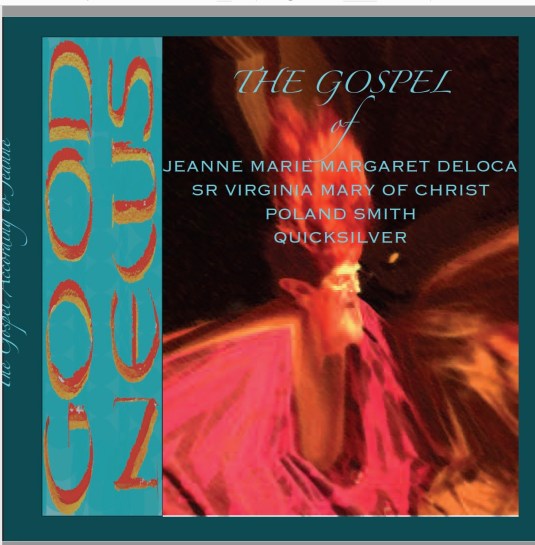
TheGospelCoverGrab

rainbow woman

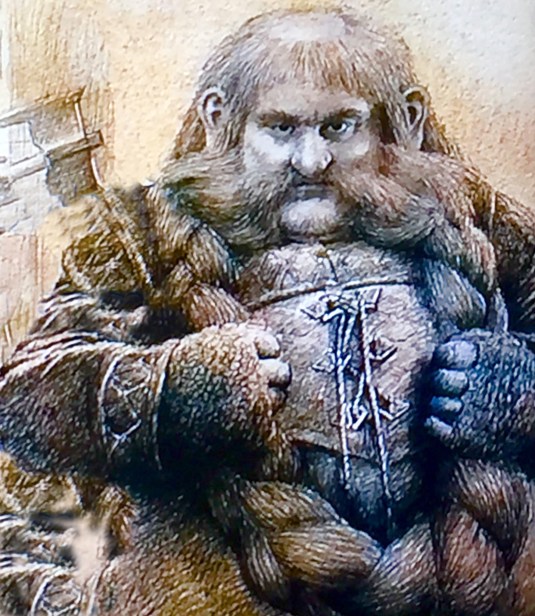
DonLookAlike

survivor man


digital man-rests

enlightenment comes

while rainbows carry both!

jp


By Joel Brouwer Nov3,2019 (Poetry Almanac)

He rose before her every morning
to walk three rainy February blocks
to the best and cheapest boulangerie.
Our secret, they said, and didn’t tell friends.
Bonjour Madame, bonjour Monsieur,
une baguette s’il vous plaît, oui Monsieur,
merci Madame, merci Monsieur.
The spell had to be pronounced perfectly
to accomplish the magic. By the time
he returned, she had everything ready,
the jam pots and butter, bowls of coffee.
Her skin still lustrous with sleep as she turned
toward him. He kissed her with his coat on, she
gleaming with heat, he with cold. I’m only
missing one thing, she said. Indicating
the black plastic basket on the table.

Joel Brouwer, “The Missing Thing” from And So. Copyright © 2009 by Joel Brouwer. Used by permission of The Permissions Company LLC on behalf of Four Way Books, http://www.fourwaybooks.com.

to Pain

72685082_10213573030438462_4979717415219757056_n

To Pain
By Dan Gerber

You begin the moment I wake up,
and even the moment before,
abiding companion, herald of my life,
though a little too strident at times.

I have little white pills to calm,
and even still, you. Sometimes
I think you’ve finally walked out,
but a little neglect is all it takes to win you back.

When you’ve stayed too long, I might
demand to know why you’ve chosen me.
What I may have done to summon you.
What retribution you represent.

But you tell me nothing more,
only that you are part of what a body feels,
only that you’re part of what a heart endures
and what a mind transforms.

You are, after all,
like the fog this morning,
obscuring almost everything, till a tree emerges just beyond
our yard,

and then, again, a fence corner
coming almost imperceptibly
back into view,
halfway up the next hill.

Dan Gerber, “To Pain” from Particles: New and Selected Poems. Copyright © 2017 Dan Gerber. Used with the permission of The Permissions Company, LLC on behalf of Copper Canyon Press, http://www.coppercanyonpress.org.

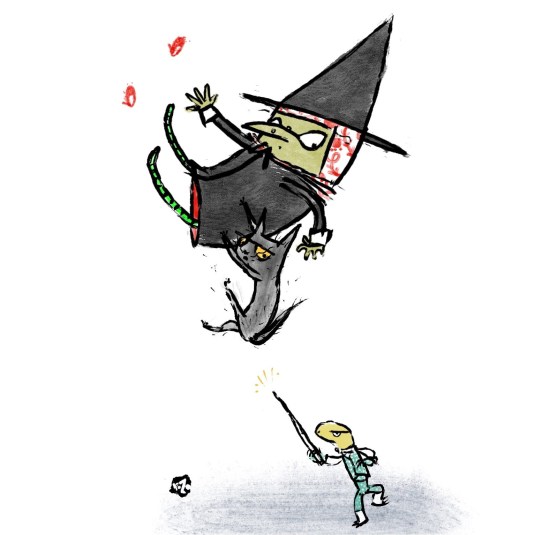
the benign witch

witch by JRZ

illustrator: Julia Rohan Zoch


some witches are kind

healthy cells that glow

play, dance, wiggle and love cats!

opinionated

FavendoYoga

Fred W Friendly: Journalist extraordinaire

Fred W Friendly

Today is the birthday of the man who said, “Television makes so much at its worst, that it can’t afford to do its best.” That’s the pioneering broadcast journalist Fred W. Friendly, born Ferdinand Friendly Wachenheimer in New York City (1915). While still a boy, Fred and his family moved to Providence, Rhode Island, where after college, Fred changed his name and began work as a reporter for the local radio station. He served as a war correspondent in World War II and joined CBS in 1950. Along with his colleague Edward R. Murrow, whom he’d first worked with in radio, Friendly essentially invented the news documentary for television. Weaving together unrehearsed interviews reports from the field, and original film clips, his work earned him 10 Peabody Awards over his career. He worked as a producer for Murrow’s influential “See it Now” documentaries, including his exposé on Sen. Joseph McCarthy and the Red Scare, and soon took the helm as president of CBS News. A large persuasive man, with strongly held opinions, he frequently butted heads with the network executives over their commitment to hard news over commercial interests. His forthright criticism of the network’s priorities caused him to leave CBS in 1966 when coverage of a hearing on Vietnam was scrapped in place of a rerun of I Love Lucy.
Friendly was an outspoken advocate for fairness and ethics in journalism, and after leaving CBS, he developed a series of popular seminars for public television that brought together journalists, educators, and politicians to discuss the most pressing issues of the day. He died at his home in the Bronx in 1998 at the age of 82. His colleague Dan Rather remembered him as “a fierce and mighty warrior for the best […] principles in journalism, […] for his friends, and for his country.

He never gave up, he never gave in; he never backed down, and he never backed up.”

Pattern #59 Mobile App

reblogging again!

jeannepoland's avatarThe Vibrant Channeled Creator

Did you say: "Bite down??" Did you say: “Bite down??”

“Yipes! We’re lost again!
Wild animals, wooly paths,
Guidance needed NOW!”

View original post

Previous Older Entries Next Newer Entries