more words for feelings:

postedByCharJonesKissing Spot

You’ve probably never heard of many of these, but in this list may be the exact word you’ve been looking for.


1. Croochie-Proochles
The superb Scots dialect word croochie-proochles means the feeling of discomfort or fidgetiness that comes from sitting in a cramped position (like, say, on an airplane).
2. Nikhedonia
You’re playing a game, and you suddenly realize that you’ve got it in the bag. Or you’re watching your favorite team play and, after a close-fought match, you see that they’re surely going to win. That’s nikhedonia—the feeling of excitement or elation that comes from anticipating success.
3. Alysm
Alysm is the feeling of restlessness or frustrated boredom that comes from being unwell. When you’re desperate to get on with your day but you’re so under the weather that you can’t bring yourself to get out of bed? That’s alysm.
4. Shivviness
A shive is a tiny splinter or fragment of something, or else a loose thread sticking out of a piece of fabric. And derived from that, shivviness is an old Yorkshire dialect word for the feeling of discomfort that comes from wearing new underwear—a word that surely needs to be more widely known.
5. Déjà-visité
Yes, strictly speaking this isn’t an English word, but like the more familiar déjà-vu before it, we have nevertheless had the foresight to borrow déjà-visité from French and add it to our dictionaries—it’s just not used as often as its more familiar cousin. It describes the peculiar sensation of knowing your way around somewhere you’ve never been before.
6. Presque-Vu
One more term we’ve borrowed from French is presque-vu. It literally means “almost seen,” and refers to that sensation of forgetting or not being able to remember something, but feeling that you could remember it any minute.
7. Gwenders
That tingling feeling you get in your fingers when they’re cold? That’s gwenders.
8. Misslieness
The Scots dialect word misslieness means “the feeling of solitariness that comes from missing something or someone you love.”
9. Euneirophrenia and 10. Malneirophrenia
Oneiros was the Greek word for a dream, and derived from that the English language has adopted a handful of obscure terms like oneirocriticism (the interpretation of dreams), oneirodynia (a night’s sleep disturbed by nightmares), and this pair. Euneirophrenia is the feeling of contentment that comes from waking up from a pleasant dream, while malneirophrenia is the feeling of unease or unhappiness that comes from waking up from a nightmare.
11. Lonesome-Fret
That feeling of restlessness or unease that comes from being on your own too long is lonesome-fret, an 18th/19th century dialect word defined as “ennui from lonesomeness” by the English Dialect Dictionary.
12. Fat-Sorrow
“Sorrow alleviated by riches”—or, put another way, sadness alleviated by material things—is fat-sorrow. It’s a term best remembered from the old adage that “fat sorrow is better than lean sorrow.”
13. Horror Vacui
The dislike some people have of leaving an empty space anywhere—like on a wall or in furnishing a room—is called horror vacui, a Latin term originally adopted into English in the mid-19th century to refer to the tendency of some artists to fill every square inch of their paintings or artworks with detail.
14. Crapulence
When the word hangover just won’t do it justice, there’s crapulence. As the OED defines it, crapulence is a feeling of “sickness or indisposition resulting from excess in drinking or eating.”
15. Huckmuck
According to the English Dialect Dictionary, the confusion that comes from things not being in their right place—like when you’ve moved everything around while you’re cleaning your house—is called huckmuck.
Paul Anthony Jones is a writer and musician from Newcastle upon Tyne. He is the author of word origins guide Haggard Hawks and Paltry Poltroons, and runs its tie-in Twitter account @HaggardHawks.


tempers

FavendoYoga


Family Stories
by Dorianne Laux
I had a boyfriend who told me stories about his family,
how an argument once ended when his father
seized a lit birthday cake in both hands
and hurled it out a second-story window. That,
I thought, was what a normal family was like: anger
sent out across the sill, landing like a gift
to decorate the sidewalk below. In mine
it was fists and direct hits to the solar plexus,
and nobody ever forgave anyone. But I believed
the people in his stories really loved one another,
even when they yelled and shoved their feet
through cabinet doors or held a chair like a bottle
of cheap champagne, christening the wall,
rungs exploding from their holes.
I said it sounded harmless, the pomp and fury
of the passionate. He said it was a curse
being born Italian and Catholic and when he
looked from that window what he saw was the moment
rudely crushed. But all I could see was a gorgeous
three-layer cake gliding like a battered ship
down the sidewalk, the smoking candles broken, sunk
deep in the icing, a few still burning.
 
“Family Stories” by Dorianne Laux from Only As the Day is Long: New and Selected Poems. © W. W. Norton and company, 2019.


I was always told that I was an artist of many schools, talents and skills, but a master of none.

And that those who can’t do, TEACH.

I discovered that the best way to create is to teach talented people to create. And so evolved a community of artists of all ages who inspire each other! Just like Anne Fadiman, explained below:

It’s the birthday of essayist and journalist Anne Fadiman (books by this author), born in New York City (1953). She’s best known as the author of The Spirit Catches You and You Fall Down (1997), which is about the culture clash between a Hmong family, whose daughter has epilepsy, and the American medical establishment. She started the project as an assignment for The New Yorker, but she turned it into a book when the original assignment was killed. The book won a National Book Critics Circle Award. She also wrote a best-selling essay collection, Ex Libris: Confessions of a Common Reader (1998).
Fadiman says her journalistic tendencies come from her mother, Annalee Jacoby, who was the first female war correspondent in China. Fadiman’s father, Clifton Fadiman, was an essayist, a radio host, and a book lover — her childhood home boasted shelves full of thousands of books — and Fadiman credits him for inspiring Ex Libris.


dramatic Percy

maxresdefault

Percy Shelley or Mary Shelley?- (see U-tube video)


To a Singer
by Percy Bysshe Shelley

My soul is an enchanted boat,
Which, like a sleeping swan, doth float
Upon the silver waves of thy sweet singing;
And thine doth like an angel sit
Beside a helm conducting it,
Whilst all the winds with melody are ringing.
It seems to float ever, forever,
Upon that many-winding river,
Between mountains, woods, abysses,
A paradise of wildernesses!
Till, like one in slumber bound,
Borne to the ocean, I float down, around,
Into a sea profound, of ever-spreading sound.
Meanwhile thy spirit lifts its pinions
In music’s most serene dominions;
Catching the winds that fan that happy heaven.
And we sail on, away, afar,
Without a course, without a star,
But by the instinct of sweet music driven;
Till through Elysian garden islets
By thee, most beautiful of pilots,
Where never mortal pinnace glided,
The boat of my desire is guided;
Realms where the air we breathe is love,
Which in the winds on the waves doth move,
Harmonizing this earth with what we feel above.
 
“To A Singer” by Percy Bysshe Shelley.


It’s the birthday of the man who said, “Poetry lifts the veil from the hidden beauty of the world, and makes familiar objects be as if they were not familiar.” That’s the poet and essayist Percy Bysshe Shelley (books by this author), born in Field Place, Sussex, England (1792). He grew up in a wealthy family and went off to Oxford, where he was kicked out for writing risqué poetry and declaring his atheism in a pamphlet he published. The family cut him off financially at the age of 19.
Shelley left England and eloped to Scotland with his 16-year-old bride. There he was mentored by the English philosopher William Godwin. Chronically broke, Godwin saw in Shelley’s wealthy family his salvation and encouraged the poet to make good with his father. While Godwin’s outspoken socialism appealed to Shelley, so did his intellectual daughter, Mary, and soon the two had left both their families to roam around Europe together.
Shelley and Mary traveled to Switzerland, where they rented an adjoining house to Lord Byron. The two writers were good for one another, and in 1816, Shelley published his Hymn to Intellectual Beauty. That same year, Percy’s previous wife committed suicide, and Percy and Mary married in a failed attempt to gain custody of Percy’s orphaned children. The court refused, citing the poet’s belief in “free love” as the reason, and the children went into foster care.
The next few years were the most productive of Shelley’s life. He wrote “Adonis,” an elegy for his friend John Keats; “Prometheus Unbound,” a drama in verse; and The Cenci, a tragedy.
He died before the age of 30, attempting to sail the coast of Italy in his ship, the Don Juan.

iPod

it went up and up and now I can’t reach it anymore

jeannepoland's avatarThe Vibrant Channeled Creator

Yesterday I fell into the evolution of iPod Yesterday I fell into the evolution of iPod
I am now the slave of the web, the cloud and iTunes. A rainbow of music lovers! I am now the slave of the web, the cloud and iTunes.
A rainbow of music lovers!

i·Pod (Definition)
ˈīpäd/
noun
trademark
noun: iPod; plural noun: iPods

a portable electronic device for playing and storing digital audio and video files.

iPod (from the Urban Dictionary)
Thw world’s smallest form of penis compensation.
Make sure you wear your white headphones everywhere you go while struting around in your tight pants and white belt while listening to the latest Hawthorne Heights song. Who cares if you have no class or taste, you’re cool.

View original post

Question ?

inSandVan der Merwe

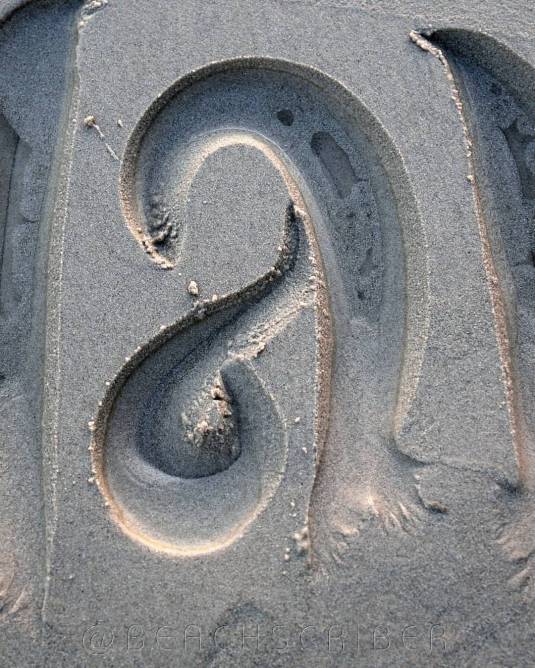
written in the sand by Beach Scribe, South Africa


Question

every mystery is a question ?
every sound a query ?
every person inimitable ?

every abyss a darkness ?
every chasm a path ?
every molecule a morph ?

embrace the period at the bottom ?
ride the hook on top ?
swing up; flip it! discover !

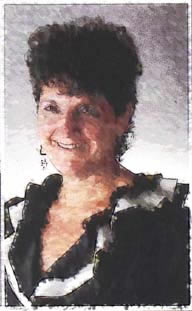
the Ashro Woman

DivaJeanneFullSizeRender

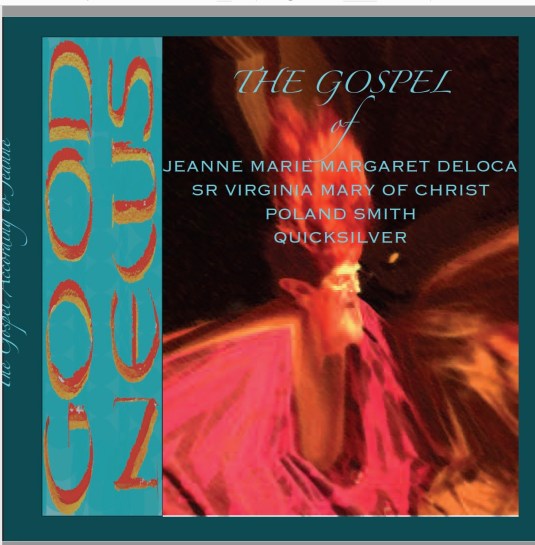
TheGospelCoverGrab

watercolor_of_jeanne

Ashro means “a positive body image”

a bold woman

of many bold colors

styles

activities

See the catalog: https://www.ashro.com/blog/ashro-woman/?source=promo&medium=email&code=sp40317288&crn=00026074479&link=Main_CTA&cm_mmc=promo-_-email-_-sp40317288-_-Main_CTA&dtm_em=4AF1D634BB3C944467FCD24F4BF56CA5

dangerous woman

61441626_1990693161053772_5796364575645368320_o


It’s the birthday of the woman Teddy Roosevelt once called “the most dangerous woman in America” when she was 87 years old. Mary Harris Jones, or “Mother Jones,” (books by this author) was born to a tenant farmer in Cork, Ireland, in 1837. Her family fled the potato famine when she was just 10, resettling in Toronto. She trained to be a teacher and took a job in Memphis, where on the eve of the Civil War she married a union foundry worker and started a family. But in 1867, a yellow fever epidemic swept through the city, taking the lives of her husband and all four children. A widow at 30, she moved to Chicago and built a successful dressmaking business — only to lose everything in the Great Chicago Fire of 1871. Jones then threw herself into the city’s bustling labor movement, where she worked in obscurity for the next 20 years. By the turn of the century, she emerged as a charismatic speaker and one of the country’s leading labor organizers, co-founding the Industrial Workers of the World (IWW).
She traveled the country to wherever there was labor struggle, sometimes evading company security by wading the riverbed into town, earning her the nickname “The Miner’s Angel.” She used storytelling, the Bible, humor, and even coarse language to reach a crowd. She said: “I asked a man in prison once how he happened to be there and he said he had stolen a pair of shoes. I said if he had stolen a railroad, he would be a United States Senator.” Jones also had little patience for hesitation, volunteering to lead a strike “if there were no men present.” A passionate critic of child labor, she organized a children’s march from Philadelphia to the home of Theodore Roosevelt in Oyster Bay, New York with banners reading, “We want to go to school and not the mines!” At the age of 88, she published a first-person account of her time in the labor movement called The Autobiography of Mother Jones (1925). She died at the age of 93 and is buried at a miners’ cemetery in Mt. Olive, Illinois.
She said: “Whatever the fight, don’t be ladylike.”

present

37394270_1344637738972043_8097520525703643136_n

Time is the coin of your life.
It is the only coin you have,
and only you can determine how it will be spent,
Be careful lest you let other people spend it for you.
—CARL SANDBURG

Jazzy Ben Franklin


images

Jazz You’ll Never Know
by Margaret Hasse
Alex dresses up in a sweet black suit
for his Central High senior picture
holding his trumpet as if
he will raise it
like a silver night-blooming moonflower
to play “Sweet Georgia Brown” or “Almost Blue.”
Alex has sat in on jazz gigs in New Orleans,
San Francisco, D.C.
and Saint Paul.
He attends summer jazz camps, jazz competitions,
jazz schools,
listens to Smithsonian Jazz Orchestra records.
He once ate ice cream
named Jazz,
ate an apple
named Jazz,
hopes there’ll be a car
branded Jazz,
wears a cologne with notes
of jazzy fragrance from a blue bottle.
When he shakes his silver ID bracelet
his own name flashes on one side,
Louis Armstrong on the other.
Alex, I ask, what is it with you and jazz?
If you have to ask, Mom, he says, quoting his hero,
you’ll never know.
 
“Jazz You’ll Never Know” by Margaret Hasse from Earth’s Appetite. © Nodin Press, 2013. Reprinted with permission.

It was on this day in 1775 that the Continental Congress established the Postal System. In the early days of colonial America, there was no centralized system for transporting correspondence — merchants or slaves carried letters between towns, and taverns or inns collected overseas mail. Early American settlements were coastal and relatively isolated from each other. Most mail was transatlantic, going from colonists to friends or relatives back in Europe. Mail that needed to be transported within the colonies was carried by postal riders, who rode alone through dense wilderness, marking the way by slashing marks into trees with axes.

In 1707, the British Crown officially took over the North American postal system, and appointed a series of postmasters general. One of these was Benjamin Franklin, who worked hard to make the system more organized and efficient.

In January of 1774, Franklin was fired from his post for being sympathetic to the revolutionary cause. By that point, revolutionaries had set up alternative systems to deliver mail without the Crown’s knowledge. These systems were invaluable for secret correspondence, but also as a way to publicize revolutionary materials to a wider audience — otherwise, when the revolutionaries published anti-British newspapers and pamphlets, the Crown post simply refused to deliver them. Americans supported the alternative mail systems as one more way to boycott England — the Crown mail service came to be seen as a form of taxation. Soon, this alternative system became the more popular and profitable of the two.

In May of 1775, the Second Continental Congress formed a committee to determine the best way of organizing this new alternative system. The six committee members, including Franklin and Samuel Adams, spent two months deliberating, and delivered a report on July 25th. The following day — on this day in 1775 — it was approved by the Congress, and the Postal System was established. Franklin was unanimously elected as postmaster general, with an annual salary of $1,000.

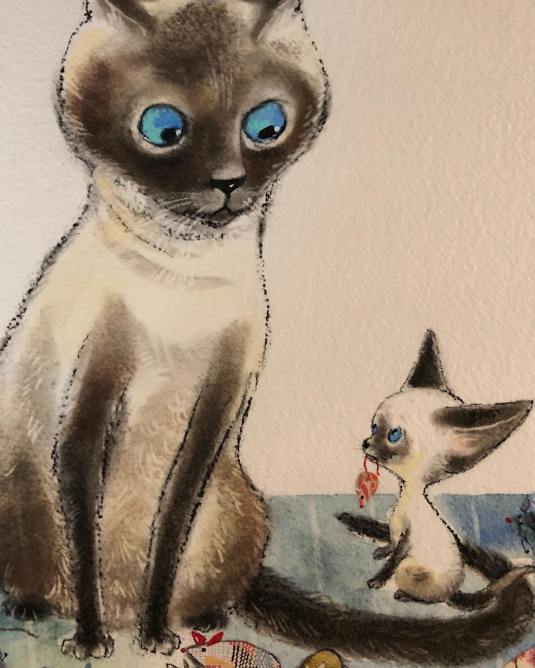
On a Cat

JByronSchachner copy

illustrator: J Byron Schachner


Lines from To A Cat
by Algernon Charles Swinburne

Stately, kindly, lordly friend,
      Condescend
Here to sit by me, and turn
Glorious eyes that smile and burn,
Golden eyes, love’s lustrous meed,
On the golden page I read.
All your wondrous wealth of hair,
     Dark and fair,
Silken-shaggy, soft and bright
As the clouds and beams of night,
Pays my reverent hand’s caress
Back with friendlier gentleness.
Dogs may fawn on all and some
     As they come;
You, a friend of loftier mind,
Answer friends alone in kind.
Just your foot upon my hand
Softly bids it understand.

Previous Older Entries Next Newer Entries