young and old

Frank'sFamilyof5

male-female  young-old  healthy all


Young and Old
by Charles Kingsley

When all the world is young, lad,
And all the trees are green;
And every goose a swan, lad,
And every lass a queen;
Then hey for boot and horse, lad,
And round the world away;
Young blood must have its course, lad,
And every dog his day.

When all the world is old, lad,
And all the trees are brown;
And all the sport is stale, lad,
And all the wheels run down;
Creep home, and take your place there,
The spent and maimed among:
God grant you find one face there,
You loved when all was young.

selfies

MeredithPurples

Meredith purples

Meredithon6:15:19

the window lets in sky

I spy

blue sky-

I sigh…

a quasi

bird’s eye.

fathers make prophets

63961682_10220260179996949_5362949375582535680_n.jpg

illustration by Joanne Fink


“May God bless and keep you.
May God’s radiant light shine down upon you and be gracious to you.
May God grant you—and grant each one of us— the most precious gift of all— the gift of peace in our hearts, in our homes, and in our world.”
May this Shabbat bring each of us a sense of Shalom—Salaam—Peace. As always, you are welcome to share.
Shabbat Shalom,


Joanne


Today is Father’s Day. The holiday that we celebrate on the third Sunday in June traces its roots to 1910, but the first recorded celebration of a holiday honoring fathers took place in Fairmont, West Virginia, on July 5, 1908. Grace Golden Clayton wanted to celebrate the lives of 210 fathers who had died in a mining cave-in in Monongah, West Virginia. That particular observance was never promoted outside of Fairmont, and no mention was made of it until years later. The Father’s Day that took root owes its origins to Sonora Smart Dodd, of Spokane, Washington. She heard a Mother’s Day sermon in 1909 and thought it might be nice to honor fathers as well. So the following year, she promoted the idea with the support of area churches. The first bill to make it a national holiday was introduced in Congress in 1913, but in spite of encouragement by President Woodrow Wilson, it didn’t pass. In 1966, Lyndon Johnson issued a proclamation designating the third Sunday in June to honor fathers, and it finally became an official, permanent national holiday during the Nixon administration.

Joyce Carol Oates once said, “A writer who has published as many books as I have has developed, of necessity, a hide like a rhino’s, while inside there dwells a frail, hopeful butterfly of a spirit.

getting your illustrations out there

WalterDropsColoronEveryone

illustrator: Walter Koessler (dropping color on their heads)


It’s the birthday of advertising exec-turned-writer Ilene Beckerman (books by this author), born in Manhattan (1935). She didn’t begin her writing career until the age of 60, and even then, she became a published author almost by accident. She had written and illustrated a book for her five children, something to remember her by. She said: “My purpose was to say things to my children one doesn’t have the time to say. I wanted them to know I wasn’t always their mother. I was a girl, I had best friends, we did stupid things together. I was on a bus with my friend once eating dog bones so people would look at us. I wanted them to know.”
She took the book she’d written down to the ad agency she owned, to use the machines there to make a dozen photocopies. She put them in big red binders, with the illustrations she had sketched in plastic sheet protectors, and handed them out to her children and a few close friends. She was done, or thought she was. Then, the cousin of a friend got a hold of one of the binders and sent it over to Algonquin Books. Pretty soon, the publisher was calling her about publishing her book. Beckerman said that they offered her “an advance that had a comma in it. I think I fainted.”

The book came out in 1995, and was called Love, Loss, and What I Wore. It’s the story of her life growing up in Manhattan in the 1930s, ’40s, and ’50s, accompanied by drawings of the clothes that she was wearing during that time. She insists that clothing plays an integral part in many women’s memories, that they can recall important events or distinct spans of their lives by what they were wearing at the time. When the book came out, bookstores were not sure whether to market it as memoir or fashion. It was later made into a play by Nora Ephron and Deli Ephron.
Beckerman insists that clothes are the least important part of her book, which she considered a memoir.

The book contains advice and aphorisms from her grandmother, who raised her, such as, “If you have to stand on your head to make somebody happy, all you can expect is a big headache.”

Svitlana

Svitlana Holovchenko

illustrator: Svitlana Holovchenko


there are oceans to sail

and clear clear days to sail with

moonlight nights to sleep with

no cares at all

quicksilver

faithful

62192192_10157300091241489_4054473252255301632_o


some sunny days, I’m faithful

some dark days, I’m doubtful


all days, Spirit is faithful

all nights, Spirit transforms me

Itch! Itch!

Ants make great subjects for my first graphic novel

jeannepoland's avatarThe Vibrant Channeled Creator

The Roller Skating Ant18
The Roller Skating Ant19
The Roller Skating Ant20
The Roller Skating Ant21

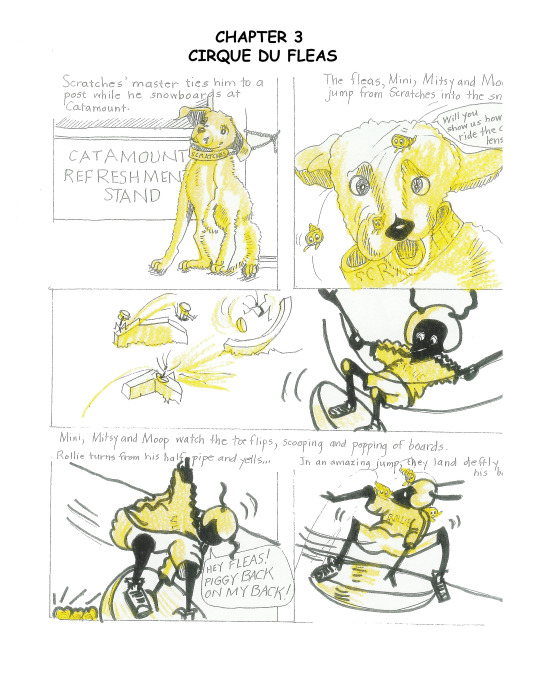
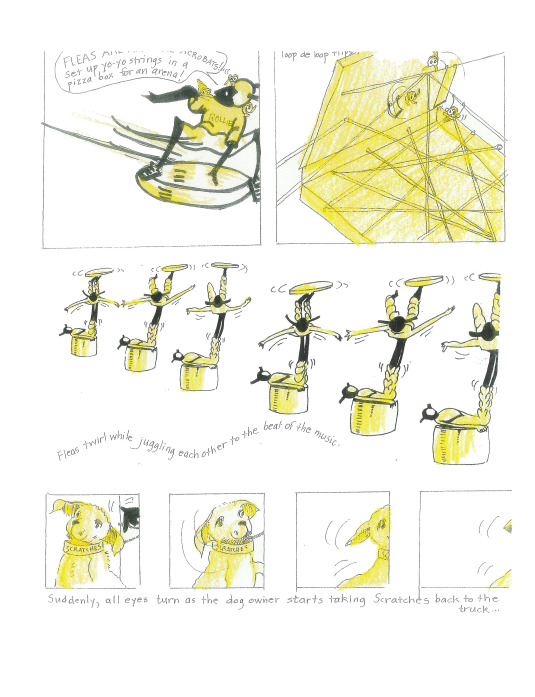
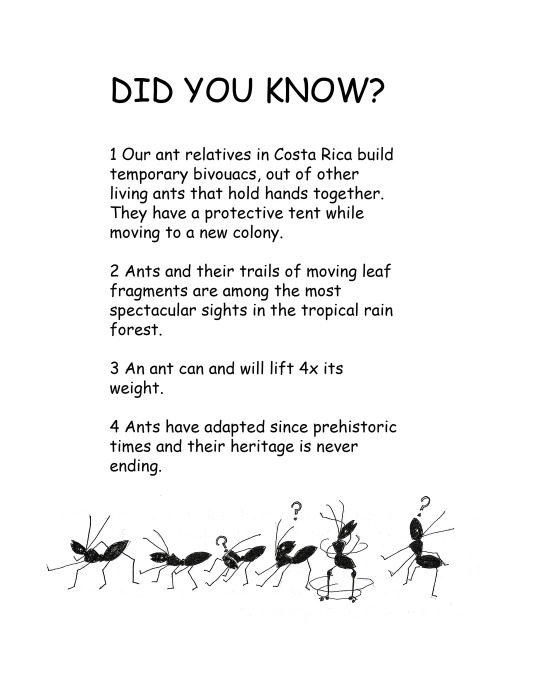
The four pages above are from Jeanne’s graphic novel: “The Roller Skating Ant”: Chapter 3.
I posted it to go with Catherine Johnson’s poem:
http://wp.me/sHil1-scritch

View original post

feelings

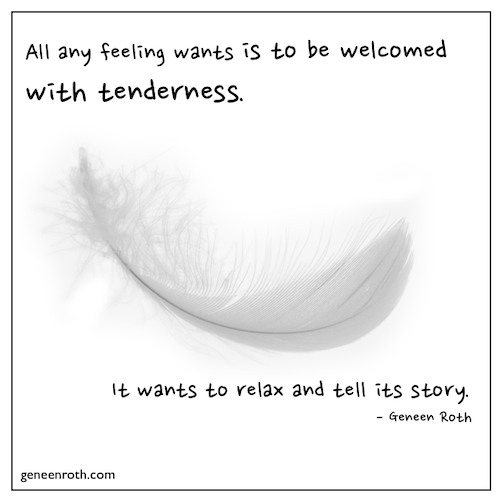
all-any-feeling-wants


I trust you, feeling.

S P E A K to me.

dime novels

redFromCharJones

posted by Char Jones


It was on this day in 1860 that the first dime novel was published. It was called Malaeska, the Indian Wife of the White Hunter, by Ann S. Stephens, and it was the first of 321 novels published by Beadle & Adams in their series Beadle’s Dime Novels.

The early dime novels were wrapped in a salmon-colored cover, and they actually cost 10 cents. Before long, the phrase “dime novel” was used to mean any cheap, melodramatic pulp fiction, some of which actually cost 15 cents.

Many authors of dime novels wrote nothing else, but there were some established writers who tried their hands at writing pulp fiction.

Theodore Dreiser may have helped write the Diamond Dick dime novels. Louisa May Alcott published more than 30 dime novels under the pseudonym A.M. Barnard.
She wrote to her friend Alfred Whitman: “I intend to illuminate the Ledger with a blood and thunder tale as they are easy to ‘compoze’ and are better paid than moral and elaborate works of Shakespeare, so don’t be shocked if I send you a paper containing a picture of Indians, pirates, wolves, bears and distressed damsels in a grand tableau over a title like this: ‘The Maniac Bride’ or ‘The Bath of blood, A Thrilling Tale of Passion.'”

Upton Sinclair wrote boys’ adventure novels; he would dictate about 6,000-8,000 words a day to a stenographer.

And thus, the paperback was born, outside the towers of the publishing monoliths.

a window is a wall

003-frank-llyod-wright-3600-kansas-city-twilight-seven-images-03-1544139950

East Coast Frank Lloyd Wright


Today is the birthday of architect Frank Lloyd Wright, born in Richland Center, Wisconsin (1867). His life spanned an era full of dramatic changes: he was born two years after the Civil War ended, and died in 1959, a year and a half after the first Sputnik launch.
His first professional mentor was architect Louis Sullivan. Sullivan coined the saying “form follows function,” and he believed that American architecture should have its own unique qualities and not simply try to replicate old European standards. Sullivan’s philosophy greatly influenced Wright, who took it one step further with his own theory that form and function should be one. His simple, clean designs inspired the Prairie School architects, and “Taliesin,” his Wisconsin home, was the perfect example of the Prairie Style. When it came to designing homes on commission, he always claimed that the clients’ wishes came first — but was plainly of the opinion that his clients didn’t really know what they wanted. “It’s their duty to understand, to appreciate, and conform insofar as possible to the idea of the house,” he once said.
Wright would often tell his students: “Study nature, love nature, stay close to nature. It will never fail you.” His aim was to design buildings that complemented — even seemed part of — nature. He used building materials like wood and stone, and never painted them. His designs were horizontal, with low rooflines, so that the buildings blended in with the landscape as much as possible. He incorporated walls made almost entirely of windows, to blur the line between the outdoors and the indoors. The glass walls were also functional, using winter sunlight to help heat the house. “No house should ever be on a hill or on anything,” he said. “It should be of the hill. Belonging to it. Hill and house should live together each the happier for the other.” Even when he designed skyscrapers and other urban buildings, he always tried to incorporate elements inspired by natural structures. One of the most famous of these is New York’s Solomon R. Guggenheim Museum, which resembles a giant white snail shell.

Previous Older Entries Next Newer Entries