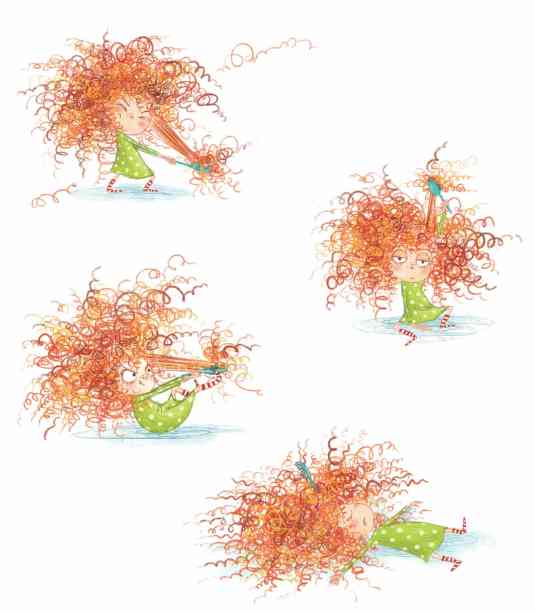
illustrator: Laura Ellen Anderson
pull
tease
stretch
surrender
(redheads are known to be wild, but red curly hair seldom shows its roots when you ride the twists)
Jeanne Poland's Poetry Blog
07 Jun 2019 Leave a comment
in bad hair day, Poetry Tags: bad hair day, but their roots seldom show, Laur Ellen Anderson, pull, redheads are known to be wild, Stretch, surrender, tease, when you ride the twists
illustrator: Laura Ellen Anderson
pull
tease
stretch
surrender
(redheads are known to be wild, but red curly hair seldom shows its roots when you ride the twists)
06 Jun 2019 Leave a comment
in Poetry
One of my pdf books about a beloved Camden.

This is a PDF about a thunderstorm
2 children who try to help a frightened dog
and their Nana and Don.
06 Jun 2019 Leave a comment
in from inferior to poet, Poetry Tags: an internal library, believe fervently, child regrets wishing her toys to life, from inferieor to poet, Maxine Kumin, Radcliffe, Tufts, wonen thought inferior

A Child Regrets Wishing Her Toys to Life
It’s the birthday of poet Maxine Kumin (books by this author), born in Philadelphia (1925). She was a good student and wrote poetry from the time she was a young girl, but she was equally interested in swimming, and even trained to become an Olympic swimmer as a teenager. When she was 18, Kumin was offered a job with Billy Rose’s Aquacade, a famous traveling dance-and-swimming show; but her father considered the spectacle too risqué and refused to give his permission. He did approve of her academic talents, so she went to Radcliffe and studied literature and history. She had continued to write poetry, and she showed her poems to one of her young professors, Wallace Stegner, who at the time was still an unknown novelist. Stegner handed them back with a note in red pencil: “Say it with flowers, but, for God’s sake, don’t try to write poems.” She was so hurt that she didn’t even try to write another poem for many years.
In the meantime, she got a master’s degree in comparative literature, met and married an Army engineer, and moved to the suburbs, where she concentrated on raising her children. During her third pregnancy, she was feeling restless, and she happened upon a book called Writing Light Verse, which cost $3.95. She decided that if she hadn’t published anything by the time her child was born she would give up forever. She was six months pregnant when The Christian Science Monitor accepted one of her poems and paid her $5 for it. It was just four lines long; it read: “There never blows so red the rose / so sound the round tomato, / as March’s catalogues disclose / and yearly I fall prey to.” She began publishing light verse in magazines like Ladies’ Home Journal and The Saturday Evening Post. The Post required Kumin’s husband to send a letter from his employer certifying that her poem was original, since, she later said, “Women, along with people of color, were still thought to be intellectually inferior, mere appendages in the world of belles lettres.”
She was happy enough writing light verse, although she wished she knew some other poets. In 1957, she enrolled in a local poetry-writing workshop. One of her classmates was the poet Anne Sexton, and the two women became close friends and writing peers — they eventually installed separate phone lines in each of their homes so that they could be in constant communication. Very slowly Kumin began to have poems accepted that were not just light verse. She said, “Until the Women’s Movement, it was commonplace to be told by an editor that he’d like to publish more of my poems, but he’d already published one by a woman that month.”
Her professor at the poetry workshop recommended her for a position at Tufts, where he taught, and so she began a long career as a teacher and mentor. As a teacher, she often asked her students to memorize 30 to 40 lines of poetry a week so that they grew familiar with the sound of poetry. She said: “The other reason, as I tell their often stunned faces, is to give them an internal library to draw on when they are taken political prisoner. For many, this is an unthinkable concept; they simply do not believe in anything fervently enough to go to jail for it.”
Her books include Up Country (1972), The Long Approach (1985), Where I Live (2010), and And Short the Season (2014).
Kumin died in 2014 at her home in Warner, New Hampshire. She was 88.
Notice how talented Maxine Kumin was at choosing the men in her life!
05 Jun 2019 Leave a comment
in Poetry, tea for two Tags: how better could it be?, I'm for you, MagPark, tea for two, you're for me

illustrated by Mag Park
teafortwoandI’mforyouandyou’reformehowbettercoulditbe?
poem by Jeanne (5/5/19)
03 Jun 2019 Leave a comment
in Poetry, wearing the calligraphy tuxedo Tags: Bookhand miniscules, classic, in formal attire, John Stevens Calligraphy, linear perfection, precise, Roman majuscules, scrolls to adore, the bell of the balls letters, thick and thin contrast, wearing the calligraphy tuxedo
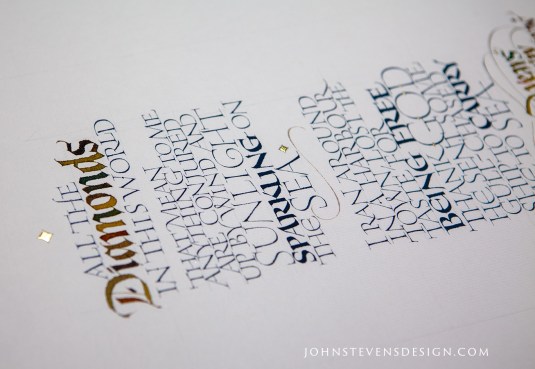
John Stevens Calligraphy in formal attire
classic
precise
linear perfection
thick and thin contrast
Roman majuscules
Bookhand miniscules
scrolls to adore
the bell of the balls letters
02 Jun 2019 Leave a comment
in amazing cat photography, Poetry Tags: amazing cat photography, Bohemian Rhapsody, cat photography, creative work, Elizabeth Rose Stanton, four artists, Hall of Fame, hear it and know, religions of the soul, the best rock band ever: Queen, the best rock music ever, the operatic theme

the best rock band ever: Q U E E N
Last night we viewed and listened to the best rock music ever.
“Bohemian Rhapsody” (dvd from Netflix)
the cat photography boggled my mind.
the creative work of all four artists is unmatched.
and acknowledged by the Hall of Fame
and religions of the soul!
hear it and know…

photo by Elizabeth Rose Stanton
” We liked the operatic theme best!”
31 May 2019 Leave a comment
in Charlie, Poetry Tags: Chapman's face hairs, Charlie, couch the brain, eye-sockets, hedges protecting our delicate parts, myriad expressions, Neil Waldman, pet dog, protect the nostrils, surprise to consternation, values and levels

illustrator: Neil Waldman
What do Chapman’s face hairs tell us?
borders are hedges protecting our delicate parts
( they do the same thing for our pet dog)
(couch the brain)
(protect the nostrils and lips)
( protect the eye-sockets)
and
allow for myriad expressions
from surprise to consternation!
Now we know why Neil Waldman dabs in many values and levels in his work.
30 May 2019 Leave a comment
in Jeanne d'Arc, Poetry Tags: 1431, burned at the stake, burned at the stake at 19 years of age, France loves itself, in more than 20000 books, in Rouen, Jeanne d'Arc, Mark Twain, My Namesake, the maid of Orleans, voices

Jeanne d’Arc: Google images
My Namesake:
It was on this day in 1431 that Joan of Arc was burned at the stake in Rouen, France. In the centuries that have passed, she’s become a national icon in France. She is to the national identity of France, novelist Julian Barnes notes, what Robin Hood is to England.
Statues of Joan of Arc stand all over parks and churches in France, and nearly every French town has a street named for her, called “Jeanne d’Arc.” One 19th-century historian wrote that Joan of Arc “loved France so much that France began to love itself.”
Joan of Arc was a 13-year-old peasant girl when she began to hear voices in her garden. The voices, she recounted, were those of saints Michael, Margaret, and Catherine, and they eventually told her that she needed to save France. At the time, France was engaged in the Hundred Years War, and the English had the French town of Orleans under siege. In April of 1429, Joan of Arc asked the French government for troops that she could lead to liberate the captured Orleans. She’d met with the crown prince and theologians, and they thought she could be of use in the fight against the English, and so Joan of Arc was given an army to command.
She went into battle wearing a white suit of armor and carrying up high a banner depicting an image of the Trinity. An English arrow hit her in the shoulder, but she was OK. Her army succeeded in liberating Orleans: English troops fled, and Joan’s army took over their surrounding forts.
In another battle, Joan of Arc — now known as “the maid of Orleans” — was taken hostage by Burgundian troops and sold to the English. She was imprisoned for over a year, often chained to a wooden block, while interrogators attempted to extract confessions out of her. Then, on February 21, 1431, she was brought to trial under an ecclesiastical court. She stuck to her story that she had heard the voices of saints and it was they who commanded her to serve France. Interrogators demanded that she retract her statements. She was convicted of heresy and brought before a large crowd to be sentenced, condemned, and handed over to secular officials. Then, on this day, when she was 19 years old, she was burned at the stake.
In 1456 (25 years after she died), a posthumous retrial was held at which she was exonerated. In 1920, she was canonized a Catholic saint. Joan of Arc has been portrayed in more than 20 films; the first was made by director Georges Melies in 1899. And she’s the subject of more than 20,000 books.
One of these is by Mark Twain (books by this author), who spent 12 years researching her life and wrote a book called Personal Recollections of Joan of Arc, first serialized in Harper’s Magazine and then published as a book in 1896. It’s a fictional account and purports to be written by Joan of Arc’s page and personal secretary. But the book is mostly devoid of the humor that Mark Twain is famous for. He genuinely admired Joan of Arc, and wrote an earnest book about her.
Mark Twain later said, “I like Joan of Arc best of all my books; and it is the best; I know it perfectly well.”
29 May 2019 Leave a comment
in blue tree frog, Poetry Tags: blue as blue could be, blue tree frog, but true, in the tree, not feeling blue, Shaundra

in the tree sits frog
blue as blue could be
not feeling blue but true: frog!
28 May 2019 Leave a comment
in Poetry
Oh I have to post this again. It fills my nostrils with fresh air!
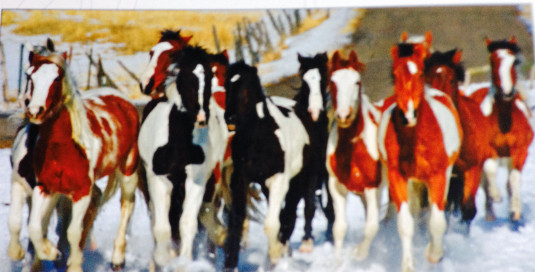 Utah Pintos
“There is something about the outside of a horse that is good for the inside of a man.”
Winston Churchill
Hoofing
snuggling
shuffling
prancing with the herd.
Snorting
whinnying
neighing
acapella song.
Thundering
rampaging
stampeding
mountainside throng.


 The Vibrant Channeled Creator