12 Mar 2015
by jeannepoland
in Family
Tags: baggy oldtrousers, Edward Albee, flyway of dreams, in a cottage, Interesting, limited palette, out in the cold, predictable blues, swallows in Autumn, Ted Kooser, wet rocks

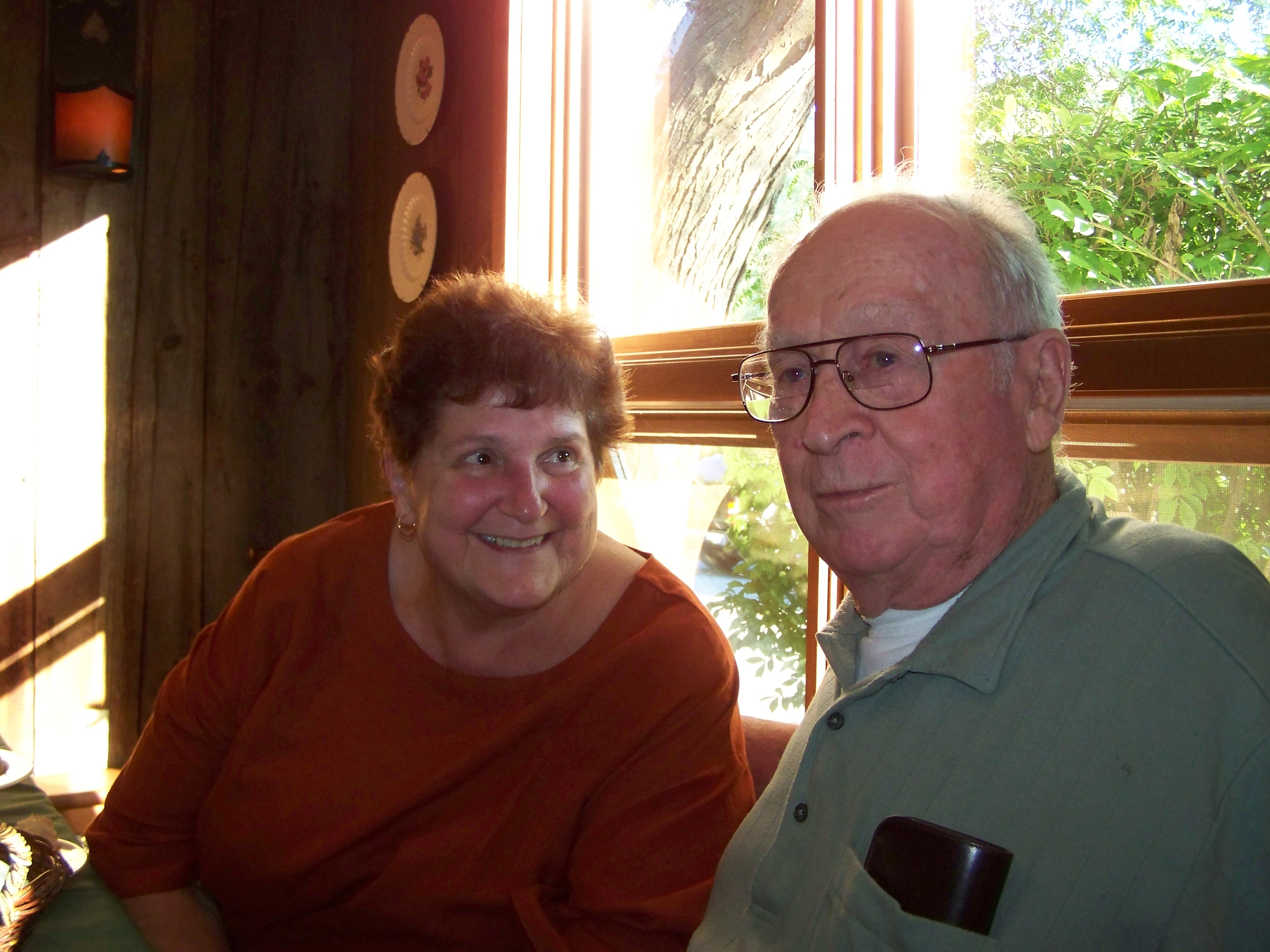
Jeanne 2007
Edward Albee
“If you’re willing to fail interestingly, you tend to succeed interestingly.”
A Person of Limited Palette
by Ted Kooser
I would love to have lived out my years
in a cottage a few blocks from the sea,
and to have spent my mornings painting
out in the cold, wet rocks, to be known
as “a local artist,” a pleasant old man
who “paints passably well, in a traditional
manner,” though a person of limited
talent, of limited palette: earth tones
and predictable blues, snap-brim cloth cap
and cardigan, baggy old trousers
and comfortable shoes, but none of this
shall come to pass, for every day
the possibilities grow fewer, like swallows
in autumn. If you should come looking
for me, you’ll find me here, in Nebraska,
thirty miles south of the broad Platte River,
right under the flyway of dreams.
“A Person of Limited Palette” by Ted Kooser from Splitting an Order. © Copper Canyon Press, 2014. Reprinted with permission.
10 Mar 2015
by jeannepoland
in Family
Tags: beyond, beyond it, David Rabe, follow it, Frank Packlick, idea, image I start, old artists never die, sentence, their work lives on and on

Old artists never die…their work lives on and on…
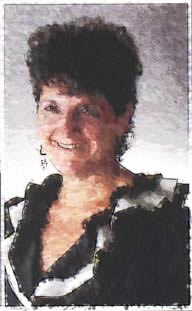
Jeanne and Frank Packlick
2009
David Rabe said:
“I get a sentence, an idea, an image, and I start.
I don’t know anything beyond it.
I follow it.”
09 Mar 2015
by jeannepoland
in Family
Tags: enough, grateful, Joy Willaims, never enough, shadows, stories, writers
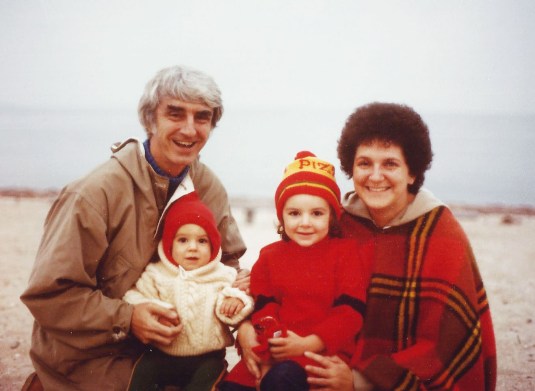
John, Jeanne, Quenby, Owen
1977
“Writers end up writing stories
—or rather, stories’ shadows
—and they’re grateful if they can,
but it is not enough.
Nothing the writer can do is ever enough”
—Joy Williams
07 Mar 2015
by jeannepoland
in Family
Tags: a woman walks beside him, another winter endured, ballerina, her heart springs, Jeanne and Paul at Quenby's Wedding, Louise Gluck, remember, Robert Frost, weary of each other, whirl in place

Jeanne and Paul
at Quenby’s Wedding
2007
Frost said poetry could make you “remember what you didn’t know you knew.”
The Couple in the Park
by Louise Glück
A man walks alone in the park and beside him a woman walks, also alone.
How does one know? It is as though a line exists between them, like a line on
a playing field. And yet, in a photograph they might appear a married cou-
ple, weary of each other and of the many winters they have endured togeth-
er. At another time, they might be strangers about to meet by accident. She
drops her book; stooping to pick it up, she touches, by accident, his hand and
her heart springs open like a child’s music box. And out of the box comes
a little ballerina made of wood. I have created this, the man thinks; though
she can only whirl in place, still she is a dancer of some kind, not simply a
block of wood. This must explain the puzzling music coming from the trees.
“The Couple in the Park” by Louise Glück from Faithful and Virtuous Night. © Farrar, Straus and Giroux, 2014. Reprinted with permission.
06 Mar 2015
by jeannepoland
in Family
Tags: a field of snow, blink on, boy who is half swan, Dean Young, heaven, peacock feather, plastered with dew, walk through dandelions, wash your face
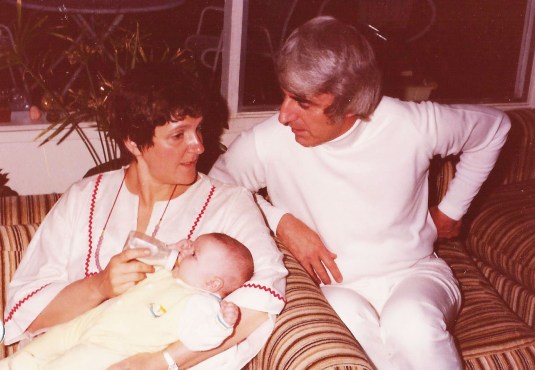
Quenby’s Backyard Baptism 1975
The Invention of Heaven
by Dean Young
The mind becomes a field of snow
but then the snow melts and dandelions
blink on and you can walk through them,
your trousers plastered with dew.
They’re all waiting for you but first
here’s a booth where you can win
a peacock feather for bursting a balloon,
a man in huge stripes shouting about
a boy who is half swan, the biggest
pig in the world. Then you will pass
tractors pulling other tractors,
trees snagged with bright wrappers
and then you will come to a river
and then you will wash your face.
“The Invention of Heaven” by Dean Young, from First Course in Turbulence. © University of Pittsburgh Press, 1999. Reprinted with permission of the author.
05 Mar 2015
by jeannepoland
in Family
Tags: Colum McCann, definition, high and low, lovely, quartet, slap the music down, song ofNYC, transported, vivacious, Whitman
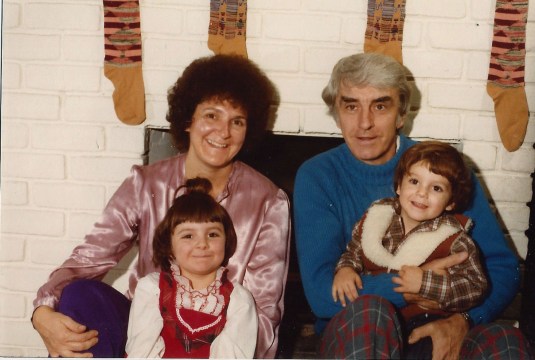
Got the quartet together in 1978
Colum McCann
He said, “I wanted it to be a Whitmanesque song of the city, with everything in there – high and low, rich and poor, black, white, and Hispanic. Hungry, exhausted, filthy, vivacious, everything this lovely city is. I wanted to catch some of that music and slap it down on the page so that even those who have never been to New York can be temporarily transported there.”
03 Mar 2015
by jeannepoland
in Family
Tags: a British drinking song, A Poem Emerges, definition, Francis Scott key, jot on the back of an envelope, national anthem, The Star Spangled Banner
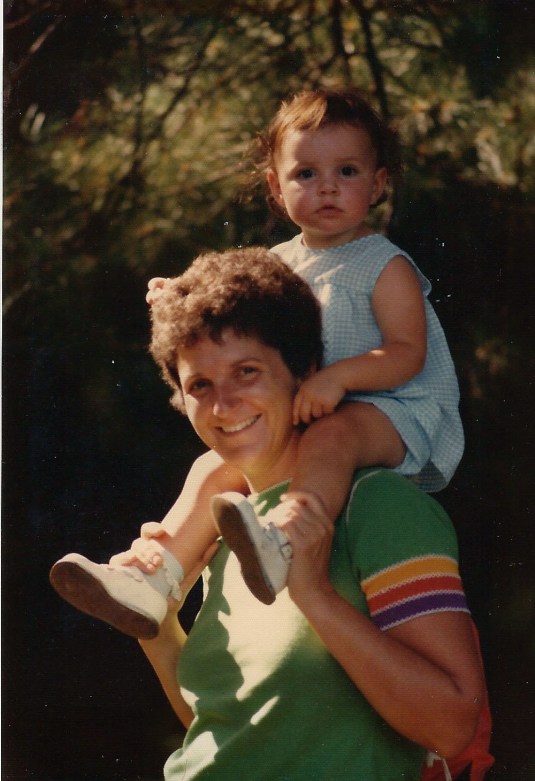
Jeanne’s young gets a higher view (1975)
The Star-Spangled Banner took from 1812 to 1931 to become our national anthem.
The lyrics come from a poem written by Francis Scott Key more than a century before, “Defence of Fort McHenry.” He’d spent a night toward the end of the War of 1812 hearing the British navy bombard Baltimore, Maryland. The bombardment lasted 25 hours — and in the dawn’s early light, Francis Scott Key emerged to see the U.S. flag still waving over Fort McHenry. He jotted the poem “Defence of Fort McHenry” on the back of an envelope. Then he went to his hotel and made another copy, which was printed in the Baltimore American a week later.
The tune for the Star-Spangled Banner comes from an old British drinking song called “To Anacreon in Heaven,” which was very popular at men’s social clubs in London during the 1700s. Francis Scott Key himself did the pairing of the tune to his poem. It was a big hit.
For the next century, a few different anthems were used at official U.S. ceremonies, including “My Country Tis of Thee” and “Hail Columbia.” The U.S. Navy adopted “The Star-Spangled Banner” for its officialdom in 1889, and the presidency did in 1916. But it wasn’t until this day in 1931 — just 80 years ago — that Congress passed a resolution and Hoover signed into law the decree that “The Star-Spangled Banner” was the official national anthem of the United States of America.
02 Mar 2015
by jeannepoland
in Family
Tags: clues of speech, definition, dialogue, emotional reality of the news, emotions, excite readers, gripping quality, Jeanne from Queens, point of view, scenes, social status, Ton Wolfe

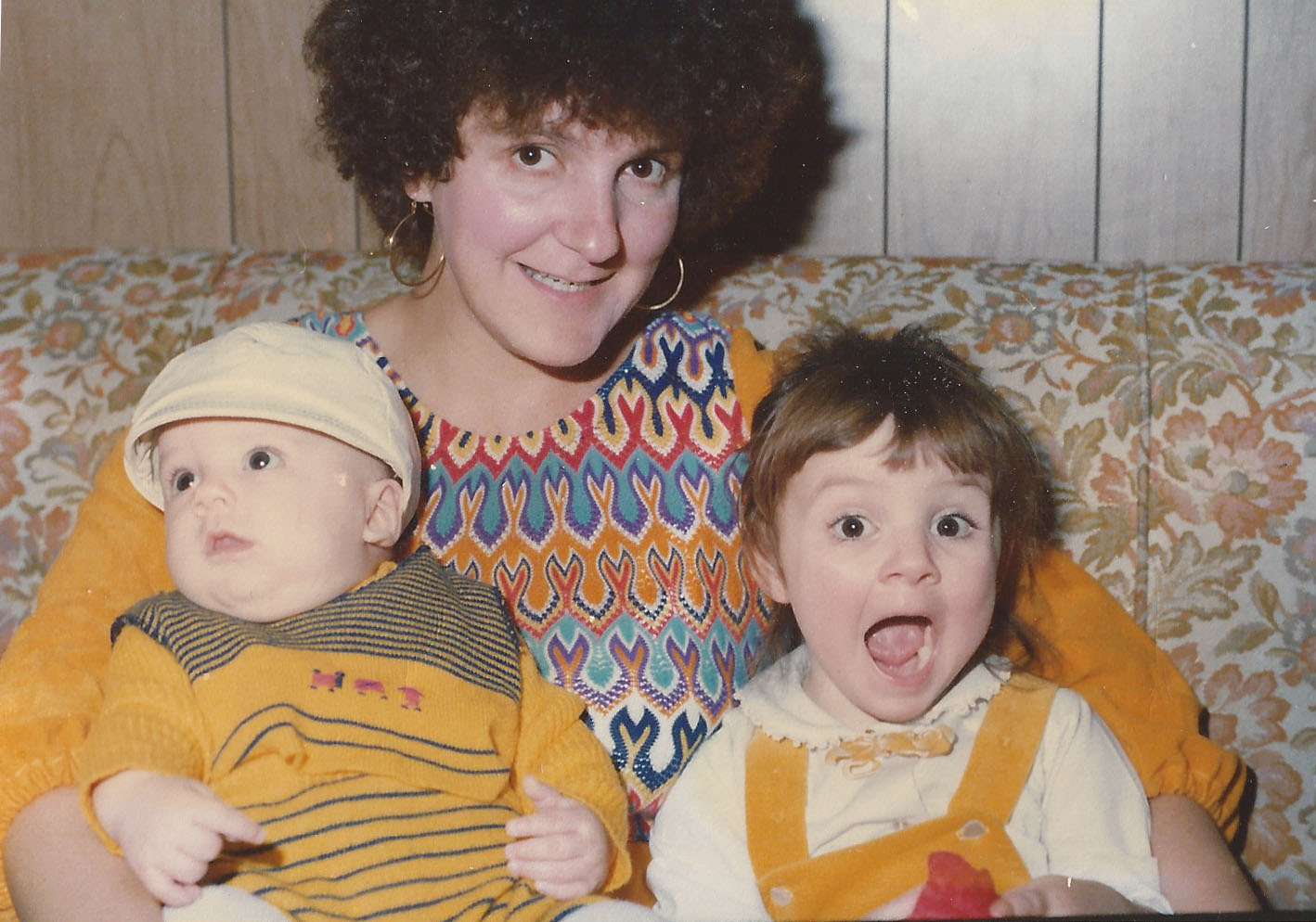
Doesn’t everyone dress in gold in 1977?
Tom Wolfe:
In an essay published in 2007, Tom Wolfe argued that the newspaper industry would stand a much better chance of survival if newspaper editors encouraged reporters to “provide the emotional reality of the news, for it is the emotions, not the facts, that most engage and excite readers and in the end are the heart of most stories.”
He said there are exactly four technical devices needed to get to “the emotional core of the story.” They are the specific devices, he said, “that give fiction its absorbing or gripping quality, that make the reader feel present in the scene described and even inside the skin of a particular character.”
The four:
1) constructing scenes;
2) dialogue — lots of it;
3) carefully noting social status details — “everything from dress and furniture to the infinite status clues of speech, how one talks to superiors or inferiors … and with what sort of accent and vocabulary”; and
4) point of view, “in the Henry Jamesian sense of putting the reader inside the mind of someone other than the writer.”
Previous Older Entries Next Newer Entries