Definition # 66 Storytelling, Slowed Down: On Writing Vertically

Vertical Story telling for Pre-schoolers

Vertical Story Telling for Pre-schoolers

Ripatrazone talks about his own writing habits,

and his attraction to moving down within the page, rather than across it:

I write vertically.

I have never been a writer with a lot of time to write.

I am thankful for that. I am not sure what would happen if I had hours to work.

 It makes me not want to squander the moments when I sit with a story.

This is a necessary tension.

I am not a writer first.

I have a family, and without them I would have little reason to want to write — or to do anything else.

My desire to create is held in silence during the day, so that my literary moments can be focused and absolute.

“Gestation of Ideas: On Vertical Writing and Living” is a lovely read, no matter if you’re a writer of fiction or nonfiction.

Ripatrazone shares insights on the writing life,

the benefits of slowing down and letting ideas unfold naturally,

and the importance of time and perspective when telling the stories within us.
Storytelling, Slowed Down: On Writing Vertically
by Cheri Lucas Rowlands

Definition #67 COBOL Pronounced “cobble”

COBOL

COBOL

It’s the birthday of one of the people who helped invent the modern computer: Grace Hopper, born in New York City (1906).

She began tinkering around with machines when she was seven years old, dismantling several alarm clocks around the house to see how they worked.

She was especially good at math in school.

She studied math and physics in college, and eventually got a Ph.D. in mathematics from Yale.

Then World War II broke out, and Hopper wanted to serve her country. Her father had been an admiral in the Navy, so she applied to a division of the Navy called WAVES, which stood for Women Accepted for Voluntary Emergency Service.

She was assigned to work on a machine that might help calculate the trajectory of bombs and rockets.

She learned how to program that early computing machine, and wrote the first instruction manual for its use.

She went on to work on several more versions of the same machine. In 1952, Hopper noticed that most computer errors were the result of humans making mistakes in writing programs.

So she attempted to solve that problem by writing a new computer language that used ordinary words instead of just numbers.

It was one of the first computer languages, and the first designed to help ordinary people write computer programs, and she went on to help develop it into the computer language known as COBOL, or “Common Business-Oriented Language.”

Definition #65 Poetry

Thomas Lux

Thomas Lux

It’s the birthday of Thomas Lux , born in Northampton, Massachusetts (1946).

He’s known for his surreal, funny poems with titles like

“Commercial Leech Farming Today,”

“Traveling Exhibition of Torture Instruments,”

“The Oxymoron Sisters,” and

“Walt Whitman’s Brain Dropped on Laboratory Floor.”

His books of poetry include Memory’s Handgrenade (1972), The Blind Swimmer: Selected Early Poems 1970-1975 (1996), God Particles (2008), and most recently Child Made of Sand (2012).

He describes contemporary American poetry as

“Burgeoning,

chaotic,

many, many good poets,

a growing cultural profile,

a healthy, squawking, boisterous, fractious, inclusive, tradition and

(true) innovation marrying or colliding.”

Definition #64 Wounds

pottery-2

throw the lump of clay

coax it to perfection’s turn

touch each wound- erase!

Definition #63 Language

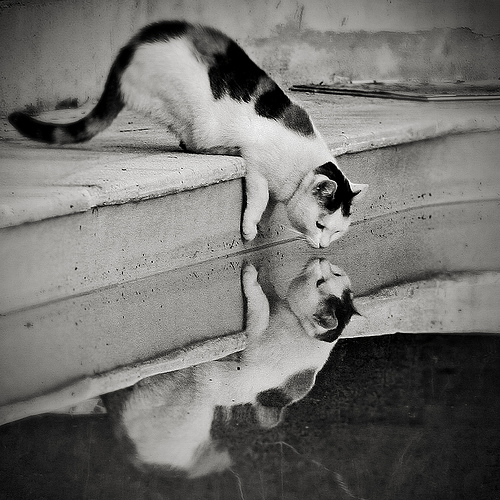
cat looks at self

instinct speaks volumes:

feelers know language of love

perfect plus-purring

Definition #62 Bean Bag Chair

BeanbagChair

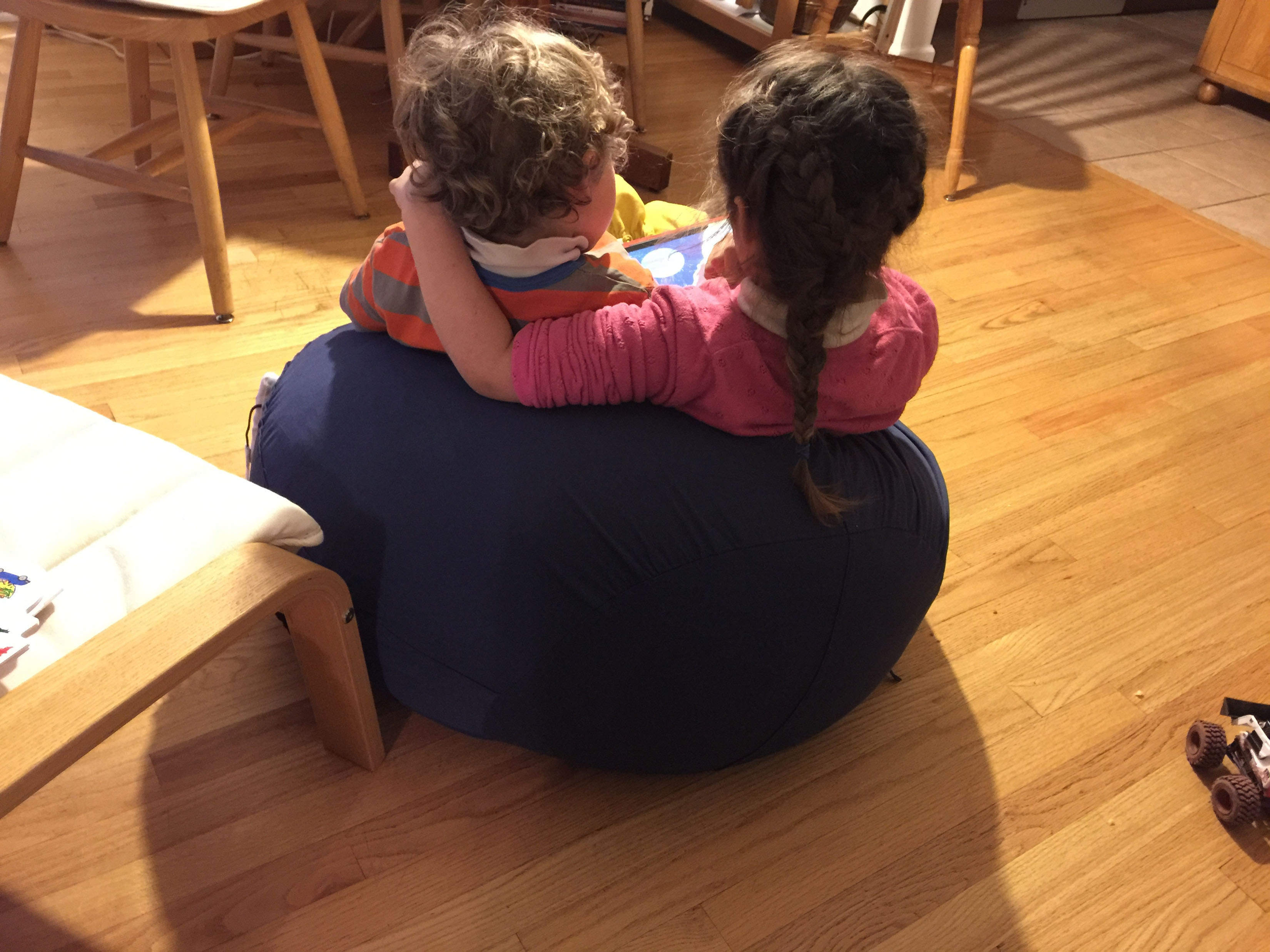
Annika shows Oliver how to draw and paint on iPad

Annika shows Oliver how to draw and paint on iPad

Oliver uses colors and paintbrushes

Oliver uses colors and paintbrushes

bean bag chair to climb –

fall and cry: or snuggle close –

color paint design

Definition #61 Cattails

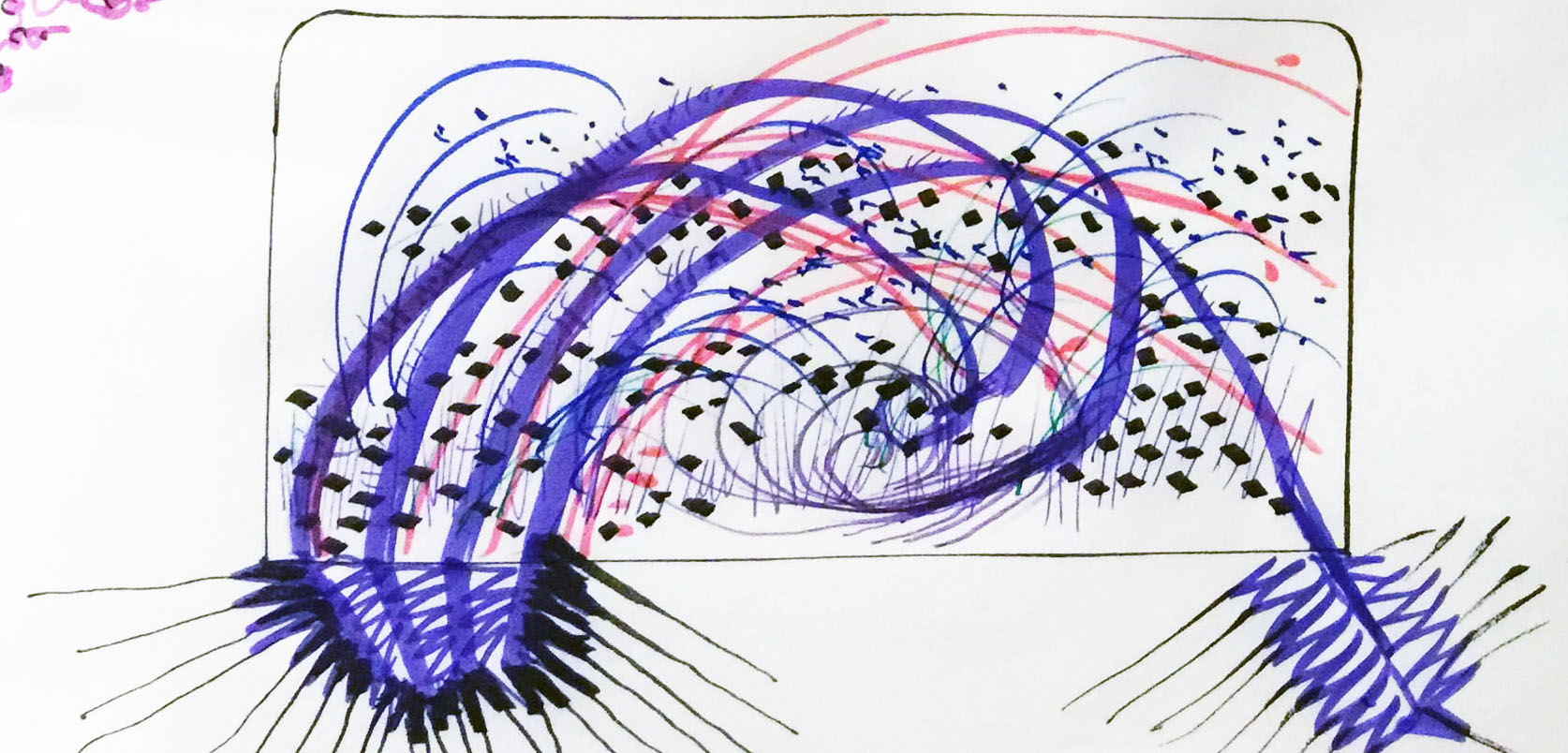
design by Jeanne and Bob Boyajian in tandem

design by Jeanne and Bob Boyajian in tandem

Bulrush Haiku

reed mace struts its seeds

brown furry fruiting spikes make

wetland habitats

Definition #60 First Sight

sheep in snow

Rilke wrote two poems about angels in almost a single sitting, and he knew that he had begun his most important work, but then he got stuck. He eventually left the castle, the First World War broke out, and he struggled to write anything for years. Finally, in February of 1922, he managed to finish in a single month what he’d started a decade before. The result was a cycle of 10 long poems that he called The Duino Elegies, about the difference between angels and people, and the meaning of death, and his idea that human beings are put on earth in order to experience the beauty of ordinary things.

First Sight

Lambs that learn to walk in snow
When their bleating clouds the air
Meet a vast unwelcome, know
Nothing but a sunless glare.
Newly stumbling to and fro
All they find, outside the fold,
Is a wretched width of cold.

As they wait beside the ewe,
Her fleeces wetly caked, there lies
Hidden round them, waiting too,
Earth’s immeasurable surprise.
They could not grasp it if they knew,
What so soon will wake and grow
Utterly unlike the snow.

“First Sight” by Philip Larkin, from Collected Poems. © Farrar, Straus and Giroux, 2004. Reprinted with permission.

Definition # 59 Alzheimer’s Art

Last week we played with calligraphy markers at the Alzheimer Unit.

The rhythm with the chisels is still there.

The right brain persists.

Still, the “talent” rings

created by Bob Boyajian

created by Bob Boyajian

chiseled markers dance

to radio tunes that swirl:

leaping landscapes laugh!

Definition #58 Omniscient Love

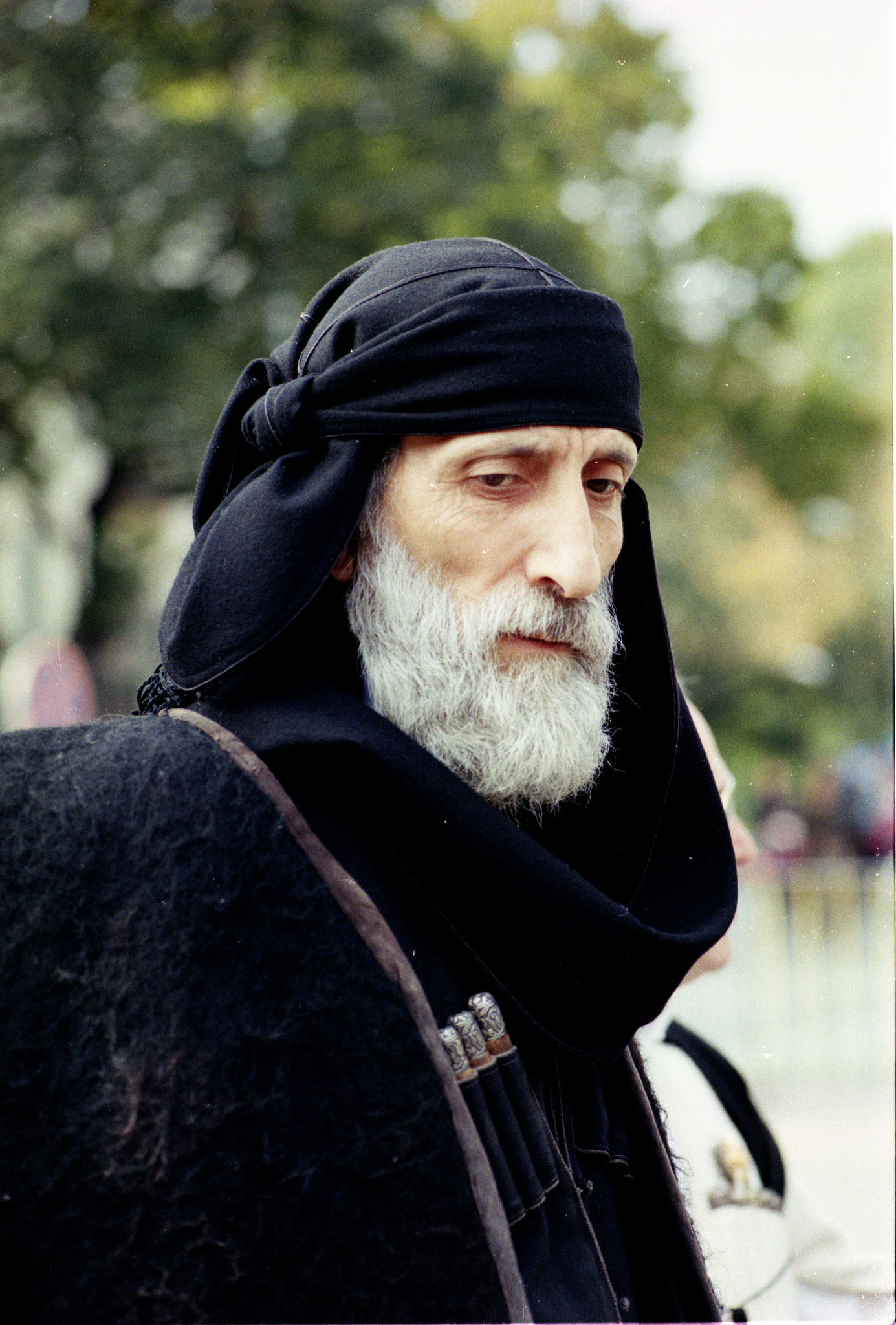
by-sulkhan-gogolashvilli

by-sulkhan-gogolashvilli

This poem is by Lee Upton, from her book Undid in the Land of Undone.

Omniscient Love

He was in knocking range of my secrets.
He had found kelp there,
he nested in the coral beds.
In a past life he was born
to me as a set of twins.
He was applied to me as a topical ointment.
He was a prescient code,
a secret writing shaped into flesh.
He was the fathomer I never expected,
the pillow talk of the bureaucracy,
the breeze that could carry the world off-course.
It was as if we’d always believed in each other precisely,
and even the clouds agreed,
and the dog and his bone;
every particle of language
jumped like a flea around him. He was
a pirate’s nautical exercise
and an argument for the resurrection.
He was in every seed bed
and digression.
He was bending down my angels and breasting
the seas of goldenmost wheat.
To ask for everything and get it
seemed a paltry thing
next to being recognized by him.
A button couldn’t pop
but he was there with a net.

I admire the playfulness and the strangeness of this extravagant love poem. Loaded with metaphors and hyperboles, it epitomizes the language of love. Upton uses kaleidoscopic metaphors, i.e., wide-ranging and exhaustive. Her hyperboles strain the bounds of what is possible, e.g., “every particle of language / jumped like a flea around him.” How else to describe the perfection of this beyond perfection beloved!
written by Diane Lockwood

Previous Older Entries Next Newer Entries