05 Apr 2015
by jeannepoland
in Family
Tags: decorated eggs, Easter, eggs, fertility, Kavi, rabbit, spring, sun, symbol, up

Kavi celebrates Spring
Sun
up
Kavi
up
Easter
up
Footnotes
The word “Easter” and most of the secular celebrations of the holiday come from pagan traditions. Anglo Saxons worshipped Eostre, the goddess of springtime and the return of the sun after the long winter. According to legend, Eostre once saved a bird whose wings had frozen during the winter by turning it into a rabbit. Because the rabbit had once been a bird, it could still lay eggs, and that rabbit became our Easter Bunny. Eggs were a symbol of fertility in part because they used to be so scarce during the winter. There are records of people giving each other decorated eggs at Easter as far back as the 11th century.
04 Apr 2015
by jeannepoland
in Family
Tags: best-seller, Indochina, lover, Margaret Duras, poverty, simply unbearable, very fond of men

“My tsatske”
It’s the birthday of Marguerite Duras, born near in a small village in French Indochina near what is now Saigon, Vietnam (1914). Her parents had left France to teach in Indochina, her dad died, and Duras grew up in poverty.
When she was a teenager, she became lovers with a wealthy, older Chinese man, whom she met on a ferry between Sa Dec and Saigon. She would write about him for the rest of her life, in autobiographical works like The Lover (1984), which was an international best-seller.
Marguerite Duras said, “You have to be very fond of men. Very, very fond. You have to be very fond of them to love them. Otherwise they’re simply unbearable.”
03 Apr 2015
by jeannepoland
in Family
Tags: Bach's well tempered Clavier, Don Jeanne Clavier, field stones, Gulda, meadow, Prelude and fugue, progresses, rolls on and on, song for three voices

Oliver dances with the skeleton
April 3,2015
Song for Three Voices
http://youtu.be/0KQW2YnCUrE
Prelude and Fugue No.1 in C Major, BWV 846, from Bach’s Well-tempered Clavier, Gulda pianist
Don:
This music
rolls on and on.
No beginning.
No end.
Jeanne:
It discovers;
progresses
constantly.
Clavier:
tempered keys:
field stones
through the meadow.
03 Apr 2015
by jeannepoland
in Family
Tags: 21 Van Winkle Road, affinity to Irving, bells that ring in my life, Gotham, Oldstyle, satire, sketch book, the almighty dollar, Washinton Irving's names, wizard, words that stick to me
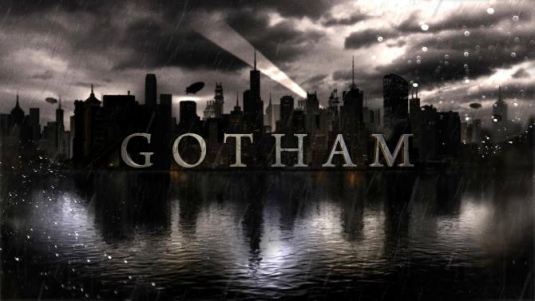
Goat Town
My Address is 21 Van Winkle Road.
And so I have an affinity to Washington Irving and his made-up pseudo names:
Words from Washington Irving:
(Bells that ring in my Life)
lifelong love of travel
Jonathan Oldstyle
William Wizard
Launcelot Langstaff
Geoffrey Crayon
Deitrich Knickerbocker
satire
Sketch-Book of Geoffrey Crayon Gent
“the almighty dollar”
Gotham: Goat Town
Knickerbockers
01 Apr 2015
by jeannepoland
in Family
Tags: Continental Drift by Russell Banks, greed, grief spreads in my throat like strep, indifference to the past, Jo McDougall, old nun behind a desk, Pulitzer Prize, ruler in hand, The Way we Live Now, uprootedness

Bob Marley
by Ray Ferrer
This Morning
by Jo McDougall
As I drive into town
the driver in front of me
runs a stop sign.
A pedestrian pulls down his cap.
A man comes out of his house
to sweep the steps.
Ordinariness
bright as raspberries.
I turn on the radio.
Somebody tells me
the day is sunny and warm.
A woman laughs
and my daughter steps out of the radio.
Grief spreads in my throat like strep.
I had forgotten, I was happy, I maybe
was humming “You Are My Lucky Star,”
a song I may have invented.
Sometimes a red geranium, a dog,
a stone
will carry me away.
But not for long.
Some memory or another of her
catches up with me and stands
like an old nun behind a desk,
ruler in hand.
“This Morning” by Jo McDougall from Dirt. © Autumn House Press, 2001. Reprinted with permission of the author.
Continental Drift by Russell Banks
His novel Continental Drift (1985) was nominated for a Pulitzer Prize and called by Atlantic reviewer James Atlas “the most convincing portrait I know of contemporary America: its greed, its uprootedness, its indifference to the past. This is a novel about the way we live now.”
30 Mar 2015
by jeannepoland
in Family
Tags: Henry David Thoreau, invented 1662, John Steinbeck, pencils, Thomas Edison

neutral colored pencils align
Pencils were first mass-produced in Nuremberg, Germany, in 1662, and the Industrial Revolution of the 19th century really allowed the manufacture to flourish.
Before he became known for Walden and “Civil Disobedience,” Henry David Thoreau and his father were famous for manufacturing the hardest, blackest pencils in the United States.
Edison was fond of short pencils that fit neatly into a vest pocket, readily accessible for the jotting down of ideas.
John Steinbeck loved the pencil and started every day with 24 freshly sharpened ones; it’s said that he went through 300 pencils in writing East of Eden (1952), and used 60 a day on The Grapes of Wrath (1939) and Cannery Row (1945).
Previous Older Entries Next Newer Entries











 The Vibrant Channeled Creator